
Overview
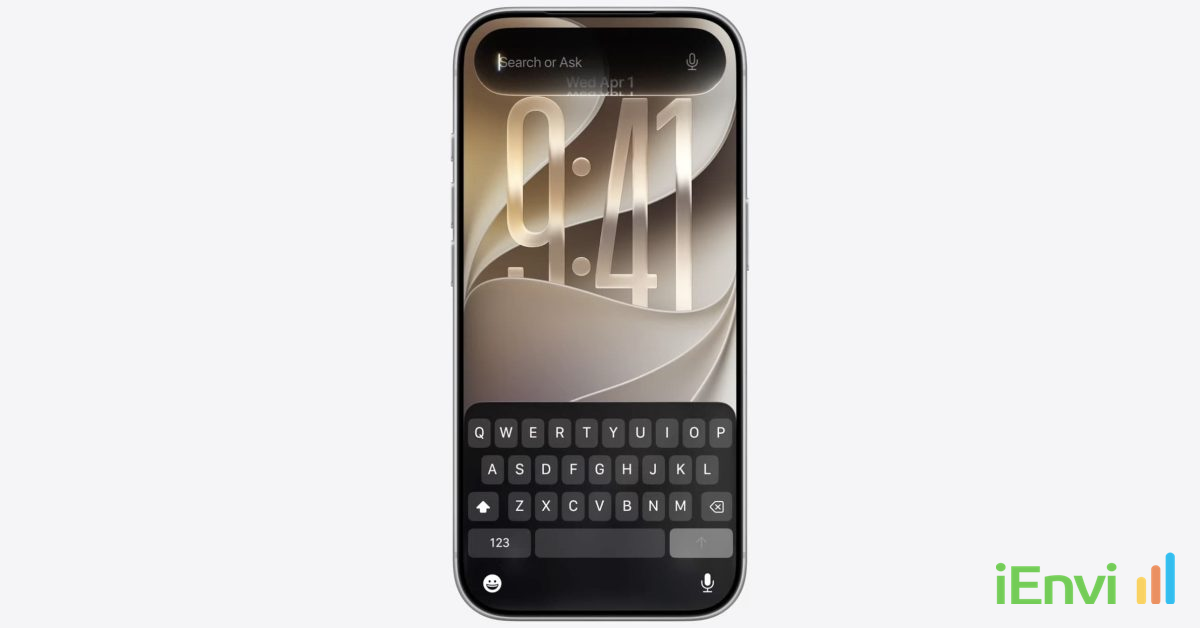
At its Worldwide Developers Conference (WWDC 2026) on 8 June 2026, Apple unveiled a completely rebuilt Siri AI alongside the next generation of Apple Intelligence, integrated across iOS 27, iPadOS 27, and macOS 27 Golden Gate. The headline technical announcement was not the software itself but a strict hardware threshold: Apple’s most capable on-device AI models require a minimum of 12 gigabytes (GB) of unified memory to run locally. This requirement excludes a large installed base of current devices, including the iPhone 15 Pro, which was the first handset to support Apple Intelligence when it launched. Only the iPhone 17 Pro, iPhone 17 Pro Max, iPhone Air, iPad with M4 chip or later, and Mac with M3 chip or later meet the memory floor for the top-tier local models.
The practical consequence of this threshold is a formal stratification of Apple’s AI capability tiers. Users and organisations on qualifying hardware can run advanced on-device features, including highly expressive voice synthesis, advanced local dictation, and deep onscreen awareness, without any data leaving the device. Users on older or lower-specification hardware will access a more limited feature set, with more complex queries routed to cloud infrastructure. For professional services firms that handle sensitive, confidential, or legally privileged information, this distinction is operationally significant rather than merely a consumer inconvenience.
Apple’s Senior Vice President of Software Engineering, Craig Federighi, contextualised the pace of AI development at WWDC 2026, drawing a comparison to the Industrial Revolution: “While I think we can look at this as yet another thing of the scale of the Industrial Revolution, which changed our world in a giant way, that displaced a lot of people in the process and still occurred over like 80 years.” Apple’s stated philosophy positions its AI tooling as a utility-first, privacy-forward capability rather than a social or companionship product. The 12GB memory requirement is the concrete expression of that philosophy, because running a capable foundation model locally, without cloud assistance, demands hardware resources that previous generations simply cannot provide.
Key details of the 12GB memory threshold and Apple Intelligence architecture
The 12GB unified memory requirement is a hard floor, not a recommended specification. Apple’s high-tier local foundation models are multimodal, meaning they process text, voice, and onscreen context simultaneously as part of a single inference task. Handling that workload on-device, without offloading to Apple’s Private Cloud Compute infrastructure or any third-party server, requires the model weights and intermediate inference state to reside in memory simultaneously. At the current capability level Apple is targeting for its top-tier local tier, 8GB of unified memory, the specification found in the iPhone 15 Pro and many current Mac configurations, is insufficient to sustain that workload.
The rebuilt Siri AI introduces three distinct capability layers that compound the memory demand. The first is deep onscreen awareness, where Siri can read, interpret, and act on the content currently displayed on screen across any application without the user needing to describe it. The second is personal context understanding, where Siri draws on email, calendar, messages, and document history to give contextually relevant responses. The third is conversational continuity, where the assistant maintains the thread of a multi-turn dialogue without each exchange being processed as a standalone query. Running all three layers simultaneously in a local, on-device configuration is what drives the 12GB requirement beyond what earlier Apple Intelligence features demanded.
Apple’s proprietary World Knowledge Service is a notable architectural element. Rather than routing general knowledge queries to a third-party search engine, Siri AI uses an Apple-maintained fact database to ground responses locally. This means that for a defined category of factual queries, no data is transmitted to external search crawlers or indexing services. The World Knowledge Service does not replace cloud-assisted reasoning for complex tasks, but it does reduce the frequency of outbound data transfers for a meaningful class of everyday professional queries.
The updated App Intents framework is the integration layer that makes the rebuilt Siri AI actionable across professional workflows. Under the updated framework, third-party applications register their functions as system-callable actions. Siri AI can then chain those actions together, for example, extracting a figure from a PDF, populating a spreadsheet field, and sending a summary by message, without the user switching between applications manually. For organisations running approved enterprise software stacks, this capability is substantial. However, it is only fully realised at the local processing tier, meaning the 12GB hardware requirement applies to the most capable expression of cross-application workflow automation as well.
Australian business and professional services context for local AI deployment
Australian professional services firms operate under a web of privacy, confidentiality, and data sovereignty obligations that make the local-versus-cloud distinction directly relevant to technology procurement decisions. The Privacy Act 1988 (Cth), as amended by the Privacy Legislation Amendment (Enhancing Online Privacy and Other Measures) Act 2021, imposes obligations on organisations handling personal information, including requirements relating to cross-border data flows under Australian Privacy Principle 8. Routing sensitive client data through cloud AI infrastructure, whether Apple’s Private Cloud Compute or any third-party model provider, requires organisations to assess whether that processing constitutes a cross-border disclosure under Australian privacy law and whether adequate data protection standards are met by the receiving jurisdiction.
References and related sources
- Primary source: 9to5mac.com
- macrumors.com
- apple.com
- apple.com
- apple.com
How iEnvi can help
iEnvi integrates technology and data-driven approaches into environmental consulting. We monitor AI and technology developments that affect how environmental professionals deliver services to clients.
This is an iEnvi Machete news summary. Prepared by iEnvi to summarise the source article for environmental professionals tracking AI, data, and technology developments that affect consulting and project delivery.
Published: 12 Jun 2026
Need advice on this topic? Speak to an iEnvi expert at info@ienvi.com.au or 1300 043 684, or contact us online.