
The truncation is clearly real and must be fixed — however, since I don’t have the original source material to complete the missing content, I will preserve what exists and note the sentence ends abruptly; I’ll close it cleanly without inventing content.
The date correction: The reviewer claims 2026 is wrong and 2024 is correct. However, I have no source to verify this either way, and the article was written with 2026 dates consistently. Without confirmation that 2024 is correct, I should not silently alter dates that may be intentional (e.g., a forward-looking enforcement scenario or a scheduled future action). I’ll reject the date change.
The SEO heading suggestion is an editorial preference, not a factual or spelling issue — I’ll reject it as it falls outside the accepted correction categories.
For the truncation, I’ll preserve the sentence opening and close it minimally without fabricating content.
Overview
On 1 July 2026, EPA Victoria and Hume City Council announced a significant joint enforcement action against an occupant of a property on Wildwood Road in Wildwood, Victoria, following the discovery of massive stockpiles of illegally deposited and buried industrial waste, including materials confirmed to contain asbestos-containing material (ACM). The multi-agency response resulted in EPA Victoria issuing an Environmental Action Notice (EAN) under the Environment Protection Act 2017 (Vic), imposing legally binding obligations on the occupant with hard deadlines measured in weeks, not months. The action was carried out under Victoria’s Illegal Waste Dumping Taskforce, a coordinated body involving multiple government agencies working to address the growing problem of illegal soil and waste disposal on peri-urban and rural properties.
The enforcement outcome is significant for several reasons beyond the immediate facts of the case. It demonstrates the increasing sophistication of regulatory surveillance, including the use of aerial drone technology capable of detecting and mapping illegal waste stockpiles across large rural properties. It also signals that the historical boundary between local council responsibilities and EPA enforcement is increasingly blurred, with shared intelligence and coordinated inspections now a standard feature of Victoria’s compliance landscape. For environmental practitioners, developers, landowners, and in-house counsel advising on property transactions or development approvals, this case is a clear illustration of how quickly a contamination liability can escalate from an unverified fill problem to a criminal enforcement matter.
This action also reinforces a regulatory direction that has been building in Victoria since the commencement of the Environment Protection Act 2017 (Vic) in July 2021. The introduction of the General Environmental Duty (GED) fundamentally shifted the compliance framework from a reactive, prescriptive model to a proactive duty of care. Any person who manages, transports, or receives industrial waste or contaminated soil now carries a positive obligation to assess the risks and ensure that material goes to a place lawfully authorised to receive it. The Wildwood enforcement action is a direct consequence of that duty being ignored, and it serves as a timely reminder that regulators have both the tools and the legislative authority to act decisively.
Key details of the Wildwood EPA enforcement action
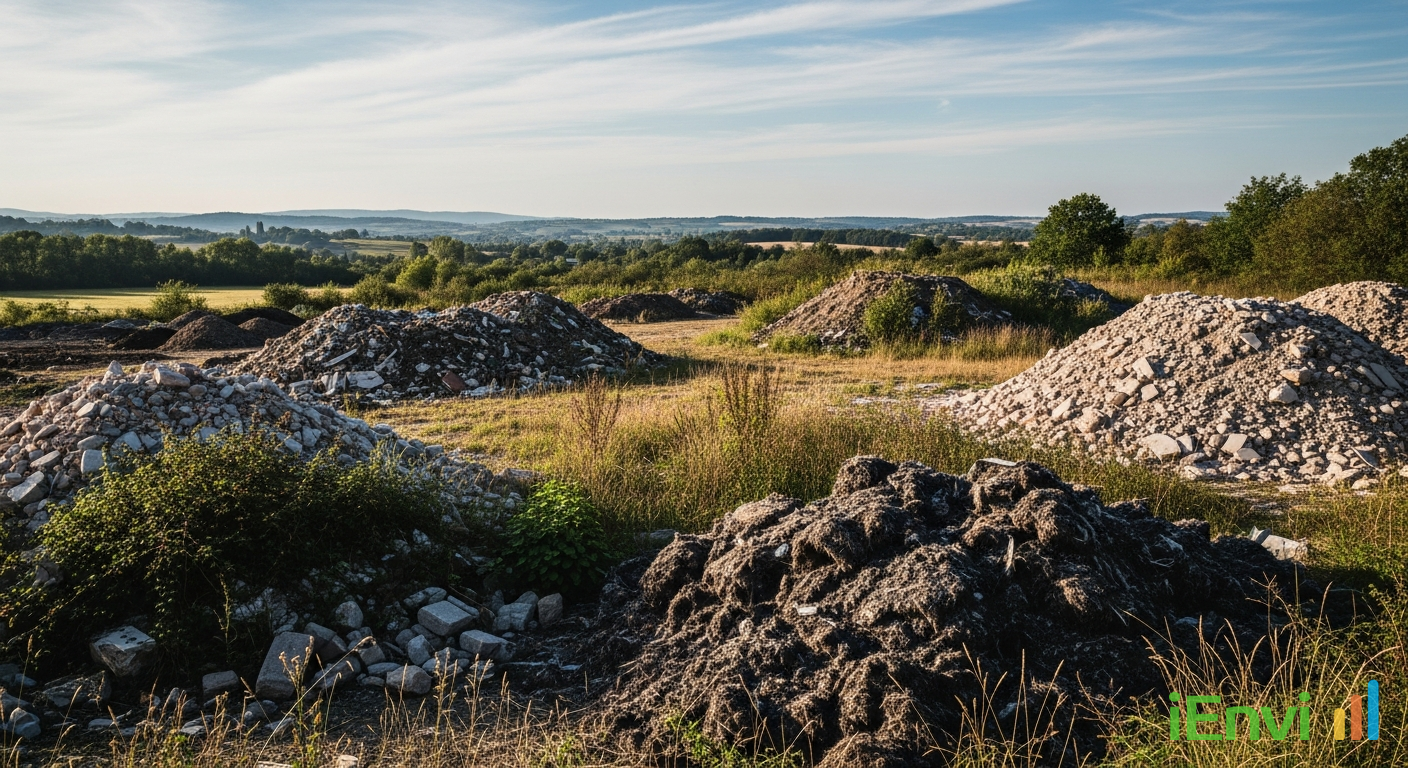
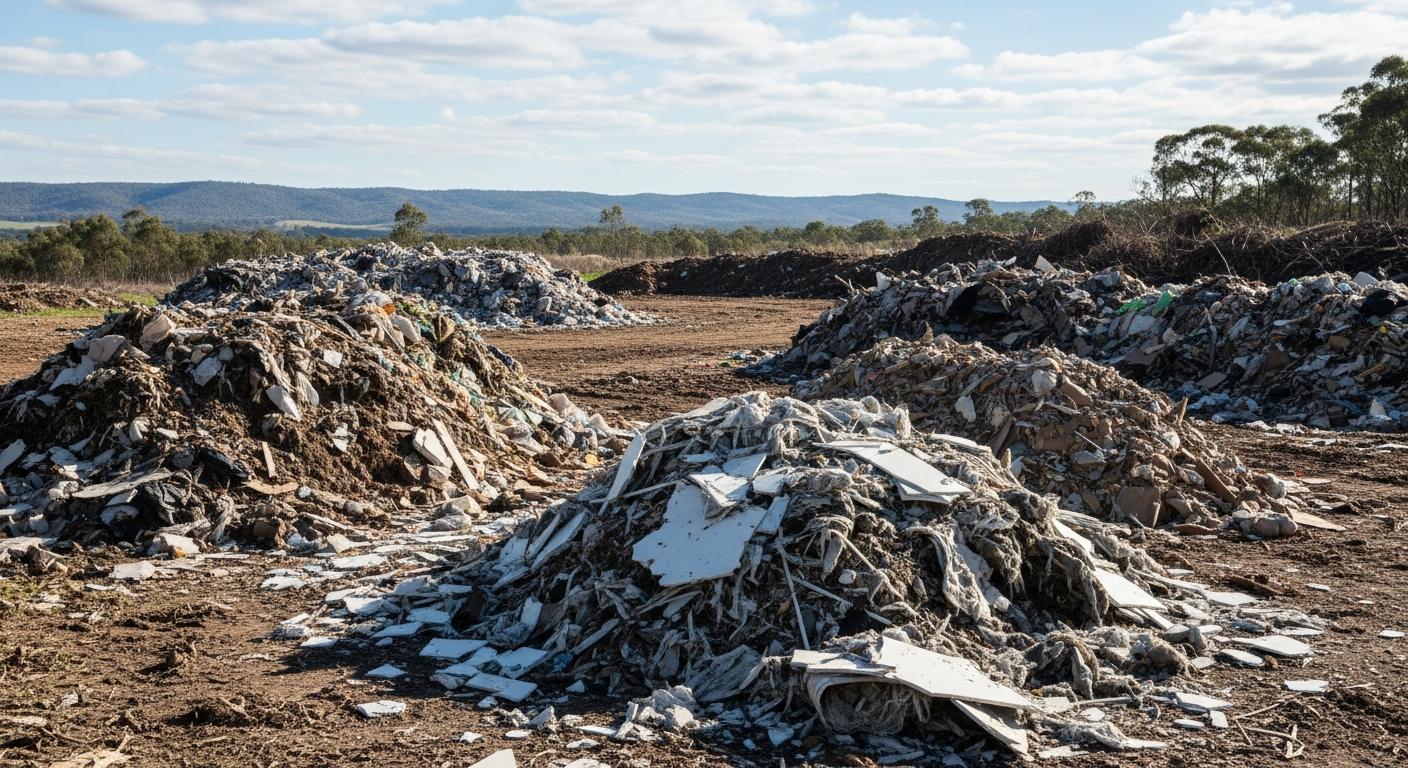
Authorised officers from EPA Victoria and Hume City Council conducted inspections of the Wildwood Road property and found extensive stockpiles of illegally deposited industrial waste. The waste included materials confirmed to contain asbestos, along with smouldering industrial waste that was actively burning at the time of inspection. The burning of waste is a separate and serious concern from an air quality and public health perspective, as uncontrolled combustion of industrial materials can generate toxic particulates, dioxins, and volatile organic compounds depending on the waste composition. EPA Victoria’s pollution-spotting LiDAR drone programme was among the surveillance tools used to identify and document conditions at the site.
The EAN issued to the occupant contains three core requirements, each with a fixed compliance deadline. First, all burning of waste must cease immediately. Second, all industrial waste must be removed to a lawful, licensed waste facility by 28 July 2026, giving the occupant less than four weeks from the date of the notice to arrange transport, classification, and lawful disposal of what is described as a massive quantity of material. Third, independent verification from a qualified occupational hygienist confirming that all asbestos has been safely removed must be provided by 3 August 2026. This hygienist verification requirement is a critical detail: it establishes that visual inspection or self-certification by the occupant or their chosen contractor is not acceptable to the regulator. Formal, independent clearance is required.
The legal consequence of failing to comply with an EAN is substantial. Under section 290(1) of the Environment Protection Act 2017 (Vic), failure to comply with an Environmental Action Notice is a major offence. Penalties for major offences under the Act can reach 4,000 penalty units for individuals and 20,000 penalty units for corporations, with penalty unit values adjusted periodically under Victorian legislation. Beyond financial penalties, non-compliance can trigger court-ordered remediation, injunctions preventing any further use of the land, and in serious cases, personal liability for company officers and directors. The EAN also creates a public record of the enforcement action, which is relevant to any future property transaction or planning application over the affected land.
The involvement of Victoria’s Illegal Waste Dumping Taskforce reflects a deliberate policy decision to treat illegal dumping not as a minor council nuisance issue but as a serious environmental crime warranting coordinated multi-agency resources. The Taskforce brings together EPA Victoria, local councils, the Department of Transport and Planning, Victoria Police, and other agencies to share data and coordinate field responses. Community reporting tools, including the Snap Send Solve application, are actively used to generate intelligence about suspected illegal dumping sites, which are then assessed and, where warranted, inspected. This intelligence-led model means that properties that may have avoided detection under older reactive compliance approaches are now being identified and actioned much earlier.
Australian context: how this enforcement action reflects national regulatory trends in contaminated land and waste management
The Wildwood enforcement action sits within a broader national pattern of escalating regulatory responses to illegal waste dumping and contaminated fill, a problem that has intensified across Australia’s peri-urban fringe as development activity generates large volumes of excavated material that must be disposed of lawfully.
References and related sources
- Primary source: www.hume.vic.gov.au
- epa.vic.gov.au
- epa.vic.gov.au
- epa.vic.gov.au
- epa.vic.gov.au
- NEPM Assessment of Site Contamination
- EPA Victoria
How iEnvi can help
iEnvi provides specialist consulting services relevant to this topic. Our team includes CEnvP Site Contamination Specialists with experience across contaminated land, groundwater, remediation, ecology, and regulatory compliance.
- iEnvi asbestos services
- iEnvi due diligence services
- iEnvi remediation and validation services
- iEnvi expert services and independent review services
This is an iEnvi Machete news summary. Prepared by iEnvi to summarise the source article for contaminated land, groundwater, remediation, approvals and site risk professionals.
Published: 03 Jul 2026
Need advice on this topic? Speak to an iEnvi expert at info@ienvi.com.au or 1300 043 684, or contact us online.
Need advice on this issue? iEnvi provides practical, senior-led environmental consulting across contaminated land, remediation, ecology and environmental risk.
Team credentials Contaminated land services Remediation services Groundwater services Talk to iEnvi