

EPA Victoria redirects $1 million Veolia landfill penalty into community restorative project account
Overview
EPA Victoria is seeking public input on how to allocate $1 million following a November 2025 Supreme Court of Victoria order against Veolia Recycling and Recovery Pty Ltd. The penalty arose after Veolia admitted to breaching its environment protection licence conditions and the General Environmental Duty (GED) under the Environment Protection Act 2017 (Vic) in relation to persistent odour emissions from its Hallam Road landfill facility in Hampton Park, in Melbourne’s south-east. Rather than the funds flowing into consolidated government revenue, the money has been directed into EPA Victoria’s Restorative Project Account, a dedicated mechanism designed to ensure penalties deliver tangible environmental or community benefit to areas affected by the breach.
To determine how those funds will be spent, EPA Victoria is convening a community consultation conference on 9 May 2026. The session will be run by an independent facilitator and is structured to capture community views on funding priorities and project criteria. Importantly, the conference is not a forum for organisations to pitch individual projects. Expressions of interest for formal project submissions will open after the conference has concluded and priorities have been established. This sequenced, community-first approach reflects a deliberate regulatory design choice by EPA Victoria to ensure affected communities have genuine influence over how restorative funds are deployed.
For environmental consultants, ecologists, local government officers, and corporate compliance teams, this case represents more than a single enforcement outcome. It signals a consolidating regulatory preference for restorative justice mechanisms over conventional punitive fines, and it establishes restorative project accounts as a meaningful and growing funding stream for local ecological restoration in Victoria. Understanding how these mechanisms work, and how to engage with them effectively, is becoming an important part of professional practice across environmental disciplines.
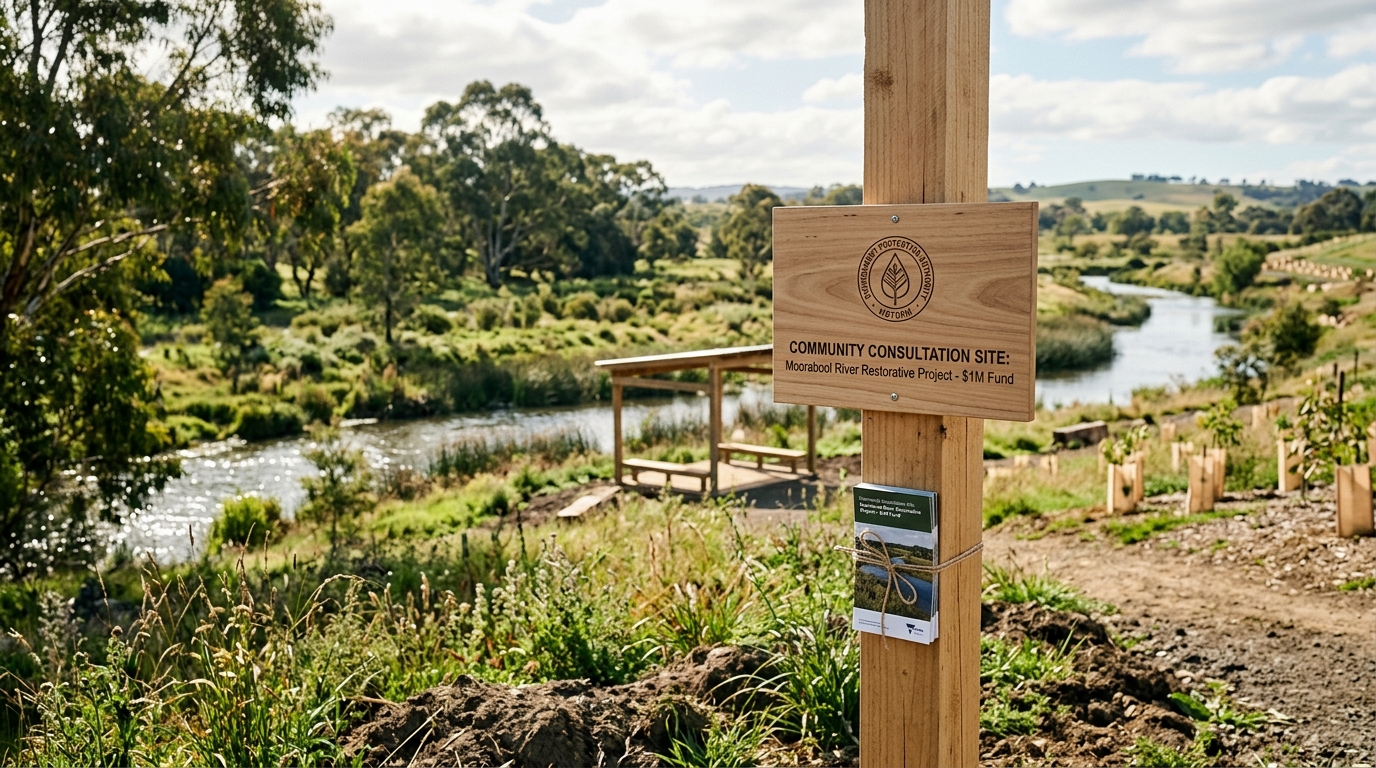
Key details of the Veolia enforcement action and the restorative project mechanism
The Supreme Court of Victoria issued its order against Veolia Recycling and Recovery Pty Ltd in November 2025. The admitted contraventions centred on breaches of the company’s environment protection licence and the General Environmental Duty as defined under the Environment Protection Act 2017 (Vic). The GED is a broad, overarching obligation that requires any person or organisation whose activities create a risk of harm to human health or the environment to understand those risks and take reasonably practicable steps to minimise them. Odour from landfill operations is a well-established category of environmental nuisance that regulators treat seriously, particularly where facilities operate in proximity to residential communities as is the case at Hampton Park.
The $1 million penalty has been placed into EPA Victoria’s Restorative Project Account under the restorative project order framework established by the Environment Protection Act 2017 (Vic). This legislative mechanism allows courts to order that penalties fund projects which restore or enhance the environment or provide community benefit in areas affected by the relevant breach. This is distinct from a standard penalty notice or court-ordered fine, where funds would ordinarily flow to consolidated revenue with no guaranteed local or environmental benefit. The 9 May 2026 community conference is the next formal step in the process, after which EPA Victoria will open expressions of interest for eligible organisations to submit project proposals that align with the community-identified priorities.
A directly comparable precedent from January 2026 illustrates how the mechanism works in practice. EPA Victoria directed $200,000 from a restorative project order against SBI Landfill Pty Ltd to the City of Casey. Those funds are financing a revegetation programme at Brookland Greens Bushland Reserve, involving the planting of more than 30,000 indigenous shrubs and groundcover species. The ecological objective of the project is to create and restore habitat for the southern brown bandicoot, a species listed as endangered under Commonwealth and Victorian legislation. Mass planting is scheduled to commence in mid-2026. This case establishes a clear template: landfill-related enforcement action generating restorative funds directed to local biodiversity outcomes in the same general geographic area as the impacted community.
The scale of the Veolia order, at $1 million, is five times larger than the SBI Landfill allocation and represents a significant quantum for a single restorative project account. For context, $200,000 funded more than 30,000 plantings across a bushland reserve. A $1 million allocation, subject to project design and scope, has the potential to fund a substantially larger ecological restoration programme, community environmental infrastructure, or a combination of projects across the Hampton Park and broader south-east Melbourne community. The precise scope will be determined through the community consultation process and subsequent expressions of interest.
Australian regulatory context: restorative orders under the Environment Protection Act 2017 (Vic) and national parallels
The restorative project order mechanism sits within Victoria’s substantially reformed environment protection framework. The Environment Protection Act 2017 (Vic), which commenced in July 2021, introduced or strengthened several key regulatory tools, including the GED, environment reference standards, and restorative project orders. The GED in particular shifted the regulatory approach from a purely prescriptive, licence-based model toward a broader duty of care framework, placing ongoing responsibility on duty holders to proactively manage environmental risk rather than simply comply with specific permit conditions.
Background and context
Headline: EPA Victoria Calls for Community Input on $1M Restorative Project Following Veolia Landfill Odour Case
In a major example of environmental penalties being redirected to local communities, EPA Victoria is calling for public input on how to spend $1 million paid by Veolia Recycling & Recovery Pty Ltd. The funds stem from a Supreme Court of Victoria order in November 2025, after Veolia admitted to breaching its licence conditions and the General Environmental Duty (GED) regarding odour issues at its Hallam Road landfill in Hampton Park.
Rather than the penalty disappearing into consolidated government revenue, it has been placed into the EPA’s Restorative Project Account. The EPA is now inviting community members and eligible organisations to a conference on May 9, 2026, to share community views on priorities for the funds. According to EPA and corroborating news sources, the conference is a community consultation session run by an independent facilitator, at which EPA will present project criteria and examples of successful projects — not a forum for organisations to 'pitch' projects. Expressions of interest for project submissions will open after the conference.. This mechanism is already proving effective for local biodiversity: in January 2026, the City of Casey was allocated $200,000 from a restorative project order against SBI Landfill Pty Ltd to fund a revegetation project — specifically the planting of more than 30,000 indigenous shrubs and groundcover at Brookland Greens Bushland Reserve to create habitat for the endangered southern brown bandicoot. Mass planting is scheduled to begin mid-2026..
Why it matters for environmental professionals and their clients:
This case highlights the increasing regulatory preference for Restorative Project Orders under the Environment Protection Act 2017 (Vic). For environmental consultants, ecologists, and local councils, these restorative accounts are becoming a significant new funding stream for local ecological restoration, biodiversity enhancement, and community environmental initiatives. For corporate operators and ESG teams, it demonstrates that enforcement is increasingly focused on direct, visible reparations to the affected local environment rather than purely punitive fines, changing the landscape of corporate environmental liability.
References and related sources
- Primary source: www.epa.vic.gov.au
- EPA Victoria
How iEnvi can help
iEnvi provides specialist consulting services relevant to this topic. Our team includes CEnvP Site Contamination Specialists with experience across contaminated land, groundwater, remediation, ecology, and regulatory compliance.
- iEnvi ESG services
- iEnvi contaminated land investigation services
- iEnvi remediation and validation services
- iEnvi expert services and independent review services
This is an iEnvi Machete news summary. Prepared by iEnvi to summarise the source article for contaminated land, groundwater, remediation, approvals and site risk professionals.
Published: 04 Apr 2026
Need advice on this topic? Speak to an iEnvi expert at info@ienvi.com.au or 1300 043 684, or contact us online.
Need advice on this issue? iEnvi provides practical, senior-led environmental consulting across contaminated land, remediation, ecology and environmental risk.
Team credentials Contaminated land services Remediation services Groundwater services Talk to iEnvi