
Overview
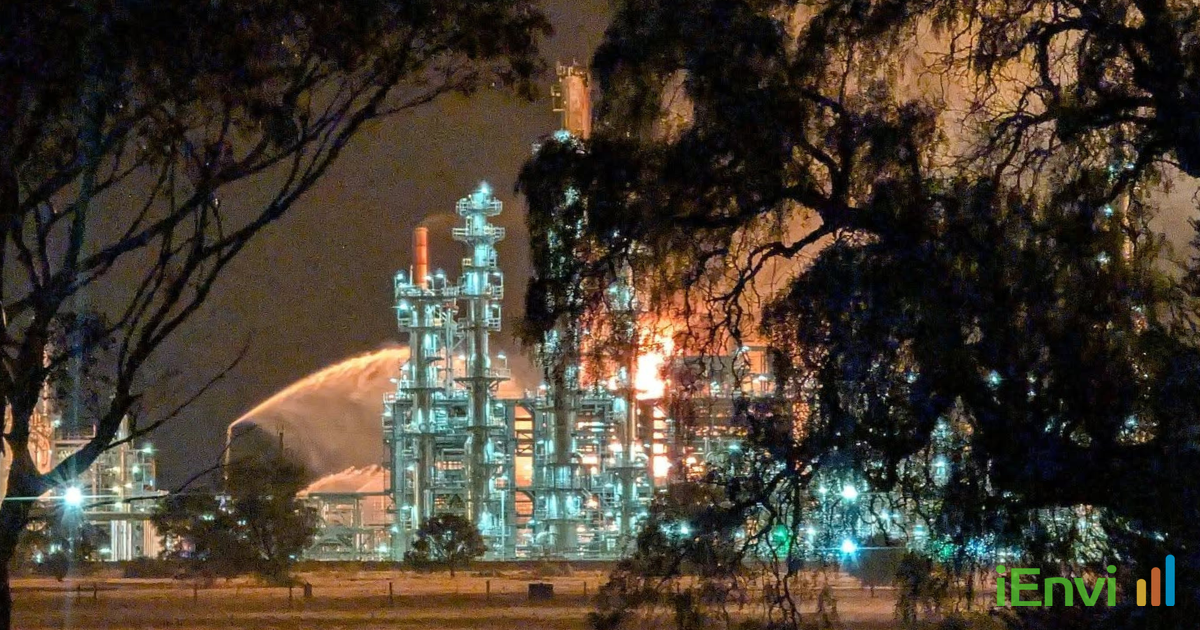
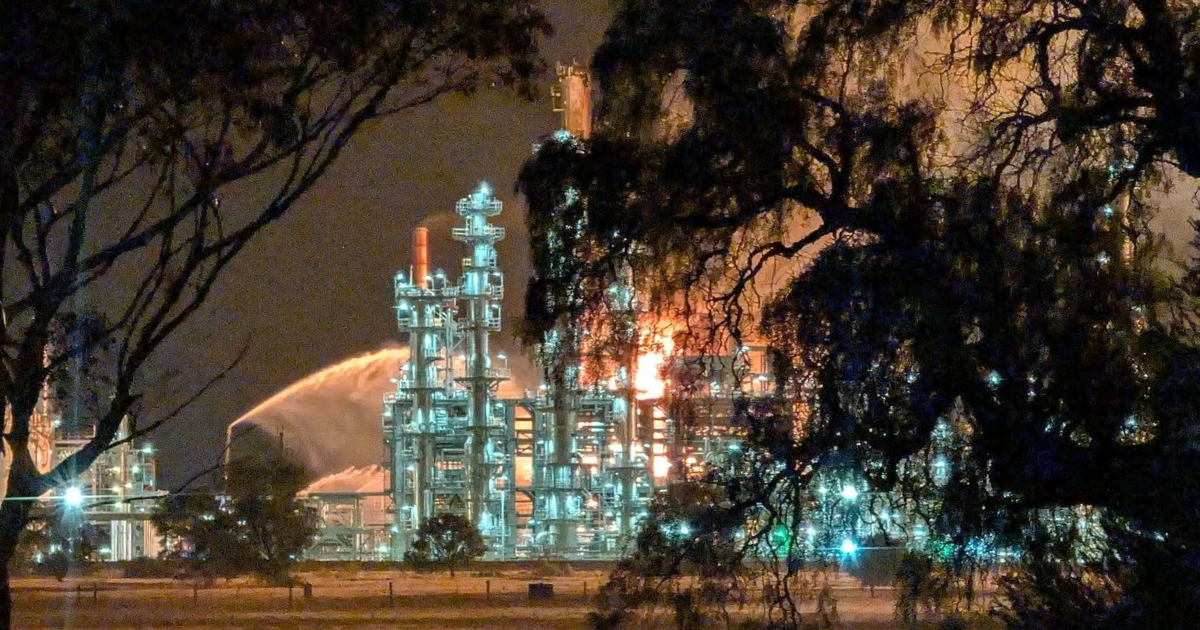
A major fire at the Viva Energy Geelong oil refinery, which broke out late on Wednesday night, 15 April 2026, has triggered an urgent water quality warning from EPA Victoria for Corio Bay and surrounding waterways. The blaze originated in the refinery’s motor gasoline (MOGAS) unit following a significant gas leak, and while Fire Rescue Victoria crews successfully contained the fire, the incident has produced a secondary environmental emergency. Contaminated firewater runoff carrying dissolved hydrocarbons, highly flammable materials, and potentially benzene has entered the marine environment of Corio Bay, prompting continuous water quality monitoring and a public advisory urging residents and their pets to avoid all contact with affected waterways until further notice.
This event is significant for environmental professionals not because refinery fires are unusual, but because the secondary environmental consequences of firefighting at large industrial facilities are frequently underestimated in emergency planning. The volumes of water required to suppress a major blaze at a Major Hazard Facility (MHF) are enormous, and that water picks up whatever it contacts on its path off-site. Dissolved hydrocarbons, firefighting foam residues, and heat-mobilised contaminants from process equipment and bunded storage areas can all enter surface water catchments if secondary containment infrastructure is overwhelmed or fails. Corio Bay is a semi-enclosed marine embayment with limited tidal flushing, meaning contaminants introduced during this event may persist and accumulate in sediments long after the immediate emergency is resolved.
For practitioners advising industrial clients, developers seeking to acquire MHF-adjacent land, or local councils managing foreshore areas near heavy industry, this incident illustrates the environmental liability associated with acute industrial emergencies and how they translate into complex, long-term regulatory obligations under Victorian legislation. The regulatory workstream triggered by this event will run well beyond the fire suppression phase and will involve multiple technical disciplines across an extended assessment and remediation timeline.
Key details of the Viva Energy Geelong refinery firewater runoff incident
The fire originated in the MOGAS unit of the Viva Energy Geelong refinery on the evening of 15 April 2026. The MOGAS unit is responsible for producing motor gasoline blendstocks, meaning the materials involved in the fire and the resulting runoff include light aromatic hydrocarbons characteristic of petroleum spirit. The primary contaminants of concern identified in the runoff include benzene, toluene, ethylbenzene, and xylenes, collectively referred to as BTEX, as well as broader fractions of total recoverable hydrocarbons (TRH). Benzene is of particular regulatory concern because it is a known human carcinogen and is acutely toxic to aquatic organisms at low concentrations, with the Australian and New Zealand Guidelines for Fresh and Marine Water Quality (ANZG 2018) identifying trigger values for benzene in marine environments at levels as low as 95 micrograms per litre (µg/L) for 99 percent species protection.
EPA Victoria has confirmed it is actively assisting with the emergency response and is conducting atmospheric monitoring during the combustion and post-combustion phases. The agency has issued public warnings advising all residents and pet owners to avoid contact with Corio Bay waters and any adjacent affected waterways until continuous water quality testing confirms contaminant concentrations have returned to acceptable levels. The Environment Protection Regulations 2021 and the associated Environmental Reference Standards (ERS), made under the Environment Protection Act 2017 (Vic), establish the baseline water quality objectives that will frame EPA Victoria’s assessment of exceedances in the affected marine environment. These standards set specific trigger values for petroleum hydrocarbons, BTEX compounds, and related parameters in marine and estuarine receiving waters.
The technical scope of the environmental assessment triggered by this event is broad. Surface water and marine water quality sampling will be required across the affected reach of Corio Bay, including spatial characterisation of the contamination plume. Sediment sampling will be necessary to determine whether hydrocarbons have partitioned into the benthic environment, given that semi-volatile and less soluble hydrocarbon fractions tend to adsorb to fine sediments in sheltered embayments. Groundwater investigation near the refinery boundary will also be warranted to evaluate whether contaminated runoff has infiltrated the shallow aquifer system and whether there is a pathway to the bay via groundwater discharge. Each of these workstreams requires mobilisation of specialist consultants, laboratory analysis, and reporting to the regulator under the Environment Protection Act 2017 (Vic).
The Geelong refinery is one of only two remaining oil refineries operating in Australia, the other being the Ampol Lytton facility in Queensland. Its strategic significance to national fuel supply has been highlighted by the incident itself, with reports indicating that fuel production at the site has been disrupted and that imports will be required to fill the supply gap while the MOGAS unit is taken offline for inspection and repair. This operational context does not diminish the environmental obligations of the facility operator under Victorian law, but it does indicate the scale and complexity of the industrial asset involved.
Australian regulatory context: Environment Protection Act 2017 (Vic), Environment Protection Regulations 2021, and Major Hazard Facility obligations
The central regulatory instrument governing this incident is the Environment Protection Act 2017 (Vic), which introduced the General Environmental Duty (GED) as a foundational obligation for all persons whose activities may give rise to risks of harm to human health or the environment. The GED requires duty holders to understand those risks and to take reasonably practicable steps to minimise them. For a Major Hazard Facility operator such as Viva Energy, this duty applies across the full lifecycle of an incident, including the management of firewater runoff and the remediation of any environmental harm that results. Where contamination has entered Corio Bay, the operator faces potential liability under the Act’s pollution of waters provisions, as well as obligations to notify EPA Victoria and to undertake an environmental audit if required by the regulator. Environmental consultants engaged by the operator, or independently by EPA Victoria, will play a central role in quantifying the extent of contamination, assessing risks to beneficial uses of the bay, and developing a remediation and management plan that satisfies the regulator’s requirements under the current legislative framework.
References and related sources
- Primary source: timesnewsgroup.com.au
- odt.co.nz
- EPA Victoria
How iEnvi can help
iEnvi provides specialist consulting services relevant to this topic. Our team includes CEnvP Site Contamination Specialists with experience across contaminated land, groundwater, remediation, ecology, and regulatory compliance.
- iEnvi groundwater services
- iEnvi remediation and validation services
- iEnvi expert services and independent review services
This is an iEnvi Machete news summary. Prepared by iEnvi to summarise the source article for contaminated land, groundwater, remediation, approvals and site risk professionals.
Published: 18 Apr 2026
Need advice on this topic? Speak to an iEnvi expert at info@ienvi.com.au or 1300 043 684, or contact us online.
Need advice on this issue? iEnvi provides practical, senior-led environmental consulting across contaminated land, remediation, ecology and environmental risk.
Team credentials Contaminated land services Remediation services Groundwater services Talk to iEnvi