
EPA Victoria Prosecution Over Site Investigation Negligence
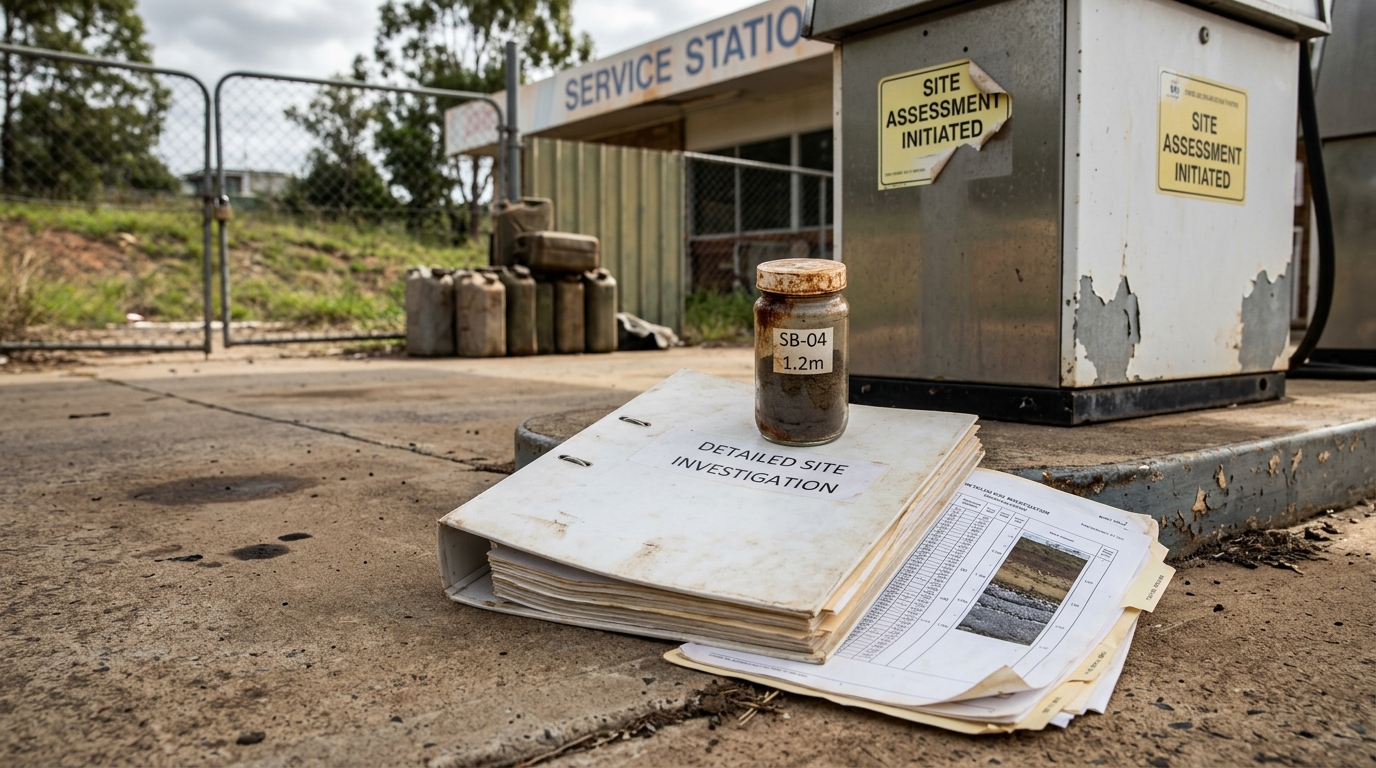
On 28 April 2026, EPA Victoria published the outcome of a successful prosecution against Dimitrios Andrianopoulos, the sole director of a company owning a former petroleum service station in Collingwood, Victoria. The prosecution resulted in a fine of $3,000, an order to pay EPA costs of $4,599.50, and the issue of a Section 331 General Restoration and Prevention Order under the Environment Protection Act 2017 (Vic). The facts of the case are straightforward but the regulatory precedent is not: a site owner commissioned a Detailed Site Investigation, received a clear finding of offsite hydrocarbon and BTEX groundwater migration risk, and then ignored both the consultant’s recommendations and a series of formal statutory notices from the regulator for months.
The case is a direct demonstration of the enforcement pathway available to EPA Victoria under the Environment Protection Act 2017 (Vic) when site owners fail to act on known contamination risks. Critically, the regulator anchored its statutory notices to the findings and recommendations already documented in the site’s own consultant-prepared DSI. This is not a case where the EPA independently identified contamination and imposed obligations. The site owner’s own environmental assessment generated the evidential foundation for prosecution, and the owner’s subsequent inaction provided the breach. For property owners, developers, landlords, and their legal advisers operating in Victoria, this outcome confirms that contaminated land reports prepared on their behalf carry legal standing that cannot be set aside through inaction.
For contaminated land consultants across Australia, this case provides concrete evidence that technical recommendations documented in a DSI carry weight that extends beyond the client relationship. When a DSI identifies a risk of offsite contaminant migration and recommends further delineation works, those recommendations become a reference point for statutory enforcement. Understanding the mechanics of how that enforcement pathway operates is now an essential part of client management, particularly when clients are reluctant to proceed with recommended follow-up investigations.
Key details of the EPA Victoria Collingwood service station prosecution
The factual sequence in this case began with a Detailed Site Investigation conducted in 2022 by the site’s environmental consultant. The DSI identified that historical underground petroleum storage systems (UPSS) at the former service station had caused hydrocarbon, BTEX (benzene, toluene, ethylbenzene, and xylene), and MAH (monoaromatic hydrocarbon) contamination in both soil and groundwater. Importantly, the DSI findings included a specific assessment that contamination was likely migrating offsite, representing a risk to receptors beyond the subject property boundary. This finding of likely offsite migration is the critical threshold that triggers a duty to further delineate under contemporary contaminated land practice and, as this prosecution confirms, under the regulatory framework.
In February 2023, EPA Victoria issued an Environmental Action Notice (EAN) to the company under Section 290 of the Environment Protection Act 2017 (Vic). The EAN required the company to undertake the further sampling that the DSI had already recommended. Section 290(1) of the Act empowers the EPA to issue an EAN requiring a person to take specified action to prevent or minimise environmental harm, and Section 290(3) makes non-compliance a statutory offence. Rather than engaging with the notice, the company ignored EPA emails and phone calls for seven months. This extended period of non-engagement is a significant aggravating factor and distinguishes this case from a situation involving a dispute about the scope of required works.
Following the company’s failure to respond to the EAN, the EPA escalated by issuing an Information Gathering Notice (IGN) under Section 255 of the Act. The IGN specifically demanded equipment integrity testing data for the underground fuel tanks on the property. Section 255(2) of the Act makes it an offence to fail to comply with an IGN. The company’s failure to comply with both the EAN and the IGN formed the basis for the prosecution. The penalties imposed reflect the Magistrates’ Court jurisdiction and are at the lower end of what the Act permits, but the General Restoration and Prevention Order issued under Section 331 carries ongoing obligations that go well beyond the financial penalties and will bind the site owner to remediation and prevention activities.
The combined financial outcome of $3,000 in fines plus $4,599.50 in EPA costs totals $7,599.50. While this figure may appear modest relative to the cost of the remediation works the owner was trying to avoid, the Section 331 Order now compels those works to be undertaken in any event, under regulatory supervision and with the prospect of further enforcement action for any subsequent non-compliance. The practical financial exposure created by the period of non-compliance is therefore substantially greater than the court-imposed penalties alone suggest.
Australian context: UPSS regulation, offsite migration duties, and contaminated land enforcement frameworks
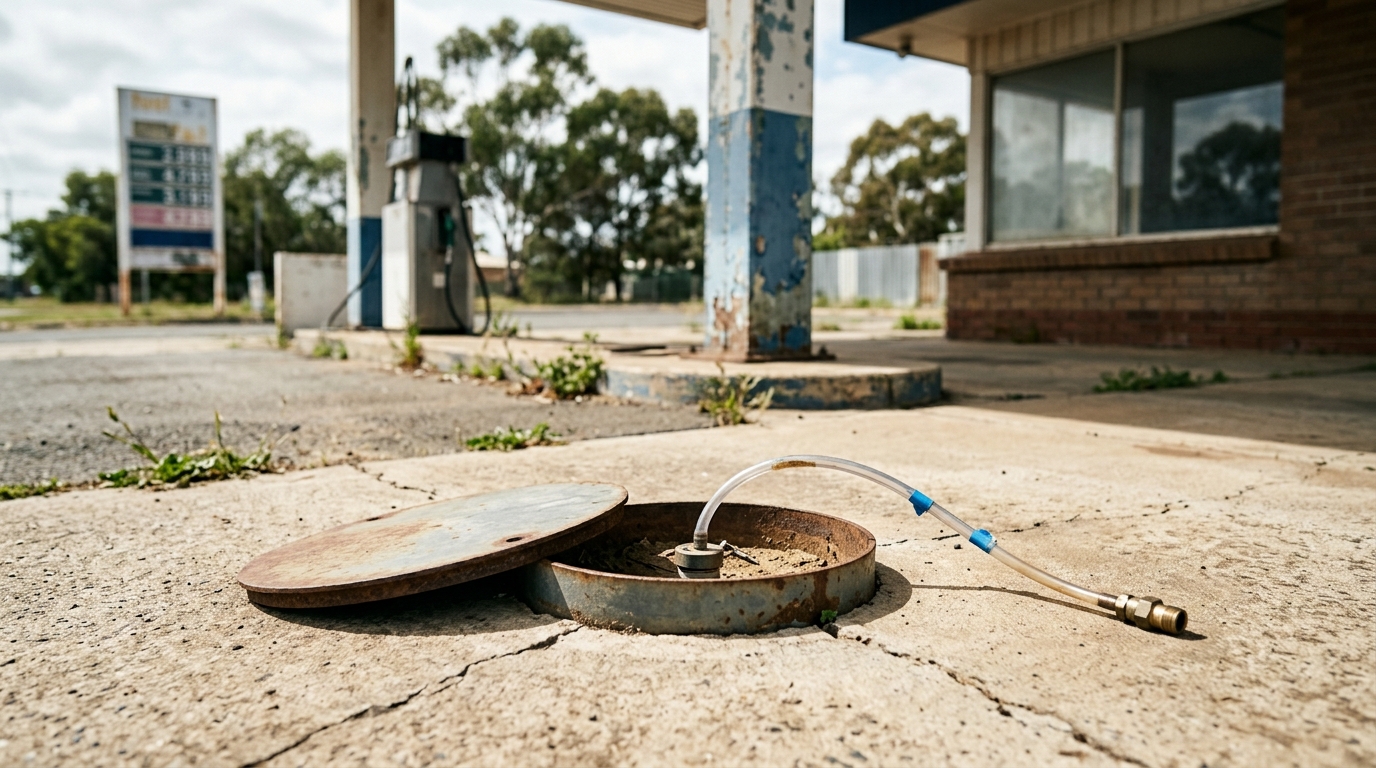
Underground petroleum storage systems are among the most commonly encountered contamination sources in Australian contaminated land practice. BTEX compounds, particularly benzene, are regulated at very low concentrations under the National Environment Protection (Assessment of Site Contamination) Measure 2013 (NEPM 2013). The NEPM 2013 health investigation level for benzene in groundwater under a residential land use scenario is 1 microgram per litre (1 µg/L), reflecting its classification as a Group 1 carcinogen. Most states and territories have adopted UPSS-specific regulations that impose management obligations on landowners and operator
References and related sources
- Primary source: www.epa.vic.gov.au
- https://www.epa.vic.gov.au/about-epa/public-registers/epa-enforcement-register/a
- EPA Victoria
How iEnvi can help
iEnvi provides specialist consulting services relevant to this topic. Our team includes CEnvP Site Contamination Specialists with experience across contaminated land, groundwater, remediation, ecology, and regulatory compliance.
- iEnvi contaminated land services
- iEnvi remediation and validation services
- iEnvi expert services and independent review services
This is an iEnvi Machete news summary. Prepared by iEnvi to summarise the source article for contaminated land, groundwater, remediation, approvals and site risk professionals.
Published: 03 May 2026
Need advice on this topic? Speak to an iEnvi expert at info@ienvi.com.au or 1300 043 684, or contact us online.
Need advice on this issue? iEnvi provides practical, senior-led environmental consulting across contaminated land, remediation, ecology and environmental risk.
Contaminated land services Remediation services Groundwater services Ecology consulting Talk to iEnvi