
EPA Victoria Revokes Sunshine Landfill Licence: What the Kealba Enforcement Decision Means for Landfill Operators, Developers and Contaminated Land Practitioners
Overview of the Sunshine Landfill Environmental Enforcement
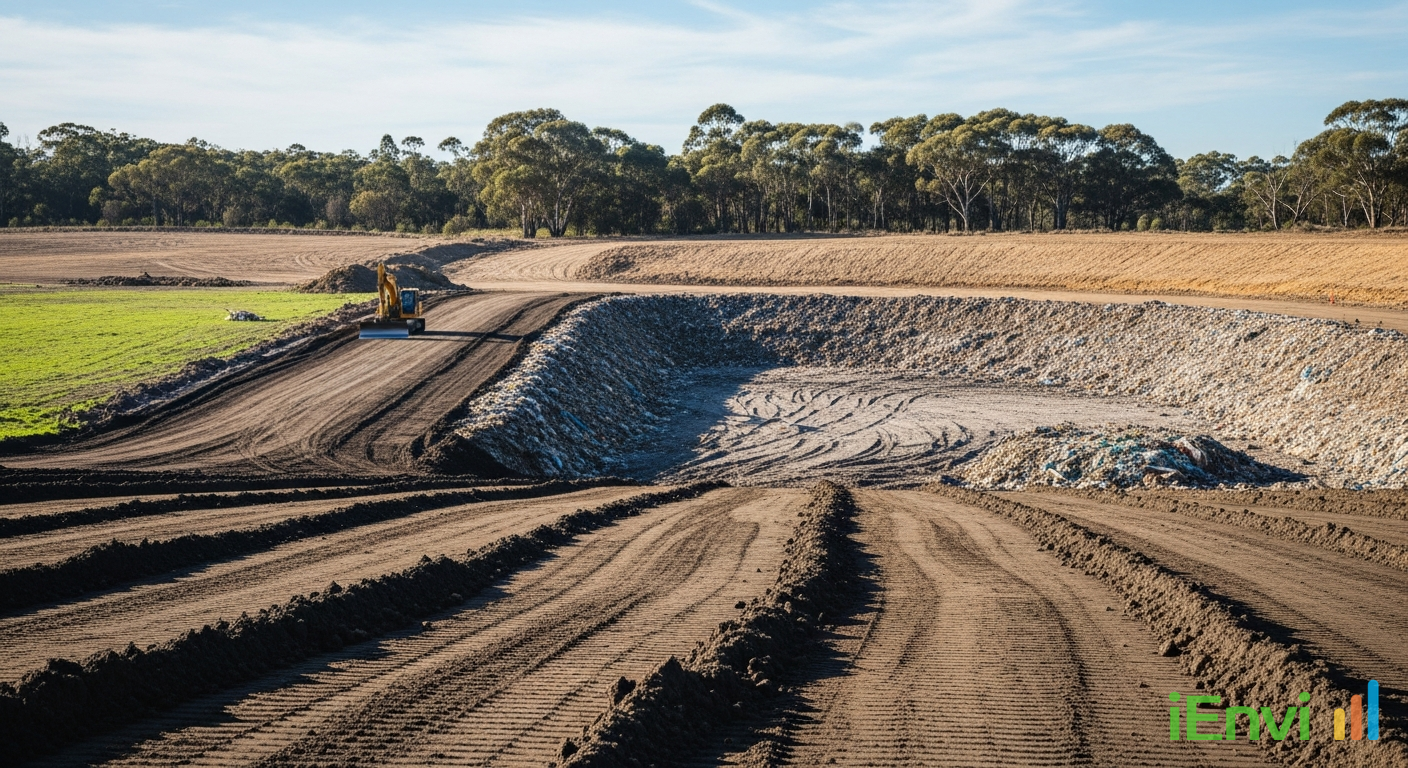
On 27 July 2023, EPA Victoria took the extraordinary step of revoking the operating licence of Barro Group for the Sunshine Landfill at Kealba, in Melbourne’s western suburbs within the City of Brimbank. The revocation permanently ends all waste acceptance at the facility and represents one of the most significant enforcement actions against a landfill operator in Victoria’s regulatory history. The decision follows years of community complaints, regulatory notices, and a protracted failure by the operator to control persistent underground fires and severe odour emissions that have affected residents across the surrounding Brimbank area.
EPA Victoria CEO Lee Miezis was direct in framing the regulatory intent: “Barro Group do not get to walk away from the site and leave taxpayers to foot the bill.” That statement is not merely rhetorical. EPA Victoria has simultaneously issued a new environmental notice legally binding Barro Group to complete full site remediation, including the extinguishing of the remaining subsurface hotspot. The remediation programme is expected to take at least five years, meaning the operator faces a substantial ongoing financial and technical commitment despite no longer being permitted to operate the facility commercially.
For environmental professionals, developers, lawyers advising industrial clients, and local government planners, this outcome crystallises something that has long been true in theory but rarely tested so publicly in practice: the closure or revocation of a waste licence does not extinguish environmental liability. The enforcement action operates under the General Environmental Duty (GED) established by the Environment Protection Act 2017 (Vic), and its implications extend well beyond Victoria’s landfill sector.
Key details of the Sunshine Landfill enforcement action
The Sunshine Landfill at Kealba has been the subject of escalating regulatory scrutiny for several years. The facility, operated by Barro Group, received municipal solid waste and other waste streams over its operational life. The core technical problem driving enforcement was the development and persistence of subsurface thermal anomalies, commonly referred to as hotspots, caused by exothermic reactions within the landfill body. These underground fires generate landfill gas, including methane and carbon dioxide, as well as volatile organic compounds (VOCs) that migrate through the landfill body and can emerge at surface or into adjacent soils and groundwater. The odour impacts on the Brimbank community, which surrounds the site, were documented and persistent.
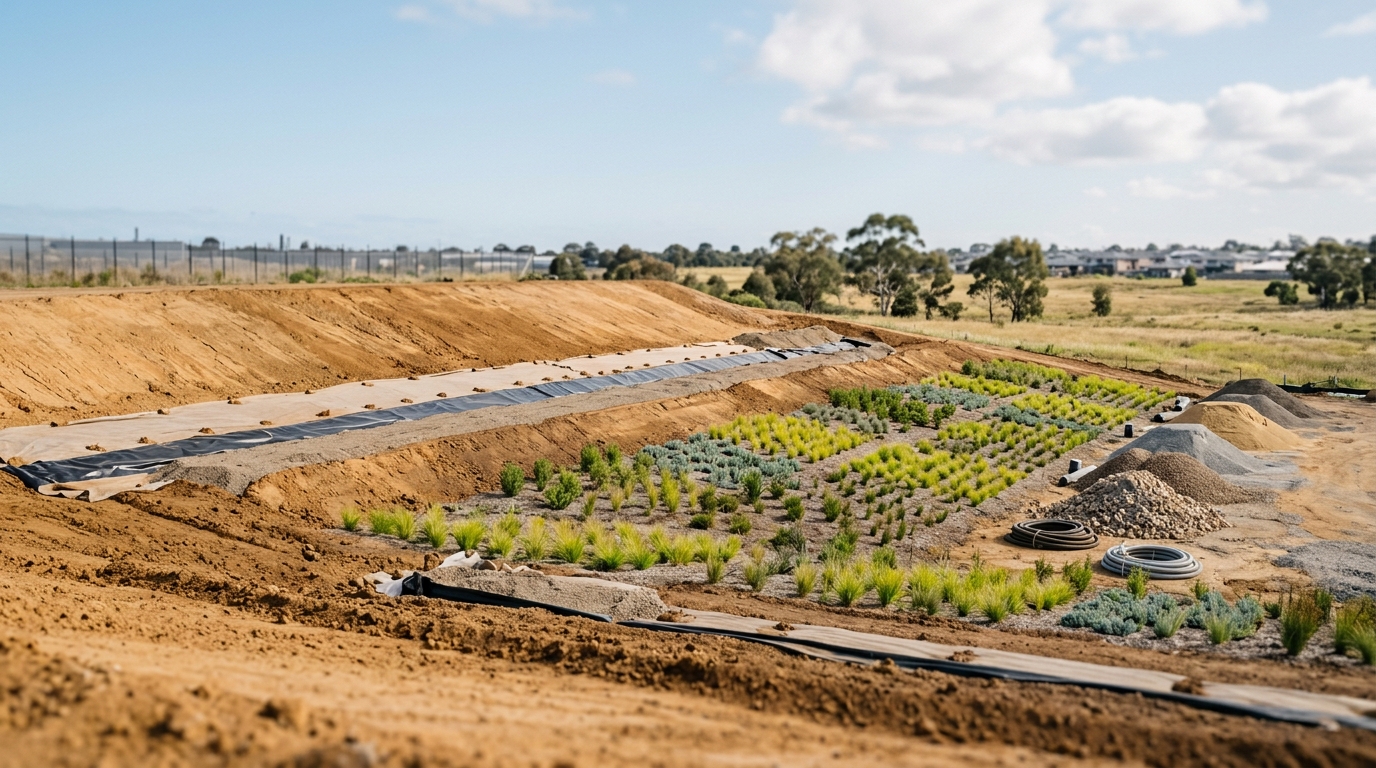
The remediation timeline of at least five years to extinguish the final remaining hotspot reflects the genuine technical complexity of managing subsurface combustion in a closed landfill environment. Controlling underground combustion requires careful management of oxygen ingress, subsurface gas pressure, moisture content, and temperature. Interventions typically involve a combination of oxygen restriction through barrier systems or targeted grouting, extraction and treatment of landfill gas via vertical wells or horizontal collectors, active temperature monitoring through subsurface probe networks, and in some cases introduction of inert materials to suppress reactivity. There is no simple or rapid solution; the thermal mass within a large landfill body can sustain reactions for years even after active intervention begins.
The regulatory framework governing this enforcement action is the Environment Protection Act 2017 (Vic), which introduced the General Environmental Duty as a broad, positive duty on all persons conducting activities that may give rise to material environmental harm. The GED requires duty holders to understand the risks of their activities and to take reasonably practicable steps to minimise those risks. Critically, the GED does not expire upon licence revocation. EPA Victoria’s use of an environmental notice to bind Barro Group to post-closure remediation obligations demonstrates that the GED functions as a standalone legal instrument independent of the operating licence. EPA Publication 788, the Best Practice Environmental Management guideline for the siting, design, operation and rehabilitation of landfills (the Landfill BPEM), provides the technical framework against which landfill management and rehabilitation performance is assessed in Victoria.
The financial exposure created by this enforcement action is substantial. A five-year active remediation programme on a closed landfill site, covering hotspot management, landfill gas extraction and treatment, groundwater monitoring, surface emissions monitoring, and community odour management, represents a cost commitment that could run into tens of millions of dollars. The environmental notice creates an enforceable legal obligation, meaning non-compliance exposes Barro Group to further regulatory action, including potential prosecution under the Environment Protection Act 2017 (Vic). The case establishes that EPA Victoria is prepared to use the full suite of its post-2017 regulatory powers against operators who fail to meet their environmental obligations, including at the post-closure stage.
Australian context: GED obligations, landfill post-closure liability, and parallel frameworks across QLD, NSW, VIC and SA
Victoria’s Environment Protection Act 2017 represents the most explicit codification of a general environmental duty in Australian legislation, but the underlying principle that environmental liability survives operational cessation is recognised across all Australian jurisdictions. In New South Wales, the Protection of the Environment Operations Act 1997 (NSW) establishes the primary licensing and enforcement framework for scheduled activities including landfills. Under that Act, the Environment Protection Authority NSW holds broad powers to issue clean-up notices and prevention notices that operate independently of whether a licence remains current, meaning operators of closed or unlicensed facilities can remain subject to enforceable remediation obligations. The duty to notify of pollution events and the capacity for the NSW EPA to recover costs of clean-up actions from responsible persons further reinforces that post-closure liability is a live and enforceable concern in that jurisdiction.
References and related sources
- Primary source: www.epa.vic.gov.au
- brimbank.vic.gov.au
- epa.vic.gov.au
- EPA Victoria
How iEnvi can help
iEnvi provides specialist consulting services relevant to this topic. Our team includes CEnvP Site Contamination Specialists with experience across contaminated land, groundwater, remediation, ecology, and regulatory compliance.
- iEnvi remediation services
- iEnvi groundwater services
- iEnvi expert services and independent review services
This is an iEnvi Machete news summary. Prepared by iEnvi to summarise the source article for contaminated land, groundwater, remediation, approvals and site risk professionals.
Published: 30 Jul 2026
Need advice on this topic? Speak to an iEnvi expert at info@ienvi.com.au or 1300 043 684, or contact us online.
Need advice on this issue? iEnvi provides practical, senior-led environmental consulting across contaminated land, remediation, ecology and environmental risk.
Team credentials Site remediation Contaminated land services Groundwater services Talk to iEnvi