
Overview
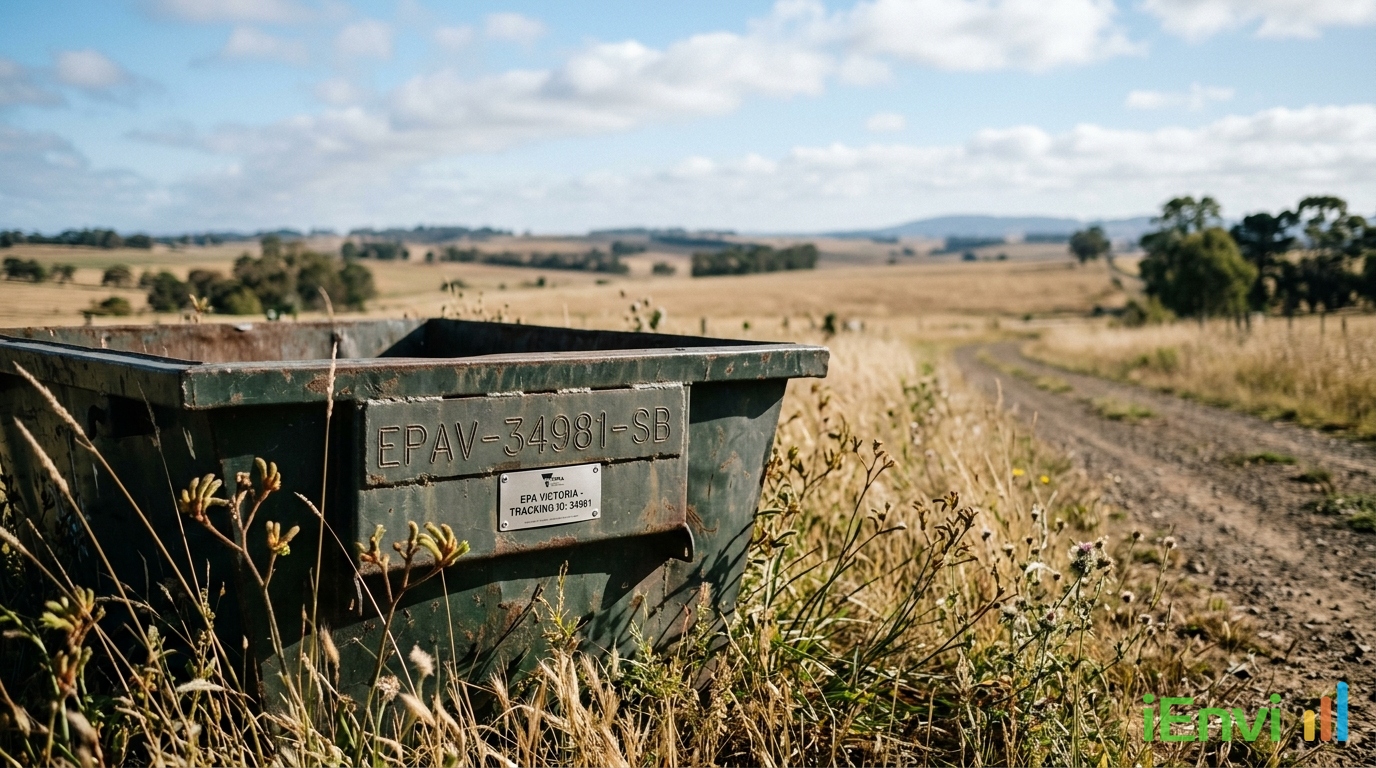
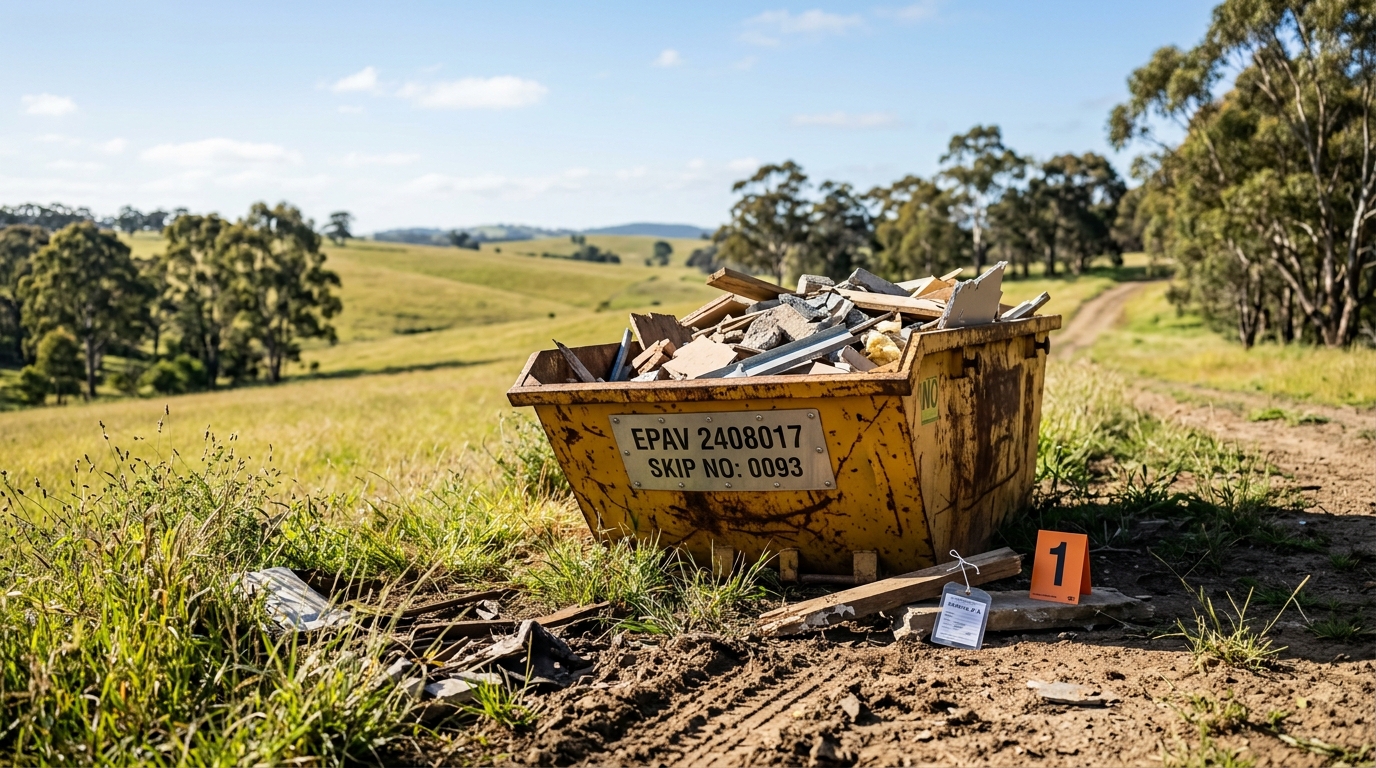
EPA Victoria has fined Ravenhall-based skip bin contractor Victoria Skip Bins Pty Ltd $10,176 following an illegal waste dumping operation at a rural property in Beveridge, north of Melbourne. Between 20 December 2025 and 5 January 2026, operatives cut padlocks to access the property and deposited 104 cubic metres of industrial, construction, and household waste across 13 skip-bin loads. The regulator described the incident as a “reverse burglary,” a term that captures the unusual nature of the offence: rather than removing property from a site, the offenders used the rural property as an unauthorised waste repository. The enforcement action, published by EPA Victoria on 31 March 2026, resulted in both a financial penalty and a regulatory notice requiring the company to remove the deposited material and arrange lawful disposal.
EPA officers investigating the case located discarded electrical appliance packaging within the waste pile and traced the serial numbers on those boxes back to the original purchasers and installers. Those installers, along with other contractors and private citizens whose waste was represented in the pile, confirmed they had engaged Victoria Skip Bins Pty Ltd to remove and lawfully dispose of their waste. The paper trail built from appliance serial numbers effectively reconstructed the supply chain and identified the responsible party with a level of precision that would have been difficult to achieve through conventional means.
For environmental practitioners, waste generators, principal contractors, and rural landowners, this case carries implications well beyond the headline fine. It demonstrates that EPA Victoria is applying forensic intelligence-gathering techniques to waste enforcement, and it signals that the regulatory burden of demonstrating lawful waste disposal rests not just with the disposal contractor but potentially with every party in the chain of custody.
Key details of the Beveridge illegal dumping enforcement action
The volume of waste deposited at the Beveridge property was substantial. At 104 cubic metres across 13 skip-bin loads, the material included a mixture of industrial, construction, and household waste. This categorisation is relevant because construction and demolition waste streams commonly contain hazardous constituents including asbestos-containing materials, lead-based paint residues, and in some legacy sites, materials with elevated concentrations of heavy metals. Household waste can introduce organic contaminants and persistent chemicals depending on the nature of the appliances and materials discarded. The presence of electrical appliances in the waste stream, evidenced by the packaging boxes that ultimately led to the prosecution, is also relevant given that end-of-life electrical equipment can contain polybrominated diphenyl ethers (PBDEs), heavy metals such as mercury and cadmium, and in older equipment, polychlorinated biphenyls (PCBs). These contaminants are characteristic of the waste categories present at the site and are noted here as general considerations for mixed waste streams of this type; the EPA Victoria source report does not itemise specific contaminants detected at Beveridge.
The financial penalty of $10,176 was issued under the illegal dumping provisions of the Environment Protection Act 2017 (Vic). The Act, which came into full force on 1 July 2021, introduced a significantly strengthened regulatory framework including the General Environmental Duty (GED). The GED places a positive obligation on any person or organisation whose activities create a risk of harm to human health or the environment to understand those risks and take reasonably practicable steps to minimise them. In the context of waste management, this extends to verifying that waste contractors are disposing of material at licensed facilities. A company that engages a skip bin contractor and accepts a receipt or docket without verifying the final disposal destination is not automatically absolved of responsibility under the GED if that waste is subsequently found at an unlawful site.
The investigative technique of tracing appliance serial numbers through to original installers and purchasers is noteworthy from a regulatory intelligence standpoint. Serial numbers recorded on appliances such as air conditioners, dishwashers, or refrigerators are typically registered with manufacturers and distributors, and installation records are maintained by licensed tradespeople. By cross-referencing waste contents against these databases, EPA officers were able to establish a clear link between the waste deposited at Beveridge and the contractors who paid Victoria Skip Bins Pty Ltd to remove it. This forensic approach mirrors supply chain auditing techniques used in customs enforcement and financial crime investigation and represents a meaningful escalation in the sophistication of environmental enforcement in Victoria.
Beyond the fine, Victoria Skip Bins Pty Ltd was issued a regulatory notice requiring site clean-up and lawful disposal of the deposited material. Regulatory notices under the Environment Protection Act 2017 (Vic) are binding instruments, and non-compliance can result in significantly higher penalties. The cost of physically removing 104 cubic metres of mixed waste, characterising it for correct disposal classification, and transporting it to a licensed waste management facility is likely to exceed the financial penalty itself, meaning the total financial consequence for the company is substantially greater than the $10,176 fine figure suggests.
Australian context: illegal dumping, chain of responsibility, and rural contamination liability
Illegal dumping of construction, industrial, and household waste on rural land is a documented problem across Australian states and territories. EPA Victoria, EPA NSW, and Queensland’s Department of Environment and Science all operate dedicated illegal dumping strike forces and have progressively increased penalties and enforcement activity over the past decade.
References and related sources
- Primary source: www.epa.vic.gov.au
- epa.vic.gov.au
- EPA Victoria
How iEnvi can help
iEnvi provides specialist consulting services relevant to this topic. Our team includes CEnvP Site Contamination Specialists with experience across contaminated land, groundwater, remediation, ecology, and regulatory compliance.
- iEnvi remediation services
- iEnvi asbestos services
- iEnvi PFAS services
- iEnvi expert services and independent review services
This is an iEnvi Machete news summary. Prepared by iEnvi to summarise the source article for contaminated land, groundwater, remediation, approvals and site risk professionals.
Published: 06 Apr 2026
Need advice on this topic? Speak to an iEnvi expert at info@ienvi.com.au or 1300 043 684, or contact us online.
Need advice on this issue? iEnvi provides practical, senior-led environmental consulting across contaminated land, remediation, ecology and environmental risk.
Team credentials Contaminated land advice Remediation services Groundwater services Talk to iEnvi