
Overview
The Australian Government has committed $32 million through the Australian Renewable Energy Agency (ARENA) to support HAMR Energy’s $92 million project to convert plantation forestry waste into sustainable aviation fuel (SAF) and renewable methanol. Announced in July 2024, the investment represents one of the more concrete federal commitments to domestic biofuel production and positions Australia’s forestry sector as a direct contributor to decarbonising hard-to-abate industries including aviation, heavy transport, and mining. For environmental professionals working across forestry, waste management, and industrial sectors, the project signals a meaningful shift in how residual biomass is valued, regulated, and managed.
HAMR Energy is a Melbourne-based company proposing a three-facility supply chain spanning Victoria and South Australia. The project is significant not only for its scale but for its feedstock model: it targets plantation forestry residues such as sawdust, bark, woodchips, and thinnings that currently carry limited commercial value and often create on-site waste management liabilities for forestry operators. By establishing a commercial pathway for these materials, the project simultaneously addresses a longstanding waste burden in the forestry sector and contributes to Australia’s sovereign liquid fuel supply.
For developers, industrial clients, councils, and lawyers engaged in environmental due diligence or ESG reporting, this development is worth understanding in detail. It changes the commercial calculus around forestry waste streams, introduces new considerations for waste classification and resource recovery frameworks, and provides a tangible domestic mechanism for corporate Scope 3 emissions reduction at a time when mandatory climate-related disclosure requirements are tightening across ASX-listed and large private entities.
Key details of the HAMR Energy forestry waste to sustainable aviation fuel project
The ARENA funding is structured in two tranches. The first tranche of $12.5 million is immediately available and will fund the early Front End Engineering Design (FEED) phase of the project. A further $19.5 million will be released once HAMR Energy secures the necessary co-funding to progress into the detailed design phase. The total project value is $92 million, meaning the ARENA contribution of $32 million represents approximately 35 per cent of the project cost, with the remaining capital to be sourced through private and co-investment arrangements.
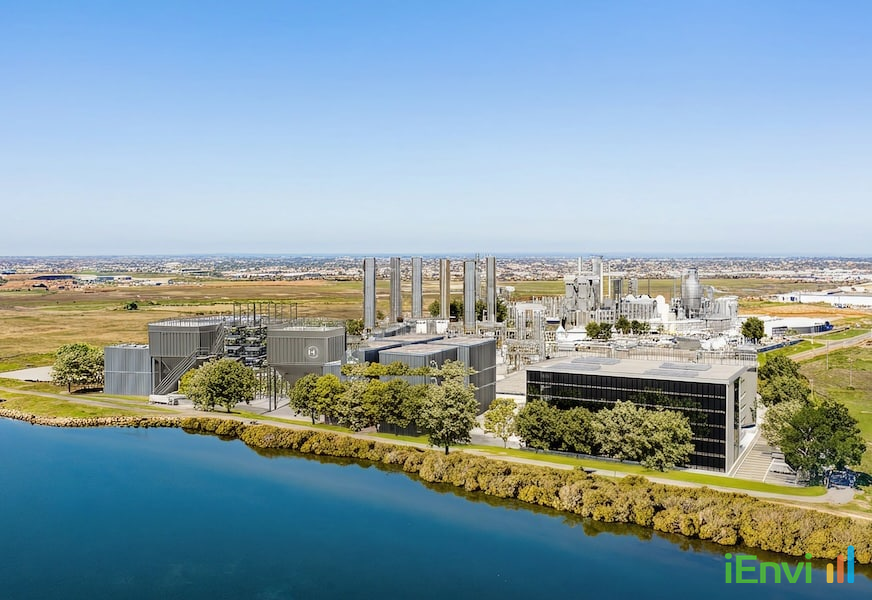
The production model relies on three geographically distinct facilities working in sequence. The first is a biomass processing facility in Victoria, which will handle approximately 600,000 tonnes of plantation forestry residues per year. This facility will receive and process sawdust, bark, woodchips, and thinnings from forestry operations that currently have no reliable commercial outlet. The second facility is the Portland Renewable Fuels Project, located in Portland, Victoria, which will convert the processed biomass into approximately 300,000 tonnes of renewable methanol annually. Portland’s existing port infrastructure and industrial land base make it a logical location for this conversion step. The third facility is the Methanol-to-Jet Project at Gillman in South Australia, which will take the renewable methanol output and process it into approximately 140 megalitres of sustainable aviation fuel per year.
The feedstock volumes involved are substantial. Six hundred thousand tonnes of forestry residues annually is a significant draw on the plantation forestry sector’s waste stream, and the logistics of aggregating, processing, and transporting that volume across two states will require detailed environmental and infrastructure planning. The conversion ratio from biomass input to SAF output reflects the multi-step thermochemical and catalytic processes involved: 600,000 tonnes of raw residue yields 300,000 tonnes of methanol, which in turn yields 140 megalitres of jet fuel. SAF produced via the methanol-to-jet pathway typically carries a substantially lower lifecycle carbon intensity than conventional jet fuel, though the exact reduction figure depends on feedstock sourcing, transport emissions, and process energy inputs, all of which will need to be quantified during the FEED phase.
The project is supported by three distinct policy instruments. Funding is delivered under the Australian Renewable Energy Agency Act 2011 (Cth), which establishes ARENA’s mandate to improve the competitiveness and increase the supply of renewable energy in Australia. The project aligns with Australia’s legislated climate targets under the Climate Change Act 2022 (Cth), which requires the government to pursue net zero greenhouse gas emissions by 2050. It also sits within the broader Future Made in Australia policy agenda, which prioritises sovereign manufacturing capability and clean energy supply chain development as industrial policy objectives.
Australian context: forestry waste, resource recovery regulation, and the biofuel policy landscape
Australia does not currently have a dedicated national sustainable aviation fuel mandate or blending requirement, placing it behind jurisdictions such as the European Union, where SAF blending obligations are already legislated under the ReFuelEU Aviation regulation. However, the federal government’s support for the HAMR Energy project reflects a deliberate policy position that domestic biofuel production is a strategic priority. The project’s alignment with the Future Made in Australia agenda suggests the government views SAF and renewable methanol production as critical industrial capabilities, not merely environmental initiatives. For clients and practitioners operating in the forestry, aviation, and heavy industry sectors, this policy direction is likely to harden into regulatory and procurement requirements.
References and related sources
- Primary source: wastemanagementreview.com.au
- SA EPA
How iEnvi can help
iEnvi provides specialist consulting services relevant to this topic. Our team includes CEnvP Site Contamination Specialists with experience across contaminated land, groundwater, remediation, ecology, and regulatory compliance.
- iEnvi contaminated land investigation services
- iEnvi remediation and validation services
- iEnvi expert services and independent review services
This is an iEnvi Machete news summary. Prepared by iEnvi to summarise the source article for contaminated land, groundwater, remediation, approvals and site risk professionals.
Published: 24 Jul 2026
Need advice on this topic? Speak to an iEnvi expert at info@ienvi.com.au or 1300 043 684, or contact us online.
Need advice on this issue? iEnvi provides practical, senior-led environmental consulting across contaminated land, remediation, ecology and environmental risk.
Team credentials Contaminated land services Remediation services Groundwater services Talk to iEnvi