

What is the TNFD Alternative Fuels Guidance?
In June 2026, the Taskforce on Nature-related Financial Disclosures (TNFD) released additional sector-specific guidance covering alternative fuels, encompassing bioenergy and synthetic hydrogen pathways. Clayton Utz highlighted the significance of this guidance for Australian entities on 24 July 2026, framing it as a fundamental reorientation of how sustainability claims must be evidenced. The guidance moves well beyond carbon accounting, introducing structured disclosure obligations that assess how alternative fuel supply chains interact with land systems, freshwater resources, and biodiversity. For the first time, a major international disclosure framework has placed what it terms “nature performance” alongside decarbonisation as a primary test of a legitimate sustainability claim.
The practical reach of this guidance is broader than many clients and advisors initially appreciate. It does not apply only to companies that produce biofuels or green hydrogen. Buyers and end-users of alternative fuels, including airlines, marine transport operators, road freight fleets, and electric utilities, are expected to disclose core sector metrics for material nature-related impacts arising from the alternative fuels they procure, even where they exercise no operational control over feedstock sourcing or production processes. This supply-chain accountability model is a significant departure from conventional carbon reporting, where Scope 3 boundaries have often been treated as aspirational rather than obligatory.
For environmental professionals, ESG advisors, and corporate sustainability officers in Australia, the timing is critical. Group 2 entities under Australia’s mandatory climate and sustainability reporting regime commenced their obligations on 1 July 2026. The TNFD alternative fuels guidance therefore arrives precisely as a large cohort of Australian businesses is navigating its first mandatory reporting cycle, adding a layer of nature-related disclosure complexity that many organisations have not yet factored into their internal systems, procurement contracts, or data collection workflows.
Key details of the TNFD alternative fuels sector guidance
The TNFD additional sector guidance for alternative fuels, released in June 2026, applies to two primary fuel pathways. The first is bioenergy, which encompasses gaseous, liquid, and solid fuels derived from biomass, including primary biomass feedstocks, waste streams, and agricultural or forestry residues. The second pathway covers synthetic fuels, specifically hydrogen produced via electrolysis and hydrogen-derived fuels synthesised using carbon dioxide or nitrogen inputs. Each pathway carries distinct nature-related risk profiles, and the guidance addresses them with pathway-specific metrics rather than a one-size-fits-all approach.
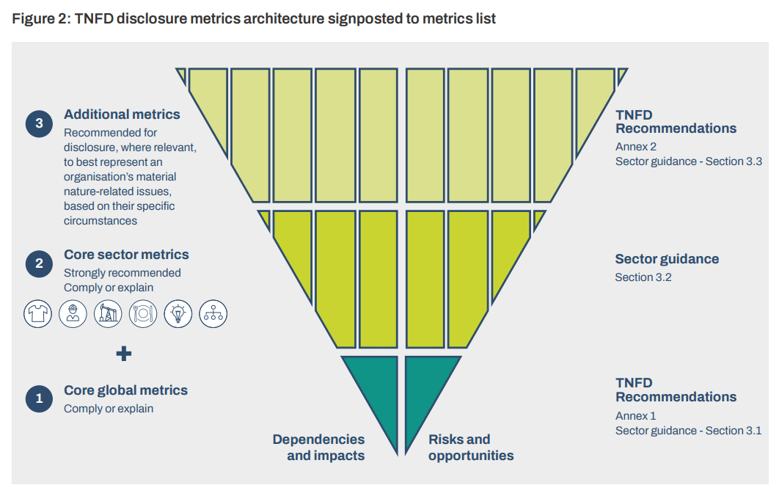
The disclosure architecture is structured across three tiers. The first tier comprises existing core global TNFD metrics that apply across all sectors. The second tier introduces core sector metrics specific to alternative fuels, and this is where the most significant new obligations sit. These sector metrics require disclosures on deforestation and conversion-free product sourcing, the evaluation of waste-derived feedstocks against higher-value uses before their diversion to fuel production, the proportion of products sourced from water-scarce areas, the traceability level of primary biomass and waste feedstocks through the supply chain, independent verification rates for feedstock origin claims, and brine disposal management practices. That final metric is particularly relevant to synthetic hydrogen projects, where electrolysis processes can generate concentrated brine streams requiring careful disposal management to avoid saline contamination of freshwater systems or coastal environments. The third tier consists of additional sector metrics that, while recommended rather than mandatory, include highly granular indicators such as degraded and abandoned land utilisation rates, nitrogen use efficiency across the feedstock supply chain, biogenic carbon dioxide capture volumes, hydrogen leak detection and prevention systems, and records of hydrogen release incidents.
The TNFD recommends that entities implement its LEAP approach, standing for Locate, Evaluate, Assess, and Prepare, to structure their nature-related risk identification and disclosure process. The Locate phase requires organisations to map the geographic footprint of their alternative fuel supply chains against sensitive ecosystems, water catchments, and biodiversity corridors. The Evaluate phase assesses the actual and potential dependencies and impacts on those natural systems. The Assess phase integrates both physical risks, such as water scarcity affecting feedstock availability or ecosystem degradation reducing long-term supply resilience, and transition risks, including tightening regulatory standards, shifting market expectations, and reputational exposure from insufficient supply chain transparency. The Prepare phase covers the development of disclosure-ready strategies, targets, and metrics aligned with the TNFD’s recommended reporting templates.
The “comply or explain” framing of the framework is worth noting for practitioners advising clients. Entities that cannot meet a particular metric disclosure are expected to explain why, including what barriers exist and what steps are being taken to close data gaps. This places a direct obligation on procurement and sustainability teams to audit their supply chain data systems and to engage with fuel suppliers on information-sharing arrangements. The framework does not accept the absence of data as a reason to simply omit a metric without explanation.
Australian context: TNFD obligations intersecting with mandatory sustainability reporting
Australia’s mandatory climate and sustainability reporting framework is advancing in phased tranches, with Group 1 entities — the largest listed companies and financial institutions — having commenced reporting obligations in July 2025, and Group 2 entities following from 1 July 2026. This second cohort is considerably broader, encompassing a wide range of listed and unlisted entities that meet relevant size thresholds under the Treasury Laws Amendment (Financial Market Infrastructure and Other Measures) Act 2024. Many Group 2 entities are now confronting their first mandatory reporting cycle without fully developed data infrastructure, internal governance processes, or supply chain visibility.
The arrival of the TNFD alternative fuels sector guidance at this moment creates a compound compliance challenge. Australian entities in sectors with material alternative fuel exposure — including aviation, maritime, road freight, agriculture, and energy generation — must now consider whether nature-related risks arising from their fuel procurement are reportable under their mandatory sustainability disclosures, and whether the TNFD metrics are relevant to that assessment. The Australian Sustainability Reporting Standards (ASRS), which underpin the mandatory regime, are aligned with the International Sustainability Standards Board (ISSB) framework and incorporate nature-related risk as a category of material financial risk. The TNFD guidance, while not itself a mandatory standard in Australia, provides the most detailed available methodology for identifying and quantifying those risks in the alternative fuels context.
For sustainability and legal advisors, several practical implications follow. First, procurement contracts with alternative fuel suppliers may need to be reviewed or renegotiated to include data-sharing obligations that allow downstream entities to meet their TNFD-aligned disclosure requirements. Second, internal data collection systems may need to be extended to capture feedstock origin, land conversion status, water sourcing geography, and verification documentation. Third, entities relying on sustainability claims tied to alternative fuel use — whether in marketing materials, investor communications, or regulatory filings — face heightened scrutiny if those claims cannot be supported by the level of supply chain evidence the TNFD guidance now establishes as the benchmark. Clayton Utz has flagged that this evidential standard may also have implications under Australian Consumer Law provisions governing environmental representations, given the increasing alignment between disclosure frameworks and consumer protection enforcement priorities.
References and related sources
- Primary source: www.claytonutz.com
- listcorp.com
- listcorp.com
- https://www.claytonutz.com/knowledge/2026/july/beyond-carbon-nature-related-repo
- EPBC Act
How iEnvi can help
iEnvi provides specialist consulting services relevant to this topic. Our team includes CEnvP Site Contamination Specialists with experience across contaminated land, groundwater, remediation, ecology, and regulatory compliance.
- iEnvi ESG services
- iEnvi contaminated land investigation services
- iEnvi remediation and validation services
- iEnvi expert services and independent review services
This is an iEnvi Machete news summary. Prepared by iEnvi to summarise the source article for contaminated land, groundwater, remediation, approvals and site risk professionals.
Published: 26 Jul 2026
Need advice on this topic? Speak to an iEnvi expert at info@ienvi.com.au or 1300 043 684, or contact us online.
Need advice on this issue? iEnvi provides practical, senior-led environmental consulting across contaminated land, remediation, ecology and environmental risk.
Team credentials Contaminated land services Remediation services Groundwater services Talk to iEnvi