
Second Nature Repair Market method for enhancing existing native vegetation
On 30 October 2026, Minister for the Environment and Water Murray Watt announced the second method under Australia’s national Nature Repair Market. Titled “Enhancing native vegetation”, it allows landholders to register projects that protect, improve and maintain existing remnant native vegetation. Projects registered under the method can also be used as offsets under Commonwealth environmental approvals. That link creates a direct pathway between the voluntary biodiversity market established by the Nature Repair Act 2023 (Cth) and the statutory offset obligations imposed under the Environment Protection and Biodiversity Conservation Act 1999 (Cth) (EPBC Act).
Until this announcement, the market had one method. It covered replanting native forest and woodland ecosystems on cleared land. That excluded the large areas of Australian land that already carry native vegetation, often in degraded condition, and where planting would be unnecessary, uneconomic or ecologically inappropriate. The new method brings those areas into scope by rewarding active management rather than establishment.
For developers, infrastructure proponents, councils, landholders and the lawyers advising them, the development matters on two fronts. It creates a new type of land-based asset that can be registered against a parcel and may affect its future use. It also opens a potential procurement route for proponents carrying EPBC Act offset conditions, alongside the established approach of securing and managing a dedicated offset site.
Enhancing native vegetation method: activities, scale and EPBC offsets
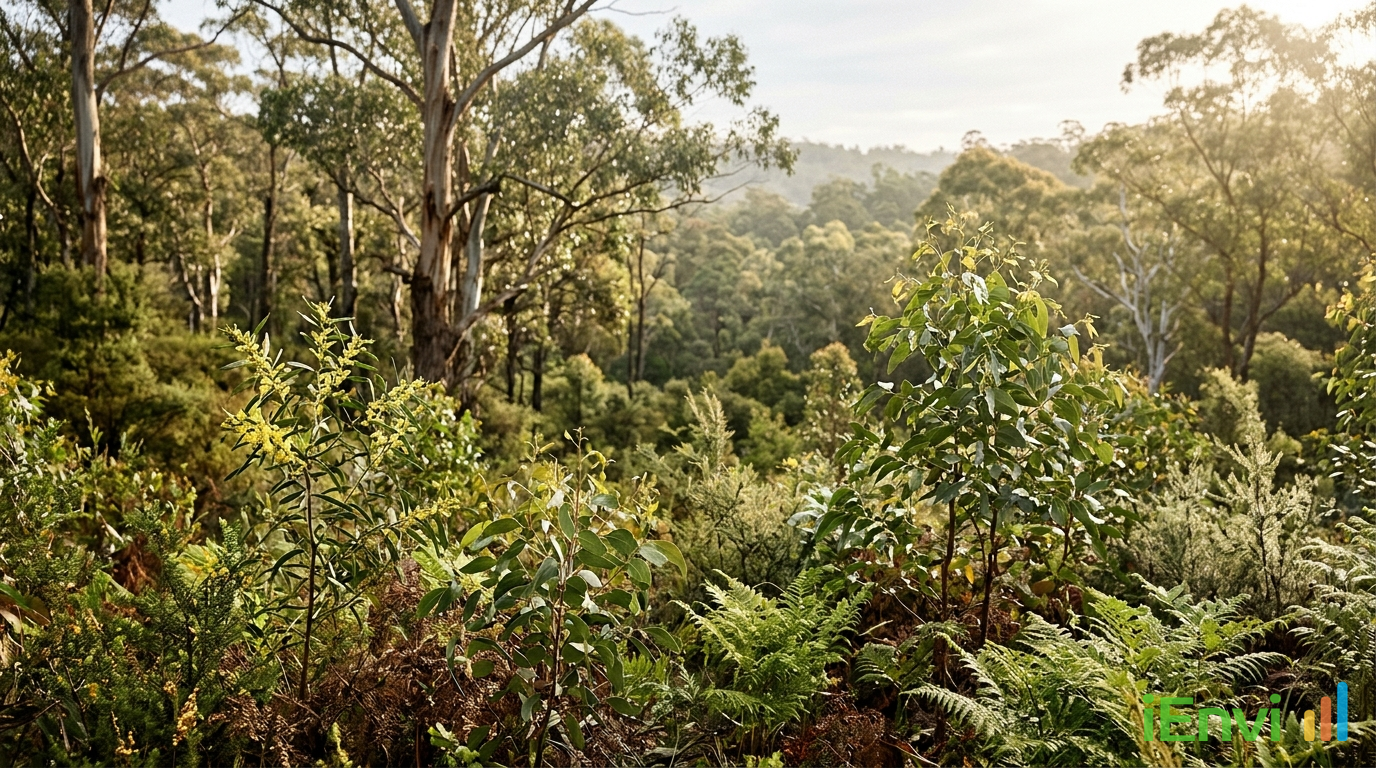
The “Enhancing native vegetation” method is the second method made under the Nature Repair Act 2023. The Minister’s release identifies the activities it is designed to reward: managing invasive weeds, controlling pest animals, enhancing core habitat for threatened species, and restoring understorey structure. The common thread is that the vegetation already exists. Biodiversity gain comes from improving its condition and protecting it over time, not from creating new vegetation from scratch.
Uptake of the first method gives a sense of scale. According to the Minister’s release, four projects are registered under the replanting method, covering 2,656 hectares in total. That is a modest footprint for a national market, and it reflects how narrow the first method was. Remnant and regrowth vegetation, including degraded bushland, covers a far larger area of private and leasehold land than recently cleared land suitable for replanting. On that basis the second method is likely to be the more relevant pathway for many landholders.
The offsets provision is the most consequential feature for project proponents. The release states that projects under this method can be registered for use as offsets under Commonwealth environmental approvals. How residual significant impacts on matters of national environmental significance must be compensated is set through the EPBC Act offsets framework and the conditions attached to each approval. A proponent with an unavoidable residual impact could in principle generate or procure biodiversity certificates from a registered project to meet an offset requirement. Whether a particular certificate can discharge a particular condition will depend on the wording of the approval and the offset requirements attached to it.
The legal instrument is a methodology determination made under the Nature Repair Act 2023. The headline features are set out in the release. The operational detail sits in the method itself and its supporting documents, published by the Department of Climate Change, Energy, the Environment and Water (DCCEEW). These cover eligibility, baseline condition assessment, monitoring and reporting, and permanence requirements. These provisions determine the real cost of participation: how often condition must be measured, how gains are demonstrated, and how long land use restrictions apply.
Nature Repair Market, ACCU stacking and state biodiversity offset schemes
The Nature Repair Market is the Commonwealth’s voluntary, legislated market for biodiversity. It is separate from the Australian Carbon Credit Unit (ACCU) Scheme, which deals with carbon abatement and sequestration. The two schemes can apply to the same land. A landholder could run an ACCU vegetation project, such as an environmental planting or human-induced regeneration project, and a Nature Repair project over the same parcel, producing what are commonly called “stacked” environmental assets. Doing this lawfully requires attention to overlapping activity rules, title matters and the consent of other interest holders such as mortgagees and lessees. Some ACCU vegetation methods are no longer open to new projects, so the available combinations need to be checked against the current method list.
The offsets link must also be read against the state biodiversity offset regimes that operate in parallel. In NSW, the Biodiversity Offsets Scheme under the Biodiversity Conservation Act 2016 uses biodiversity credits and stewardship agreements. Queensland has the Environmental Offsets Act 2014. Victoria regulates native vegetation removal and offsets through the Planning and Environment Act 1987 and its native vegetation guidelines. South Australia applies Significant Environmental Benefit requirements under the Native Vegetation Act 1991. The Minister’s release refers only to Commonwealth environmental approvals. It does not say that Nature Repair Market certificates will satisfy any state offset obligation, and practitioners should not assume they will.
Many major projects trigger both Commonwealth and state offset requirements for the same clearing. Proponents on those projects will need to confirm whether a single offset site or certificate parcel can meet both sets of obligations, or whether separate arrangements are required. This has long been a source of cost and delay for proponents dealing with two offset regimes, and the release does not address it. Until the Commonwealth and the states confirm how Nature Repair Market certificates interact with state schemes, proponents should plan on the basis that state obligations may need to be met separately.
References and related sources
- Primary source: minister.dcceew.gov.au
- EPBC Act
How iEnvi can help
iEnvi provides specialist consulting services relevant to this topic. Our team includes CEnvP Site Contamination Specialists with experience across contaminated land, groundwater, remediation, ecology, and regulatory compliance.
- iEnvi contaminated land investigation services
- iEnvi remediation and validation services
- iEnvi expert services and independent review services
This is an iEnvi Machete news summary. Prepared by iEnvi to summarise the source article for contaminated land, groundwater, remediation, approvals and site risk professionals.
Published: 05 Nov 2026
Need advice on this topic? Speak to an iEnvi expert at info@ienvi.com.au or 1300 043 684, or contact us online.
Need advice on this issue? iEnvi provides practical, senior-led environmental consulting across contaminated land, remediation, ecology and environmental risk.
Team credentials Contaminated land services Remediation services Groundwater services Talk to iEnvi