
Overview
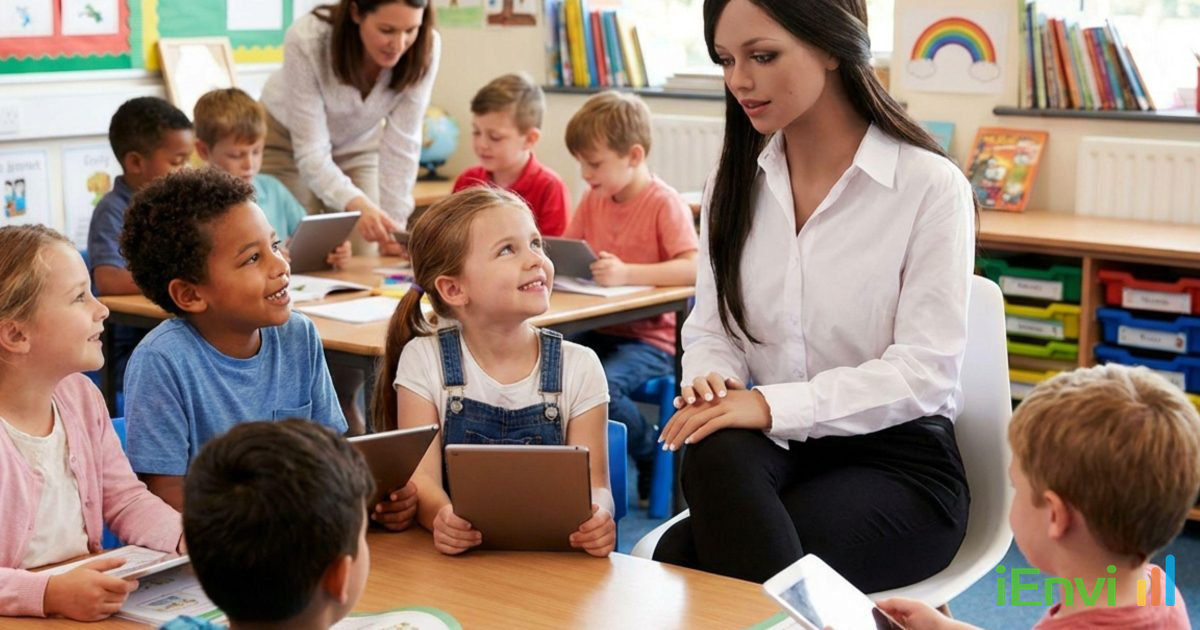
On 14 July 2024, the Salamanca City Central School District in Western New York announced it had approved the purchase of a lifelike humanoid robot named “Sally” and an accompanying AI avatar programme from technology developer Realbotix. Sally is scheduled to debut in a high school classroom in Fall 2024, making Salamanca one of the first public school districts in the United States to deploy an embodied humanoid AI as a teaching assistant. The district is located on the Seneca Nation reservation in Western New York, a regional context that adds a layer of community and governance significance to the deployment.
The development matters beyond its novelty. While the dominant narrative around humanoid robotics in 2024 has centred on industrial manufacturing deployments, such as those at BMW’s Spartanburg facility and Tesla’s factory automation programmes, Salamanca represents a deliberate pivot toward what industry commentators are calling social and educational robotics. Rather than replacing teachers, Sally is designed to operate as a highly personalised, interactive learning assistant supporting students enrolled in high school AI and robotics courses. Andrew Kiguel, CEO of Realbotix, described the deployment as “a landmark moment for both AI and humanoid robotics,” stating that “Salamanca marks the beginning of a new era where humanoid robots and intelligent AI assistants become standard tools in STEM education.”
For professionals working at the intersection of technology strategy, workplace transformation, and knowledge-intensive service delivery, this deployment is a useful signal. It demonstrates that the commercial trajectory for humanoid robotics is bifurcating: large-scale players are pursuing heavy labour and bipedal locomotion, while agile technology developers are targeting high-trust, multi-user environments where personalised conversational memory and emotional engagement are the primary value drivers. That distinction has direct relevance to how professional services firms, including those in environmental consulting, engineering, and advisory roles, might evaluate AI integration in client-facing or technically sensitive contexts.
Key details of the Sally deployment and Realbotix technology
Sally’s hardware design reflects a deliberate set of engineering priorities. The robot features a lifelike female appearance with silicone skin and long brown hair, and is configured to remain stationary in a seated position during classroom operation. While bipedal locomotion is absent, Sally is equipped with a wide range of upper-body movements and micro-facial expressions engineered to mimic human emotion and sustain natural conversational engagement. This design choice directly reduces hardware cost and mechanical complexity while optimising for the specific interaction requirements of a classroom environment, where sustained attention, emotional responsiveness, and conversational continuity matter more than physical mobility.
The personalised data integration model is one of the more technically significant aspects of the deployment. Students interact with Sally using unique identification codes rather than personal names or sensitive identifying information. For example, a student might initiate interaction by saying “Hey, I’m student 1234.” The system uses that code to retrieve past conversational data and personalised learning metrics, allowing Sally to resume lessons from precisely where the previous session ended. This architecture separates identity authentication from sensitive personal data, offering a practical privacy safeguard in a public school environment governed by student data protection requirements. The approach has clear parallels for professional services contexts where AI assistants might need to serve multiple users across a project lifecycle without retaining or exposing personally identifiable information.
The handling of AI hallucinations is arguably the most consequential technical feature of the platform. Realbotix has trained the underlying model to produce a strict “I don’t know” response when the system is uncertain, rather than generating a statistically plausible but factually incorrect answer. In the context of a classroom setting, the risk of a student receiving confidently stated misinformation from a trusted AI assistant is a serious governance concern. The deliberate suppression of hallucinated outputs in favour of transparent uncertainty is a design discipline that distinguishes this deployment from many general-purpose large language model applications. For technical and advisory professions, where a fabricated but credible-sounding answer can cause material harm to a client, project, or regulatory submission, this feature represents a meaningful benchmark for responsible AI deployment.
The programme is scheduled to commence in Fall 2024 at Salamanca High School, with Sally operating specifically within AI and robotics curriculum. The Realbotix platform also includes an AI avatar programme that complements the physical robot. The combination of embodied hardware and digital avatar functionality suggests a hybrid deployment model that could scale beyond single physical units, with the avatar component potentially accessible remotely or across multiple classroom settings simultaneously.
Australian context: humanoid AI in professional services and knowledge work
Australia does not yet have a direct regulatory framework governing the deployment of embodied AI or humanoid robots in workplace or educational settings. However, the Salamanca deployment is highly relevant to Australian professionals navigating the broader question of how AI can be responsibly integrated into technically complex, client-facing, or multi-user environments. The Australian Government’s interim guidance on AI in government services, the National AI Strategy released in 2021, and
References and related sources
- Primary source: nysfocus.com
- wellsvillesun.com
- fingerlakes1.com
How iEnvi can help
iEnvi integrates technology and data-driven approaches into environmental consulting. We monitor AI and technology developments that affect how environmental professionals deliver services to clients.
This is an iEnvi Machete news summary. Prepared by iEnvi to summarise the source article for environmental professionals tracking AI, data, and technology developments that affect consulting and project delivery.
Published: 15 Jul 2026
Need advice on this topic? Speak to an iEnvi expert at info@ienvi.com.au or 1300 043 684, or contact us online.
Need advice on this issue? iEnvi provides practical, senior-led environmental consulting across contaminated land, remediation, ecology and environmental risk.
Contaminated land advice Remediation services Discuss your site Talk to iEnvi