
Overview
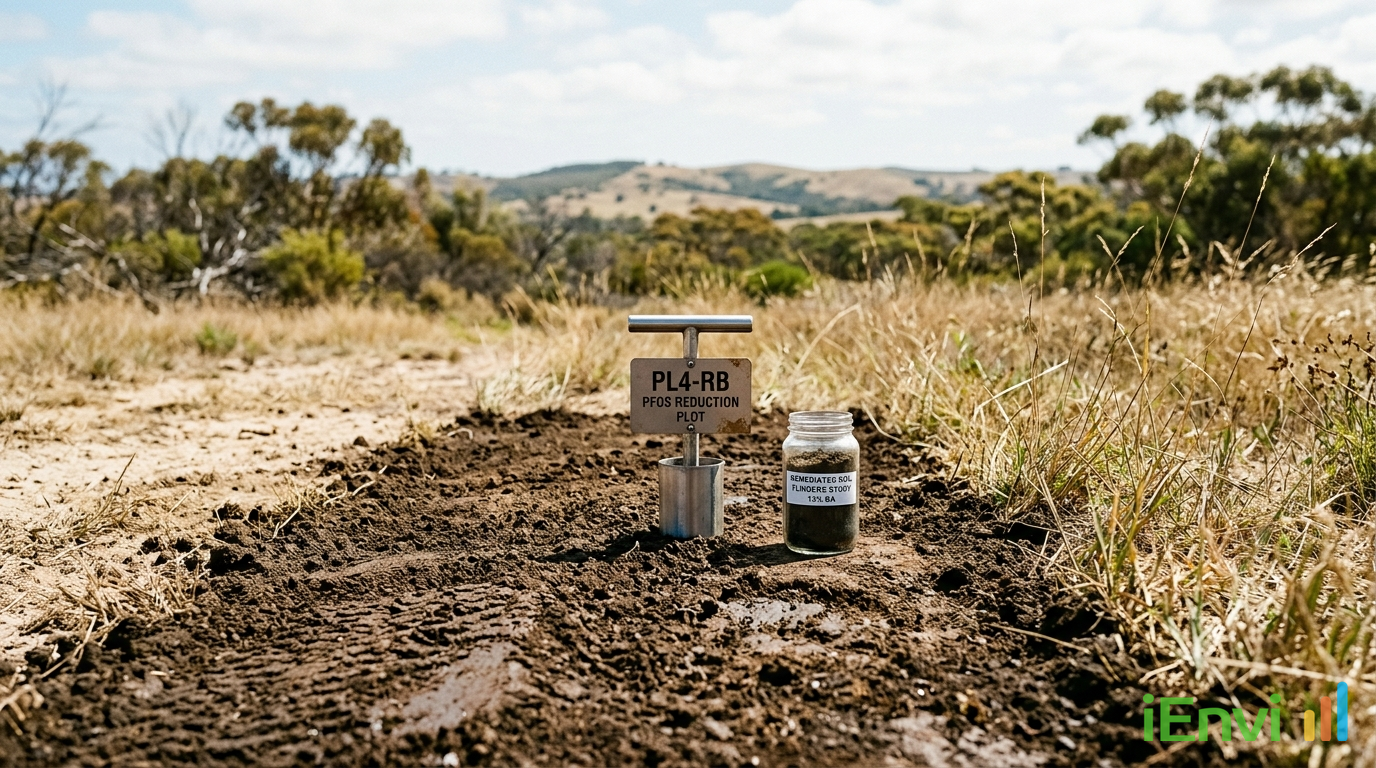
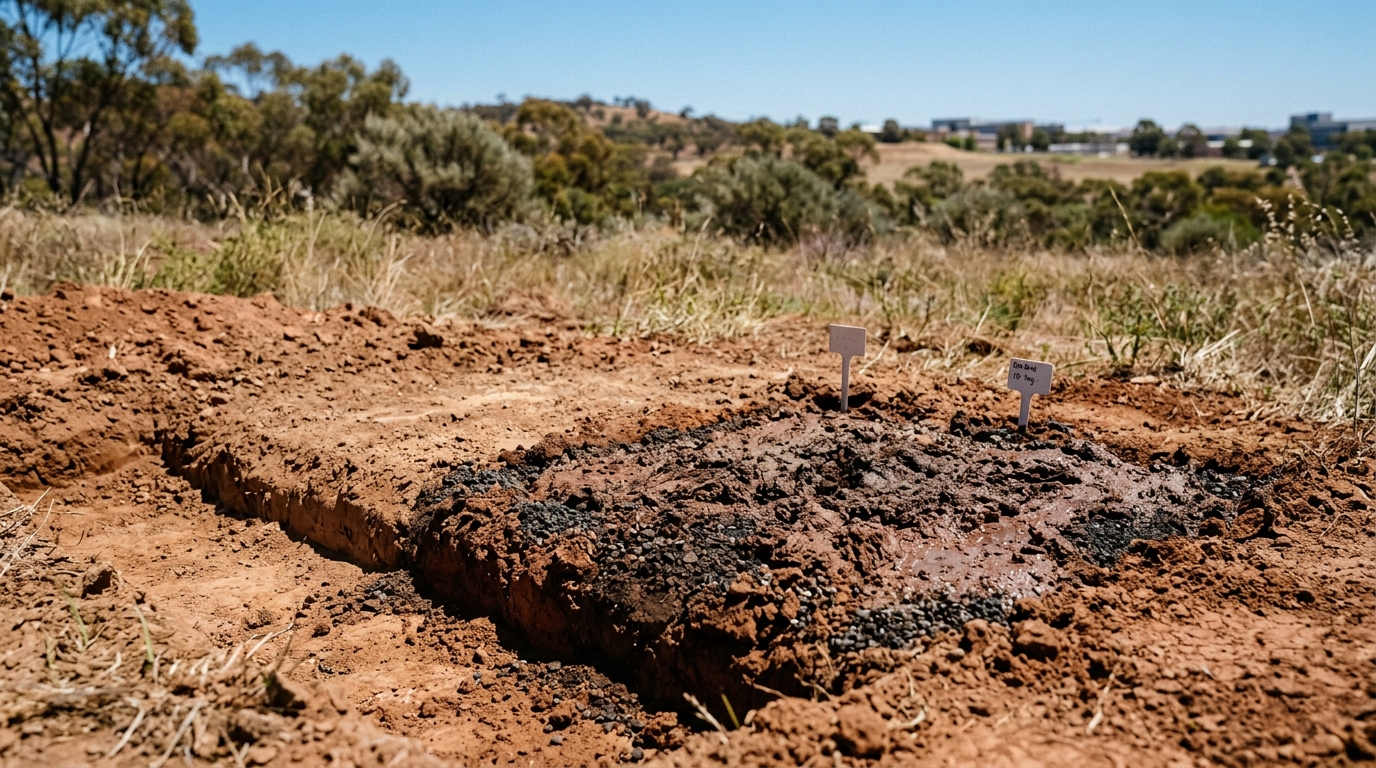
A peer-reviewed study published in Environmental Pollution (Volume 403, August 2026) has produced empirical bioavailability data for perfluorooctane sulfonic acid (PFOS) in soils treated with a commercial immobilisation agent, addressing a long-standing data gap in Australian contaminated land practice. Led by Professor Albert Juhasz with researchers from Flinders University and the University of South Australia, the study evaluated RemBind 300 applied at 5% w/w to soils impacted by aqueous film-forming foam (AFFF), with PFOS concentrations ranging from 750 to 7,455 µg/kg.
The findings matter because most human health risk assessments conducted under the National Environment Protection (Assessment of Site Contamination) Measure 2013 (NEPM 2013) default to an assumption of 100% relative oral bioavailability for soil contaminants. This is a deliberately conservative starting point in the absence of contaminant-specific and site-specific data. The Juhasz study provides one of the first peer-reviewed relative bioavailability (RBA) datasets specifically for PFOS in stabilised AFFF-impacted soil, giving risk assessors a defensible, evidence-based alternative to blanket conservatism.
For developers, councils, lawyers and site owners dealing with PFAS-impacted land in Australia, this study is directly relevant to how remediation action plans are designed, how leaching test results are interpreted, and how regulators and auditors assess whether on-site management is protective of human health. It also exposes an important limitation in standard laboratory leaching protocols that has implications for how “immobilisation success” is defined and reported.
Key details
The research team tested AFFF-contaminated soils using two complementary bioassay methods: an in vitro gastrointestinal bioaccessibility test (SBRC-I, the Solubility Bioaccessibility Research Consortium in vitro method) and an in vivo relative bioavailability assay using Sprague-Dawley rats. In unamended soils, PFOS bioaccessibility ranged from 29.5% to 86.5% (mean 63.6%), while relative bioavailability in the animal bioassay ranged from 44.8% to 107% (mean 83.3%). These figures confirm that PFOS in AFFF-impacted soil is highly available for gastrointestinal absorption in its untreated state, broadly supporting the conservatism of current default assumptions for unamended soil.
Following treatment with RemBind 300 at a 5% w/w dose, PFOS oral bioaccessibility dropped to a range of 2.4% to 11.6% (mean 5.6%), and relative bioavailability fell to a range of 5.1% to 24.5% (mean 13.0%). This represents a substantial reduction in the fraction of PFOS available for absorption via oral ingestion, one of the primary human exposure pathways assessed under NEPM 2013 Schedule B4 for site-specific human health risk assessments and Schedule B7 for the derivation of Health Investigation Levels (HILs).
A critical finding is the divergence between standard leaching test results and gastrointestinal bioaccessibility outcomes. The Australian Standard Leaching Procedure (ASLP) indicated greater than 99% reduction in PFOS mobility following amendment, which on its face suggests near-complete immobilisation. However, the immobilisation efficiency measured through gastrointestinal bioaccessibility testing was lower, at 80.0% to 95.4%, and through relative bioavailability testing, at 69.0% to 95.0%. The study attributes this gap to differences in fluid chemistry and desorption kinetics between simple aqueous or dilute acid leaching media and the more complex chemical environment of human digestive fluids, which can desorb a proportion of PFOS that remains bound under standard leaching conditions.
The practical consequence is that a sorbent can appear to achieve near-total containment under standard regulatory leaching protocols while still leaving a meaningful residual oral bioavailability, in this case a mean of 13.0%, that must be accounted for in exposure and risk calculations. This is not a failure of the amendment technology; rather, it demonstrates that leaching compliance and bioavailability reduction are measuring different things and neither should be used as a proxy for the other.
PFAS NEMP and NEPM 2013 implications for site assessments
Australian PFAS site assessment currently sits within a framework built on NEPM 2013, supplemented by the PFAS National Environmental Management Plan (PFAS NEMP), now in its 3.1 iteration under HEPA and DCCEEW guidance. Both frameworks recognise that generic assessment criteria may be refined through site-specific data, but until now there has been very limited peer-reviewed, PFAS-specific bioavailability data available to support that refinement in Australian soil types and AFFF-impacted matrices.
This study gives Suitably Qualified Persons (SQPs) and Contaminated Land Auditors a documented, published RBA factor of approximately 13% for RemBind-amended AFFF-impacted soil, which can be used to derive site-specific Health Investigation Levels under NEPM 2013 Schedule B7 rather than relying on the conservative 100% default. It also directly supports the PFAS NEMP’s guidance on evaluating soil immobilisation and risk-based management of PFAS-impacted materials, by providing a quantified basis for arguing that on-site retention of treated soil is protective of human health via the oral ingestion pathway.
The findings have less direct bearing on aquatic ecosystem protection, where the Australian and New Zealand Guidelines for Fresh and Marine Water Quality (ANZG 2018) default guideline values for PFOS and PFOA in surface water continue to apply independently of soil bioavailability considerations. Practitioners should not conflate a reduction in oral bioavailability with a reduction in leachate risk to groundwater or surface water, which remains governed by separate leaching and transport assessment pathways.
Practical implications
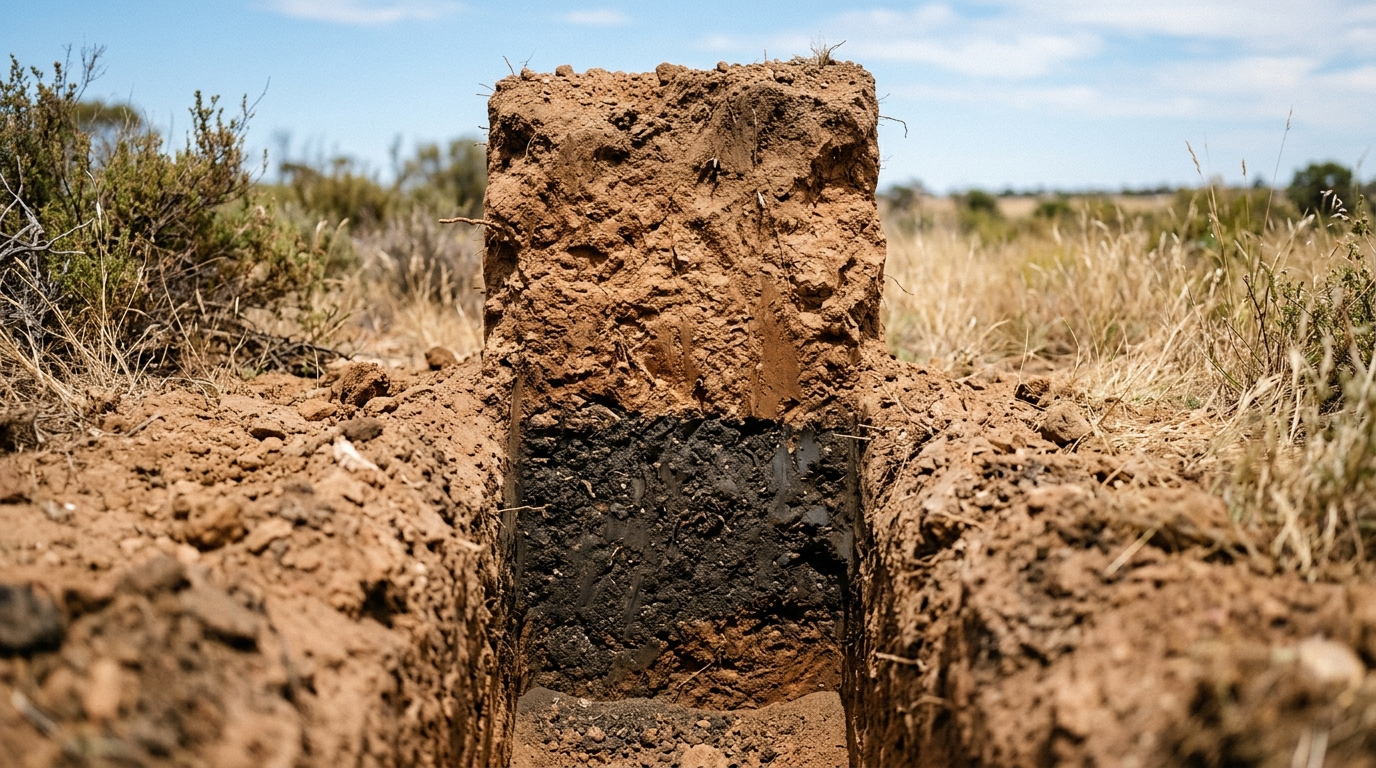
Risk assessors reviewing PFAS-impacted sites, particularly former firefighting training grounds, airports, fire stations and industrial sites where AFFF was historically used, should now consider whether a default 100% RBA assumption is appropriate where soil has been or will be treated with an immobilisation amendment, or whether a site-specific bioavailability study is warranted to support a less conservative HIL derivation. This is particularly relevant for sites being assessed for residential redevelopment, where the oral ingestion pathway typically drives the most conservative exposure scenarios.
For those preparing or reviewing Remediation Action Plans, this study is a reminder that ASLP or TCLP leaching results reported as evidence of immobilisation success should not be presented as a proxy for human health protectiveness without corroborating bioaccessibility or bioavailability data. Auditors assessing RAPs that rely solely on leaching data to justify on-site retention of treated PFAS-impacted soil should expect this gap to attract scrutiny, and consultants should be prepared to either commission bioaccessibility testing or apply conservative default assumptions in its absence.
Site owners and developers negotiating long-term management plans or seeking Site Audit Statements for PFAS-affected land should also note that this data supports on-site management as a legitimate risk-reduction strategy where amendment is properly validated, potentially avoiding the cost and disruption of full excavation and off-site disposal, provided ongoing monitoring and institutional controls address any residual exposure pathway.
Article Summary
This study lands squarely in the gap most Australian PFAS risk assessments have been papering over for years. In our experience, ASLP results get waved around in Remediation Action Plans as proof that a sorbent has “solved” the PFAS problem, when leaching mobility and human oral bioavailability are simply not the same measurement. A 13% relative bioavailability figure for RemBind-amended AFFF soil gives SQPs something they have not had before, a peer-reviewed number to justify departing from the default 100% RBA assumption under NEPM 2013 Schedule B7 when deriving site-specific HILs.
The deliverable type most affected is the RAP, followed closely by the human health risk assessment component of a DSI and any Site Audit Statement relying on soil stabilisation as the long-term management outcome. The decision that should change now is at the risk assessment design stage: if you are proposing on-site retention of amended soil, budget for bioaccessibility or bioavailability testing rather than leaning on leaching data alone, because auditors in QLD, NSW, VIC and SA are increasingly aware of this distinction and will ask for it.
The risk we see missed most often is treating immobilisation as binary, either “contained” or “not contained.” This data shows containment is a spectrum, and oral exposure pathways can persist well after leaching benchmarks are met. Anyone relying on stabilisation for a lease exit or transaction warranty should get comfortable with that nuance before signing off.
References and related sources
- Primary source: researchnow.flinders.edu.au
- flinders.edu.au
- epa.sa.gov.au
- nsw.gov.au
- wilddata.cn
- PFAS National Environmental Management Plan (NEMP)
- NEPM Assessment of Site Contamination
How iEnvi can help
iEnvi provides specialist consulting services relevant to this topic. Our team includes CEnvP Site Contamination Specialists with experience across contaminated land, groundwater, remediation, ecology, and regulatory compliance.
- iEnvi contaminated land services
- iEnvi remediation services
- iEnvi expert services and independent review services
This is an iEnvi Machete news summary. Prepared by iEnvi to summarise the source article for contaminated land, groundwater, remediation, approvals and site risk professionals.
Published: 09 Aug 2026
Need advice on this topic? Speak to an iEnvi expert at info@ienvi.com.au or 1300 043 684, or contact us online.
Need advice on this issue? iEnvi provides practical, senior-led environmental consulting across contaminated land, remediation, ecology and environmental risk.
CEnvP and SQP credentials Contamination risk assessment Environmental management plans Contaminated land advice Talk to iEnvi