

Overview
A materials science collaboration announced on 21 May 2026 has demonstrated that generative artificial intelligence can compress years of conventional laboratory discovery into a six-month programme. Kemira, a global water treatment chemistry company, and CuspAI, a frontier AI materials science firm, have jointly announced what they describe as an industry-first breakthrough: the use of a generative AI platform to design novel metal-organic frameworks (MOFs) specifically engineered to capture per- and polyfluoroalkyl substances (PFAS) from drinking water and industrial process water at trace concentrations. The collaboration has already identified more than 5,000 candidate materials, with 20 priority structures now advancing to physical development and testing.
For environmental professionals, this development is significant not because it solves the PFAS problem today, but because it signals a structural shift in how remediation materials are discovered, refined, and brought to market. Traditional material science discovery for contaminant adsorption has relied on iterative bench-scale synthesis, testing, and reformulation, a process that routinely spans five to ten years before a product reaches field deployment. The AI-assisted approach described by Kemira and CuspAI reduced the screening phase to six months by computationally evaluating approximately 300 trillion potential molecular structures. That is not an incremental improvement; it is a fundamental change in the discovery pipeline.
Practitioners working on PFAS-affected sites across Queensland, New South Wales, Victoria, and South Australia need to understand both what this announcement represents and what it does not yet represent. The 20 priority materials have not been field-tested. The transition from a computationally designed candidate to a commercially available, site-deployable treatment media involves significant further work on synthesis, stability, regeneration, and cost. Nevertheless, the trajectory is clear: the next generation of PFAS adsorbent technologies will be designed with a specificity and efficiency that generic granular activated carbon or ion exchange resins cannot match, and that transition will arrive sooner than most practitioners currently anticipate.
Key details of the Kemira and CuspAI generative AI PFAS materials research
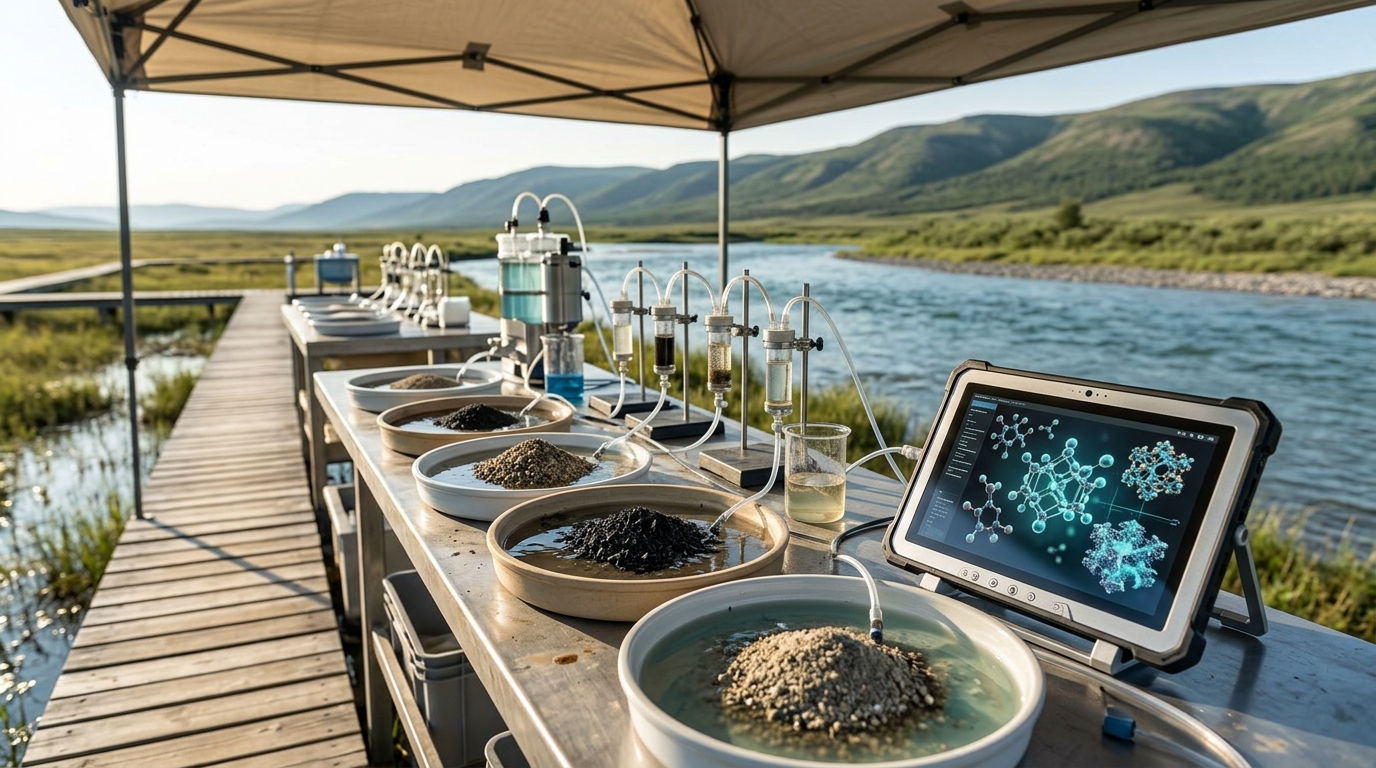
The core technical achievement of the Kemira and CuspAI collaboration was deploying a generative AI model trained to search a design space of approximately 300 trillion possible material structures and return candidates that are stable, sustainable, and manufacturable at scale. This is not a conventional database search or a simple optimisation algorithm. Generative AI in this context constructs novel molecular architectures rather than selecting from known compounds, which is why the candidate count of 5,000-plus materials represents genuinely new chemistry rather than a reranking of existing products. The model was specifically optimised to target three PFAS compounds: GenX (a fluoroether carboxylic acid commonly used as a replacement for PFOA), PFBS (perfluorobutane sulfonic acid, a short-chain PFAS replacement for PFOS), and PFOS (perfluorooctane sulfonic acid, the legacy long-chain PFAS of greatest regulatory concern globally).
The choice of target molecules is deliberate and reflects current regulatory and scientific priorities. PFOS remains the primary driver of guideline exceedances at Australian sites, given its historic use in aqueous film-forming foam (AFFF) and its persistence in groundwater plumes. GenX and PFBS represent the newer-generation short-chain PFAS compounds that have emerged as substitutes for the longer-chain substances that were phased out following earlier regulatory action. Short-chain PFAS are generally more mobile in groundwater, more difficult to remove by conventional adsorption technologies, and are increasingly appearing in monitoring data at sites where long-chain PFAS concentrations are already being managed. Designing adsorbent materials with affinity for both the long-chain legacy compounds and the short-chain replacements simultaneously is precisely the kind of multi-target challenge that generative AI is well suited to address.
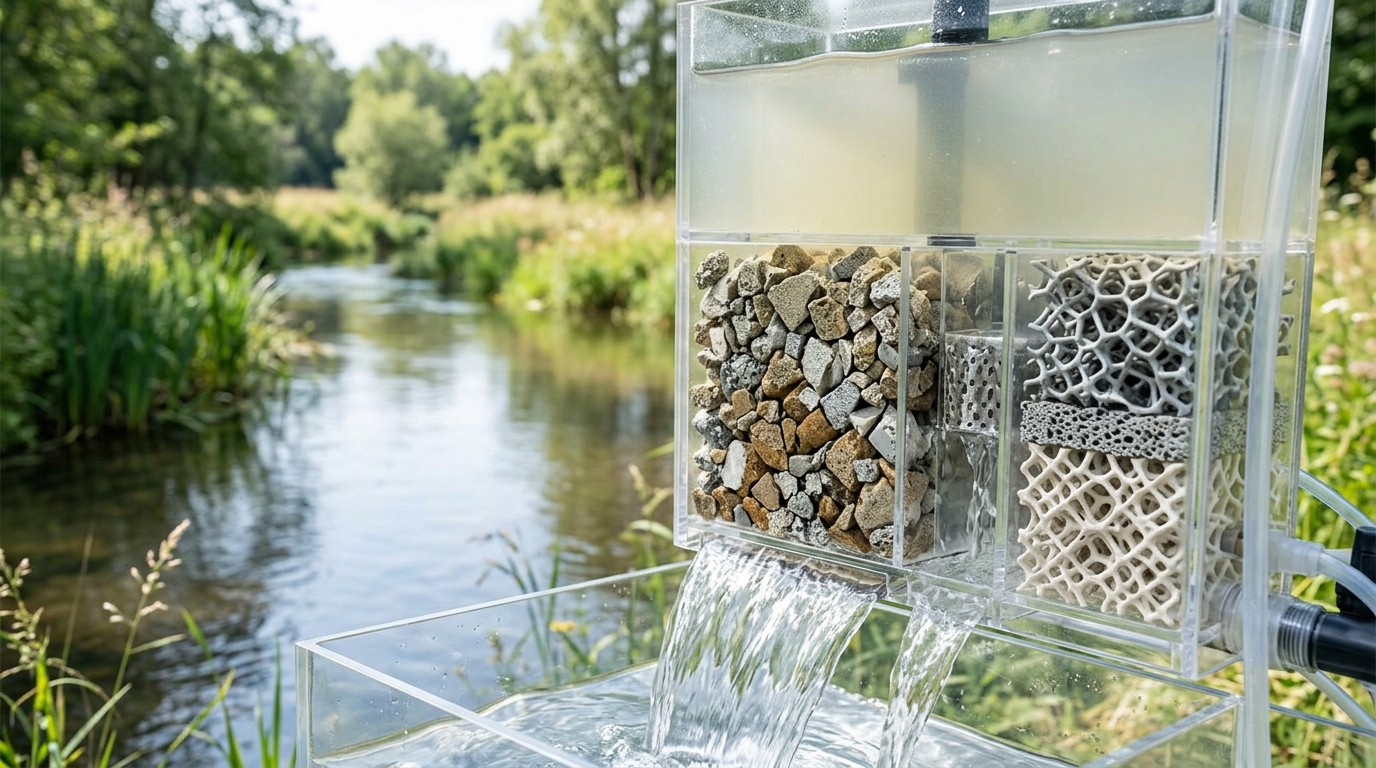
Metal-organic frameworks are a class of porous crystalline materials assembled from metal ions or clusters linked by organic bridging molecules. Their defining characteristic is an extraordinarily high internal surface area, which in the best-performing MOFs exceeds 7,000 square metres per gram (7,000 m2/g), compared with approximately 800 to 1,200 m2/g for high-grade granular activated carbon. This structural porosity allows MOFs to be engineered with pore sizes and surface chemistries tuned to specific target molecules, which is the underlying reason they are promising for trace-concentration PFAS removal where conventional adsorbents lose selectivity and efficiency. The challenge historically has been synthesising MOFs that are water-stable, chemically durable under field conditions, regenerable without degrading the structure, and manufacturable at a cost that is viable for large-scale water treatment applications. The Kemira and CuspAI collaboration specifically required the generative AI model to incorporate manufacturability and stability constraints into the design criteria, not treat them as secondary considerations.
The 20 priority materials selected from the 5,000-plus candidates are now entering physical synthesis and laboratory testing. No results from that testing phase have been published, and no field trial data are yet available. The timeline from this point to a commercially available product is not specified in the Kemira announcement, and practitioners should not assume near-term product availability. What the announcement does confirm is that the computational screening phase, which would historically have been the longest and most resource-intensive stage of the discovery process, has been completed at a speed and scale that was not previously achievable through conventional laboratory methods.
References and related sources
- Primary source: www.kemira.com
- PFAS National Environmental Management Plan (NEMP)
How iEnvi can help
iEnvi integrates technology and data-driven approaches into environmental consulting. We monitor AI and technology developments that affect how environmental professionals deliver services to clients.
This is an iEnvi Machete news summary. Prepared by iEnvi to summarise the source article for contaminated land, groundwater, remediation, approvals and site risk professionals.
Published: 22 May 2026
Need advice on this topic? Speak to an iEnvi expert at info@ienvi.com.au or 1300 043 684, or contact us online.
Need advice on this issue? iEnvi provides practical, senior-led environmental consulting across contaminated land, remediation, ecology and environmental risk.
Environmental management plans Contaminated land advice Remediation services Groundwater services Talk to iEnvi