

Introduction to the Gene.01 Smart-Skin Humanoid Robot
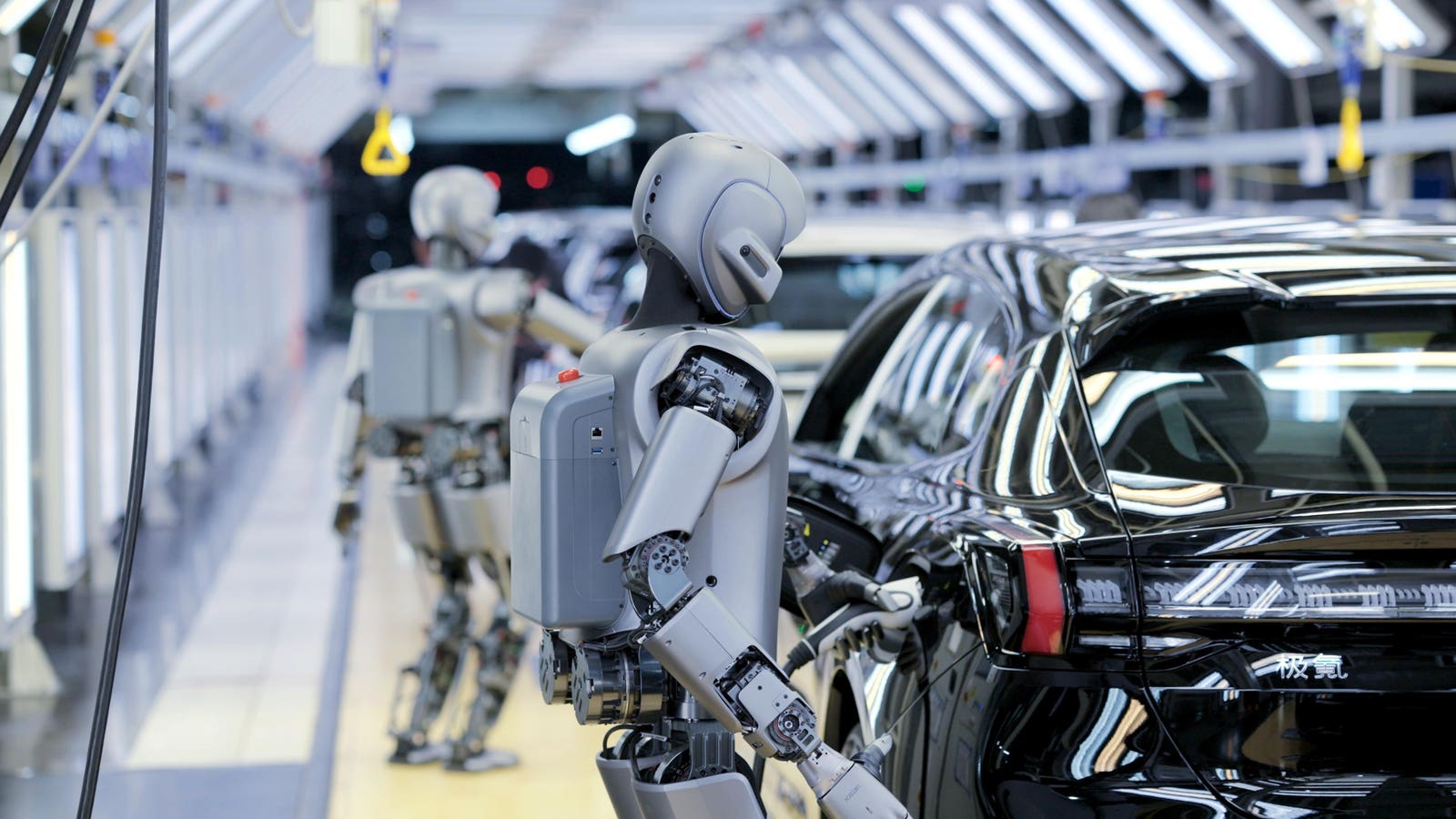
On 20 July 2026, Italian deep-tech robotics startup Generative Bionics officially introduced Gene.01, a fully functional humanoid robot platform built specifically for safe, fenceless collaboration with human workers in industrial environments. The announcement coincides with a broader inflection point in the robotics industry, where the focus is shifting decisively away from demonstration prototypes toward deployable, safety-validated machines capable of operating alongside people on live production floors. Gene.01 is scheduled to make its international debut at the AMD Advancing AI 2026 conference in San Francisco on 22 and 23 July 2026.
The platform was engineered and brought to functional readiness in just six months, a timeline that reflects both the maturity of the underlying component ecosystem and the depth of experience within the Generative Bionics team. The company describes its approach as “Physical AI,” an engineering paradigm in which the robot’s body, mechanics, and motion intelligence are designed as a unified, physics-native system rather than treating hardware and software as separate development streams. This integration is what the company argues makes Gene.01 meaningfully different from prior-generation industrial robots, which have historically required physical segregation from human workers to meet occupational safety requirements.
For enterprise decision-makers, project managers, and consulting professionals across Australia, this development is relevant not because humanoid robots are about to appear on every worksite next quarter, but because the underlying technical architecture, specifically the shift from cage-based isolation to sensor-based collaboration, represents a genuine change in how industrial safety frameworks will need to be structured going forward. Understanding the technical basis of that shift now is what allows organisations to make informed procurement, liability, and workflow design decisions before these systems reach local adoption.
Key details of the Gene.01 platform and its Physical AI architecture
The defining technical feature of Gene.01 is its distributed “smart-skin” tactile sensor network, which covers the robot’s entire exterior surface. This network is capable of detecting touch, temperature, proximity, and applied force in real time, giving the system a continuous, high-resolution map of physical interactions across its full body. Unlike conventional industrial robots that rely on perimeter detection, fixed light curtains, or camera-based vision systems as primary safety mechanisms, Gene.01 uses this tactile data as a primary intelligence channel. The practical consequence is that the robot can begin adapting its motion trajectory before physical contact occurs, rather than halting only after a collision or proximity trigger has been breached.
The platform is powered by AMD low-latency FPGA-based edge processors, which handle sensory data processing locally, on the robot itself, rather than routing information through a central server or cloud infrastructure. FPGA (Field-Programmable Gate Array) processors are well suited to this role because they can execute parallel processing tasks at extremely high frequencies with deterministic, predictable latency, which is essential when the timing of a safety-critical motion adjustment is measured in milliseconds. The developer describes this architecture as enabling the integration of tactile, visual, and force data at “ultra-high frequencies,” turning the physical body of the robot into what Generative Bionics calls a real-time computational asset that learns directly from physical experience.
Generative Bionics states that nearly half of its 100-person team hold PhDs, and that the team brings more than 15 years of collective experience drawn from foundational European humanoid robotics research programmes, specifically the iCub, iRonCub, and ergoCub platforms developed primarily at the Istituto Italiano di Tecnologia. These are not obscure academic projects; iCub in particular is one of the most widely referenced open-platform humanoid research systems in peer-reviewed robotics literature, with contributions published across control theory, machine learning, and human-robot interaction. This lineage provides meaningful technical credibility for claims about the team’s capability to solve real-world deployment challenges rather than prototype-stage demonstrations.
Gene.01 is engineered as a scalable, customisable platform rather than a fixed product. Clients can tailor the underlying AI models, the robot’s physical end-effectors, and its exterior presentation to suit specific industrial workflows. The entire platform, from supply chain sourcing through to compliance standards and data infrastructure, has been built within European systems, which Generative Bionics explicitly positions as a sovereign alternative for enterprises that have reservations about hardware or data dependencies tied to US or Chinese technology ecosystems. This positioning is increasingly commercially significant as geopolitical risk assessments become a standard part of enterprise technology procurement decisions.
Australian context: Physical AI, occupational safety frameworks, and enterprise technology adoption
Australia does not yet have a dedicated national regulatory framework governing the deployment of collaborative humanoid robots in industrial workplaces, but the existing occupational health and safety architecture is directly relevant. Safe Work Australia’s model Work Health and Safety (WHS) laws, adopted with jurisdictional variations across most states and territories, impose a duty to eliminate or minimise risks to workers so far as is reasonably practicable. As physical AI systems move from controlled pilot environments toward broader commercial deployment, the question of what constitutes “reasonably practicable” risk mitigation will need to be reassessed in light of sensor-based safety architectures that do not rely on physical separation between robots and workers. Organisations considering early adoption of platforms such as Gene.01 will need to work closely with WHS advisors, insurers, and relevant regulators to establish how existing duty-of-care obligations apply to fenceless collaborative robot deployments on Australian worksites.
References and related sources
- Primary source: www.prnewswire.com
- fidelity.com
- forbes.com
- robots-daily.com
- nvidia.com
How iEnvi can help
iEnvi integrates technology and data-driven approaches into environmental consulting. We monitor AI and technology developments that affect how environmental professionals deliver services to clients.
This is an iEnvi Machete news summary. Prepared by iEnvi to summarise the source article for environmental professionals tracking AI, data, and technology developments that affect consulting and project delivery.
Published: 21 Jul 2026
Need advice on this topic? Speak to an iEnvi expert at info@ienvi.com.au or 1300 043 684, or contact us online.
Need advice on this issue? iEnvi provides practical, senior-led environmental consulting across contaminated land, remediation, ecology and environmental risk.
Contaminated land advice Remediation services Discuss your site Talk to iEnvi