
Overview
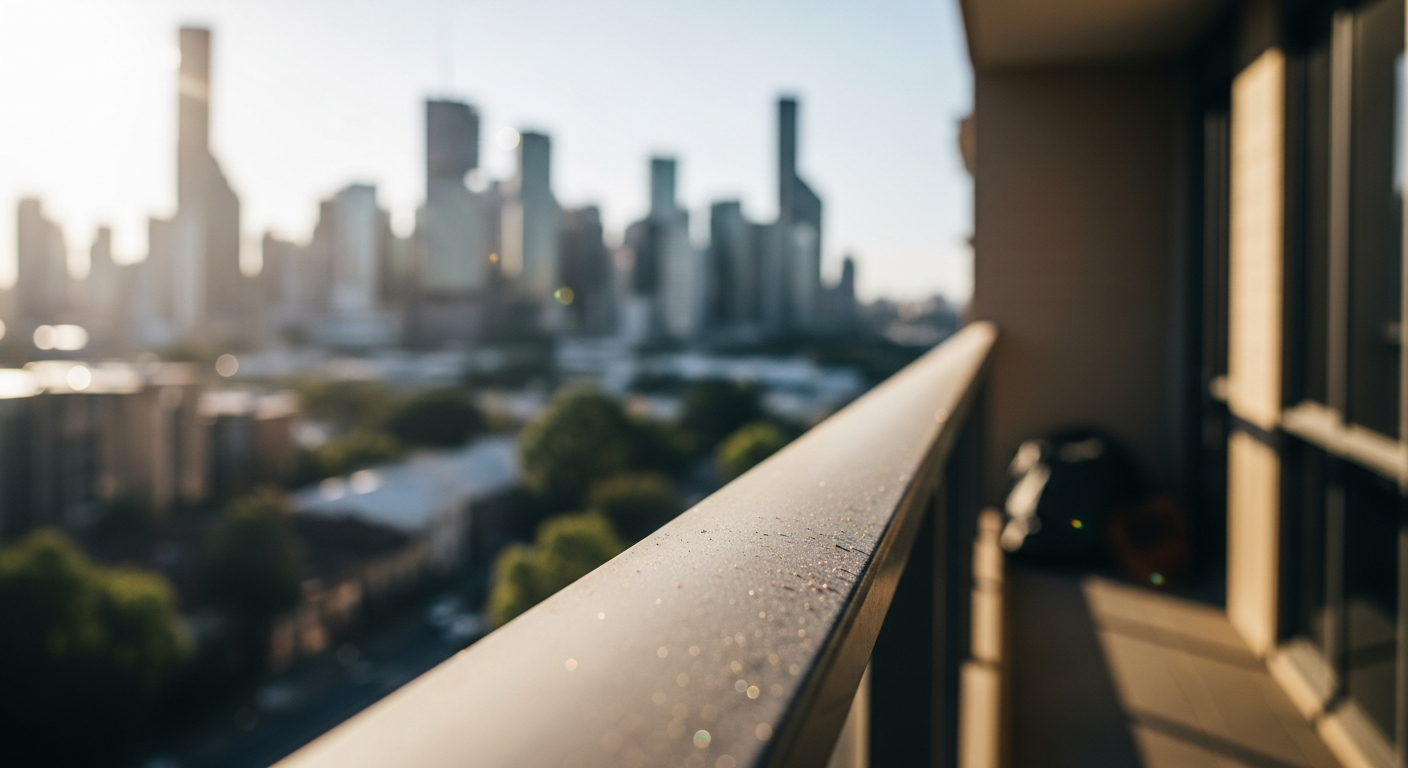
A pioneering study published in the journal ACS ES&T Air by researchers at the University of Queensland’s Queensland Alliance for Environmental Health Sciences (QAEHS) has, for the first time, quantitatively documented the accumulation of tyre wear particles (TWPs) and toxic tyre additive chemicals (TACs) in Australian urban residential environments. The university announced the findings on 21 July 2026. The research analysed dust collected from 30 outdoor residential balconies distributed across the Brisbane metropolitan region, covering inner-city, suburban, and near-road settings. The results establish a clear and concerning baseline: tyre-derived contamination is not confined to road surfaces or stormwater drains. It is present, in measurable concentrations, in the everyday living spaces of urban residents.
The headline figures are striking. Tyre additive chemicals were detected on 29 of the 30 balconies sampled, representing a detection rate of 97 per cent. Of particular concern, 6PPD-quinone, a toxic transformation product formed when the tyre antioxidant 6PPD reacts with atmospheric ozone, was detected on 23 of the 30 balconies surveyed, equating to 77 per cent of sites. This compound has attracted significant international attention due to its role in mass coho salmon mortality events in the United States, and its detection in Australian residential dust at this prevalence marks a significant moment for environmental practitioners and regulators alike.
For contaminated land consultants, human health risk assessors, environmental auditors, and the developers and councils who instruct them, this research introduces a genuinely new exposure pathway that sits outside most current site assessment frameworks. Atmospheric deposition of non-exhaust vehicle emissions into occupied residential spaces has, until now, received very little structured attention in Australian practice. This study changes that. It provides the first quantitative Australian data to support the argument that high-density residential developments near traffic corridors face a real and assessable risk from airborne tyre-derived contaminants, independent of any legacy soil contamination beneath the site.
Key details of the UQ QAEHS tyre wear particle study and 6PPD-quinone findings
The QAEHS research team collected dust samples from 30 outdoor residential balconies across the Brisbane metropolitan area, deliberately selecting a range of settings to capture variation by proximity to the central business district, distance from major roads, and balcony height above ground level. The study identified and quantified a suite of tyre additive chemicals including 6PPD-quinone, Hexa(methoxymethyl)melamine (HMMM), 2-(4-Morpholinyl)benzothiazole (24MoBT), and 5-methylbenzotriazole (5-MBTR). The detection of these compounds across such a broad cross-section of residential settings confirms that TAC contamination via atmospheric deposition is a widespread urban phenomenon, not an outlier condition confined to properties immediately adjacent to highways.
One of the most technically significant findings is that TAC concentrations do not scale linearly with total TWP mass. This is a critical distinction for risk assessment methodology. Balconies located within approximately 5 kilometres of Brisbane’s CBD exhibited notably higher chemical enrichment, with a median TAC concentration of 333 nanograms per milligram (ng/mg) compared to a median of 101 ng/mg on suburban balconies further from the city centre. The research attributes this pattern to atmospheric transformation and redistribution of tyre chemical additives during transport, meaning the chemical hazard and the particulate hazard behave differently in the atmosphere and must therefore be evaluated separately. A site assessment approach that characterises only bulk particulate deposition will systematically underestimate the chemical additive risk in locations that receive wind-transported material from high-traffic urban cores.
Wind speed was identified as a major driver of atmospheric transport, demonstrating that physical separation from a busy road does not provide meaningful protection against tyre-derived chemical exposure. The study also found that balcony height and proximity to the CBD were statistically significant predictors of contamination levels, with lower-level balconies and those closer to the city centre recording higher concentrations. These findings suggest that receptor-specific factors, including floor level, building orientation, and urban positioning relative to traffic corridors, need to be incorporated into exposure modelling for high-density residential developments.
The specific toxicological profile of 6PPD-quinone warrants close attention. It is not a primary ingredient of tyre rubber but a transformation product: 6PPD is used as an antioxidant and antiozonant in tyre manufacturing, and upon exposure to atmospheric ozone it converts to 6PPD-quinone. Laboratory studies in the United States have demonstrated acute lethality to coho salmon at concentrations as low as 0.8 micrograms per litre (µg/L). While aquatic ecotoxicology and human health toxicology involve different endpoint frameworks, the compound’s demonstrated potency in aquatic species at very low concentrations, combined with its now-confirmed presence in Brisbane residential dust, highlights the need for early-stage consideration of human exposure pathways, particularly ingestion and inhalation of resuspended indoor and balcony dust by children and other sensitive receptors.
Australian context: how this study intersects with existing contaminated land and air quality frameworks
Australia’s primary contaminated land assessment framework, the National Environment Protection (Assessment of Site Contamination) Measure 1999, as amended in 2013 (NEPM 2013), does not currently include health investigation levels or screening criteria for tyre additive chemicals, including 6PPD-quinone, HMMM, or related compounds. This is not a minor gap. The NEPM 2013 was developed to address legacy contaminants associated with industrial land use — petroleum hydrocarbons, heavy metals, chlorinated solvents, and similar — and its conceptual model of contamination presupposes a source that is spatially bounded and historically fixed. Atmospheric deposition of traffic-derived chemicals into occupied residential spaces does not fit that model. There is no former land use to investigate, no identifiable point source, and no remediation pathway that a site auditor can readily apply under current guidance.
The air quality regulatory framework presents a parallel limitation. State-based ambient air quality standards and the National Environment Protection (Ambient Air Quality) Measure address criteria pollutants — particulate matter fractions such as PM10 and PM2.5, ozone, nitrogen dioxide, carbon monoxide, sulphur dioxide, and lead — but do not extend to non-exhaust vehicle emissions or the chemical constituents of tyre wear. There is no regulatory trigger, no exceedance threshold, and no monitoring obligation that would currently capture 6PPD-quinone or other TACs in an urban residential setting. This means that a development application for a high-rise apartment building adjacent to a major arterial road could proceed through standard environmental assessment processes without any consideration of tyre-derived chemical exposure to future residents.
For practitioners, the immediate implication is that this exposure pathway must be addressed through professional judgement and conservative risk assessment practice, rather than by reference to codified standards. Human health risk assessments conducted under the NEPM 2013 framework allow for site-specific exposure scenario development, and that flexibility provides a mechanism for incorporating atmospheric deposition of TACs as an additional pathway where site conditions warrant it. The UQ QAEHS study now provides the first Australian-specific concentration data to support such an approach, giving practitioners a defensible empirical basis for including balcony and indoor dust ingestion and inhalation as assessed pathways in developments meeting the relevant proximity and density criteria.
References and related sources
- Primary source: news.uq.edu.au
- acs.org
- acs.org
- uq.edu.au
- miragenews.com
- NEPM Assessment of Site Contamination
How iEnvi can help
iEnvi provides specialist consulting services relevant to this topic. Our team includes CEnvP Site Contamination Specialists with experience across contaminated land, groundwater, remediation, ecology, and regulatory compliance.
- iEnvi contaminated land investigation services
- iEnvi remediation and validation services
- iEnvi expert services and independent review services
This is an iEnvi Machete news summary. Prepared by iEnvi to summarise the source article for contaminated land, groundwater, remediation, approvals and site risk professionals.
Published: 21 Jul 2026
Need advice on this topic? Speak to an iEnvi expert at info@ienvi.com.au or 1300 043 684, or contact us online.
Need advice on this issue? iEnvi provides practical, senior-led environmental consulting across contaminated land, remediation, ecology and environmental risk.
Team credentials Contamination risk assessment Contaminated land services Remediation services Talk to iEnvi