

Overview
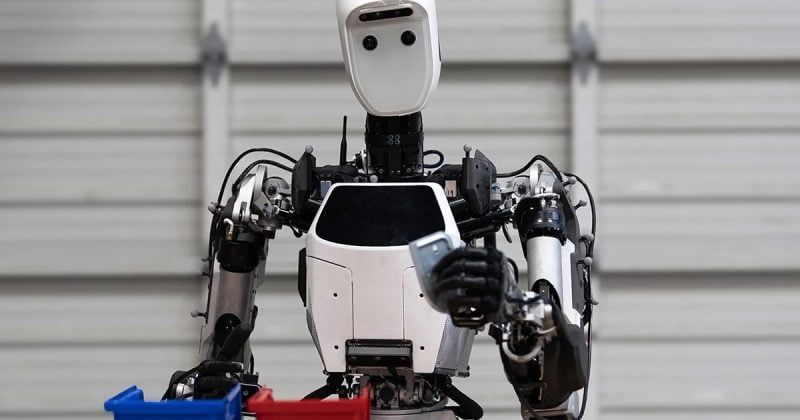
Google-backed humanoid robotics startup Apptronik officially opened its Robot Park facility in Austin, Texas, on 30 June 2025, marking a concrete shift in how the robotics industry is approaching the commercialisation of general-purpose humanoid machines. The 8,361 square metre (90,000 square foot) facility, housed inside a former Dell server plant, operates as a physical data factory where fleets of the company’s newly unveiled Apollo 2 humanoid robots are put to work under human teleoperation. The high-fidelity training data generated at the facility feeds directly into Google DeepMind’s Gemini Robotics foundational AI model, creating an integrated, continuous learning loop between physical robot performance and machine learning development.
The opening of Robot Park is significant not because it represents a breakthrough in mechanical hardware, but because it directly addresses what robotics researchers and industry analysts have consistently identified as the primary bottleneck to commercially viable humanoid robots: the severe shortage of real-world physical training data. Unlike large language models, which can be trained on trillions of text tokens already available across the internet, physical AI systems require multi-modal sensory data covering spatial depth, friction coefficients, weight distribution, and object interaction that can only be generated through robots actually doing work in real environments. Apptronik CEO and co-founder Jeff Cardenas framed the facility’s purpose in direct terms: “Just like you have a factory to build robots, we have a data factory to generate the kind of data we need.”
For business leaders, operations managers, and technology strategists across logistics, warehousing, manufacturing, and professional services, this development signals that the timeline for scalable robotic labour deployment is compressing. The infrastructure being built at Robot Park is specifically designed to bridge the gap between impressive demonstration videos and production-grade robots that can reliably perform repetitive physical tasks across industrial and commercial environments at scale.
Key details of the Robot Park facility and Apollo 2 platform
The Apollo 2 humanoid robot stands approximately 1.8 metres tall and is capable of lifting loads of up to 25 kilograms (55 pounds). It is available in both bipedal and wheeled configurations, giving operators flexibility depending on the terrain and task requirements of a given deployment environment. The platform incorporates next-generation actuation systems, optimised multi-camera sensor placement designed specifically to capture high-quality multi-modal training data, and a newly safety-rated battery that provides a reliable four-hour operational runtime per charge cycle. That safety certification is not incidental. It is the specific technical qualification that permits Apptronik to deploy Apollo 2 units directly onto active customer pilot sites, rather than restricting testing to controlled laboratory conditions.
The operational model at Robot Park centres on teleoperation rather than autonomous scripted behaviour. Human handlers remotely guide the Apollo 2 robots through repetitive physical tasks representative of real logistics, retail, and manufacturing workflows. Every movement the robots make, including successes, failures, corrections, and edge-case interactions with physical objects, is captured by the onboard sensor suite and translated into structured digital training datasets. These datasets are then transmitted to Google DeepMind for integration into the Gemini Robotics foundational model. This approach is deliberately designed to generate the type of grounded, high-fidelity physical interaction data that cannot be synthesised computationally or sourced from existing digital repositories.
Cardenas was explicit that Apollo 2 is positioned as a prototype and data collection platform rather than a commercially shipping product. The data gathered through Robot Park operations and customer pilot deployments is being used to develop Apollo 3, which is anticipated for release within the next year. Apollo 3 is intended to be Apptronik’s first commercially shipping, production-grade humanoid robot, purpose-built for high-speed industrial deployment at scale. This staged development pathway, from demonstration hardware to data platform to production system, reflects a deliberate engineering and commercial strategy rather than incremental product iteration.
The choice of a former Dell server plant as the facility’s location is also worth noting from an infrastructure standpoint. The building’s existing power infrastructure, floor loading capacity, and network connectivity made it well-suited to the dual demands of housing large fleets of active robotic systems and transmitting substantial volumes of sensor data in real time. The facility represents a capital-intensive physical investment in data generation infrastructure at a time when most AI investment has been directed toward cloud compute and software development.
Australian business and professional services context for embodied AI development
Australia’s industrial and resources sectors are among the most advanced globally in their adoption of autonomous and semi-autonomous equipment, particularly within mining, where remotely operated drilling systems, autonomous haul trucks, and predictive maintenance programmes are already embedded in major operational workflows. The trajectory established by Apptronik’s Robot Park, accelerating the development of general-purpose humanoid robots capable of performing unstructured physical tasks, is directly relevant to Australian industries facing persistent labour availability constraints, including resources, construction, and logistics.
References and related sources
- Primary source: apptronik.com
- wtaq.com
- businessinsider.com
- cryptobriefing.com
- forbes.com
How iEnvi can help
iEnvi integrates technology and data-driven approaches into environmental consulting. We monitor AI and technology developments that affect how environmental professionals deliver services to clients.
This is an iEnvi Machete news summary. Prepared by iEnvi to summarise the source article for environmental professionals tracking AI, data, and technology developments that affect consulting and project delivery.
Published: 01 Jul 2026
Need advice on this topic? Speak to an iEnvi expert at info@ienvi.com.au or 1300 043 684, or contact us online.
Need advice on this issue? iEnvi provides practical, senior-led environmental consulting across contaminated land, remediation, ecology and environmental risk.
Contaminated land advice Remediation services Discuss your site Talk to iEnvi