
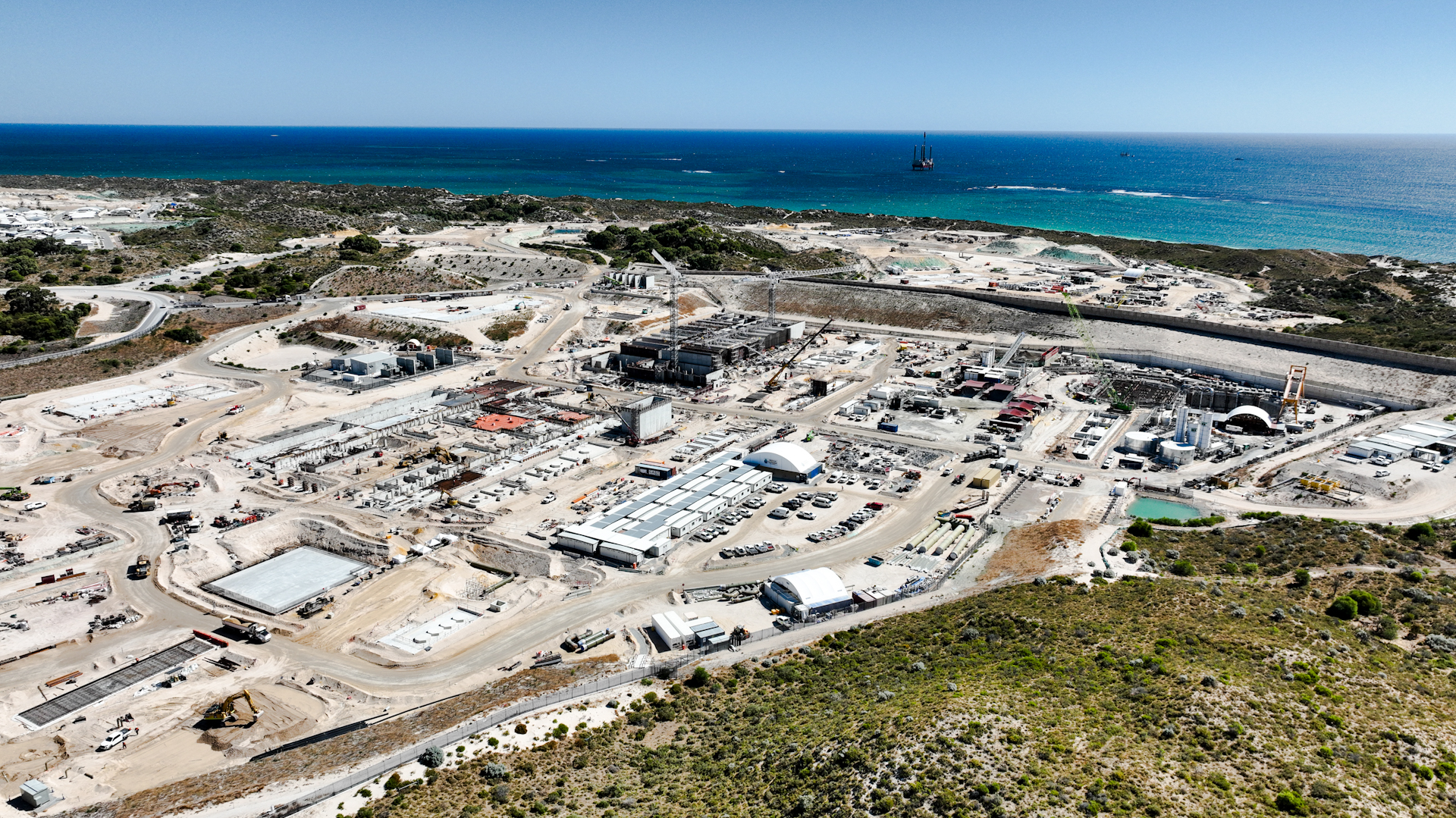
Overview of the Alkimos Desalination Design
The Alkimos Seawater Alliance, a major partnership comprising infrastructure builder ACCIONA, Western Australia’s Water Corporation, and engineering consultancy Jacobs, has reached a significant design milestone for the upcoming Alkimos Seawater Desalination Plant. The alliance is integrating a dedicated, on-site groundwater treatment plant into the facility’s design to blend treated groundwater directly with reverse osmosis permeate. This integration represents the first time a desalination facility of this scale in Western Australia will utilise direct groundwater blending as its primary mechanism for achieving final drinking water quality, rather than relying solely on post-treatment chemical additions.
For Australian environmental professionals, developers, municipal planners, and legal advisors, this development marks a critical shift in integrated water resource management. Traditional desalination schemes treat seawater and groundwater as separate, parallel municipal streams. By co-locating and integrating these resources, the Alkimos design directly addresses the chemical and environmental challenges associated with conditioning desalinated water. This engineering approach offers a blueprint for sustainable water infrastructure that could influence future utility designs across Australia’s rapidly expanding coastal urban corridors.
As climate variability continues to pressure traditional surface water catchments, major urban centres are increasingly dependent on desalinated water. However, the mineral profile of pure desalinated water presents significant operational challenges for distribution infrastructure. The integration of localised groundwater extraction and treatment to stabilise this water represents a sophisticated balancing act. This approach requires careful alignment with environmental regulations, water allocation licensing, and hydrogeological impact assessments, making it a highly relevant case study for contaminated land and water resource specialists nationwide.
How Groundwater Blending Reduces Chemical Usage
Seawater desalination via reverse osmosis is highly effective at removing dissolved salts, organic compounds, and minerals. However, this high level of purity results in a product water, known as reverse osmosis permeate, that is mineral-deficient and highly corrosive. Permeate typically exhibits extremely low total dissolved solids and a negative Langelier Saturation Index, meaning it has a high capacity to dissolve calcium carbonate. If introduced directly into a municipal distribution network, this corrosive water would rapidly degrade concrete water mains, metallic pipework, and domestic plumbing infrastructure.
To prevent infrastructure corrosion and meet the aesthetic and health standards of the Australian Drinking Water Guidelines, desalinated water must undergo post-treatment remineralisation. Historically, this has required substantial chemical dosing on-site. Traditional desalination facilities rely heavily on bulk quantities of hydrated lime, quicklime, or carbon dioxide to artificially increase the pH, total alkalinity, and calcium hardness of the water. This traditional approach requires continuous transport, storage, and handling of bulk chemical reagents, introducing ongoing operational hazards, supply chain vulnerabilities, and chemical storage footprint challenges.
The Alkimos design addresses this issue by utilising the natural mineral hardness of local groundwater to buffer the corrosive reverse osmosis permeate. Under the integrated design, groundwater will be extracted from the local aquifer and passed through an on-site groundwater treatment plant to remove target impurities such as dissolved iron, manganese, or organic carbon. Once treated, this mineral-rich groundwater is blended directly with the reverse osmosis permeate in a calculated volumetric ratio. The natural calcium and magnesium ions present in the groundwater act as a natural buffering agent, establishing the necessary mineral balance and alkalinity.
According to design projections from the Alkimos Seawater Alliance, this integrated blending process is expected to reduce the post-treatment chemical demand of the facility by up to 50 per cent. While targeted chemical dosing will remain on-site as a secondary control to fine-tune final water quality parameters, the primary stabilisation will be achieved via this natural blending method. By halving the requirement for bulk post-treatment chemicals, the design significantly reduces the physical footprint required for chemical storage, minimises the hazard profile for plant operators, and reduces the frequency of heavy vehicle chemical deliveries to the coastal facility.
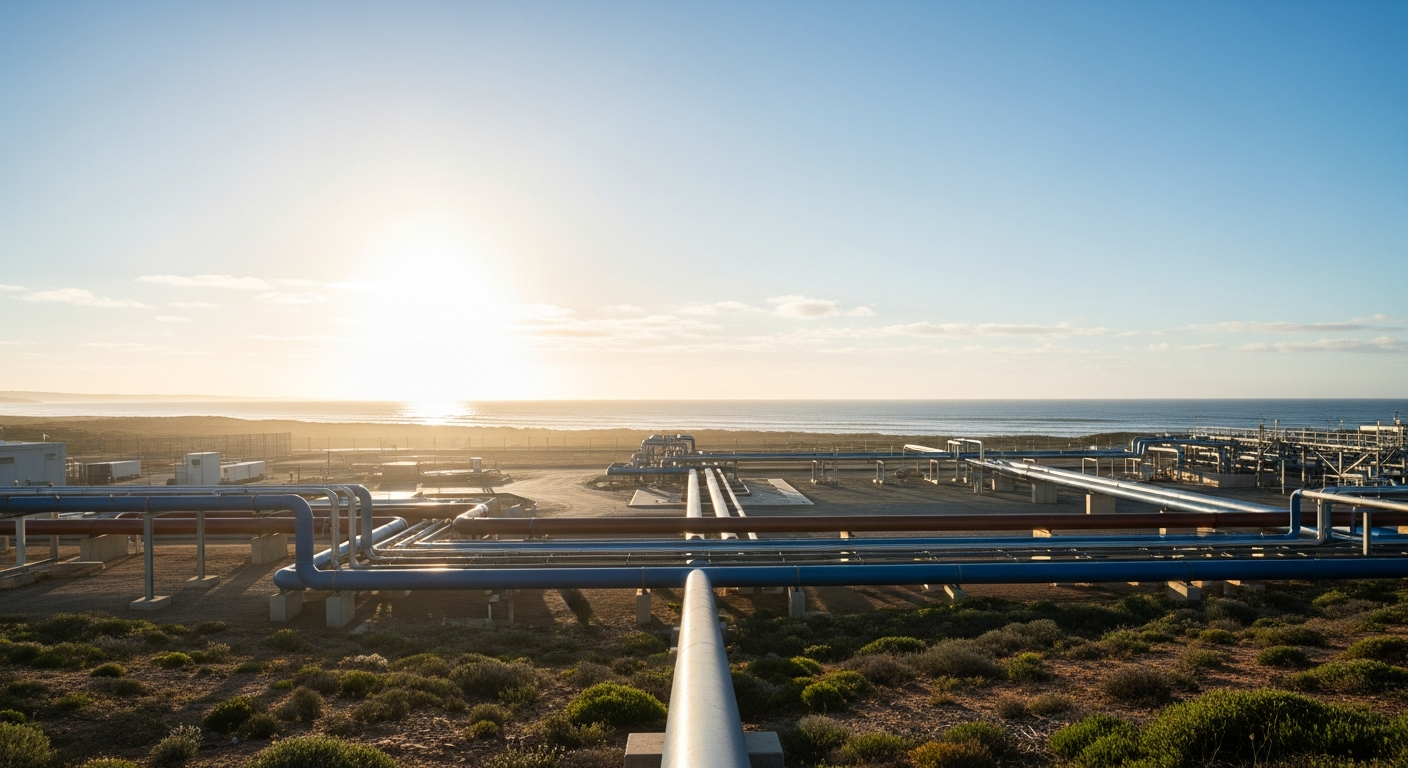
Regulatory and Environmental Framework in Western Australia
The integration of groundwater extraction for municipal blending within a major desalination project highlights the complex regulatory landscape governing Australian water resources. In Western Australia, groundwater abstraction is regulated by the Department of Water and Environmental Regulation under the Rights in Water and Irrigation Act 1914. Any large-scale extraction must align with strict water allocation plans and ensure that drawdowns do not negatively impact local groundwater-dependent ecosystems, such as the sensitive banksia woodlands or coastal wetlands characteristic of the Swan Coastal Plain.
From a water quality perspective, the blended water must consistently comply with the Australian Drinking Water Guidelines, which are jointly maintained by the National Health and Medical Research Council and the Natural Resource Management Ministerial Council. The guidelines set specific aesthetic thresholds for pH between 6.5 and 8.5, and a hardness target of 60 to 200 milligrams of calcium carbonate per litre to prevent both corrosion and excessive scale deposition. Blending groundwater introduces a variable raw water source into the stream, requiring highly responsive monitoring systems to manage fluctuations in source water quality and maintain steady-state compliance.
References and related sources
- Primary source: www.acciona.com.au
- Australian Drinking Water Guidelines
How iEnvi can help
iEnvi provides specialist consulting services relevant to this topic. Our team includes CEnvP Site Contamination Specialists with experience across contaminated land, groundwater, remediation, ecology, and regulatory compliance.
- iEnvi groundwater services
- iEnvi remediation and validation services
- iEnvi expert services and independent review services
This is an iEnvi Machete news summary. Prepared by iEnvi to summarise the source article for contaminated land, groundwater, remediation, approvals and site risk professionals.
Published: 17 Jun 2026
Need advice on this topic? Speak to an iEnvi expert at info@ienvi.com.au or 1300 043 684, or contact us online.
Need advice on this issue? iEnvi provides practical, senior-led environmental consulting across contaminated land, remediation, ecology and environmental risk.
Team credentials Groundwater investigation and treatment Contaminated land services Remediation services Talk to iEnvi