
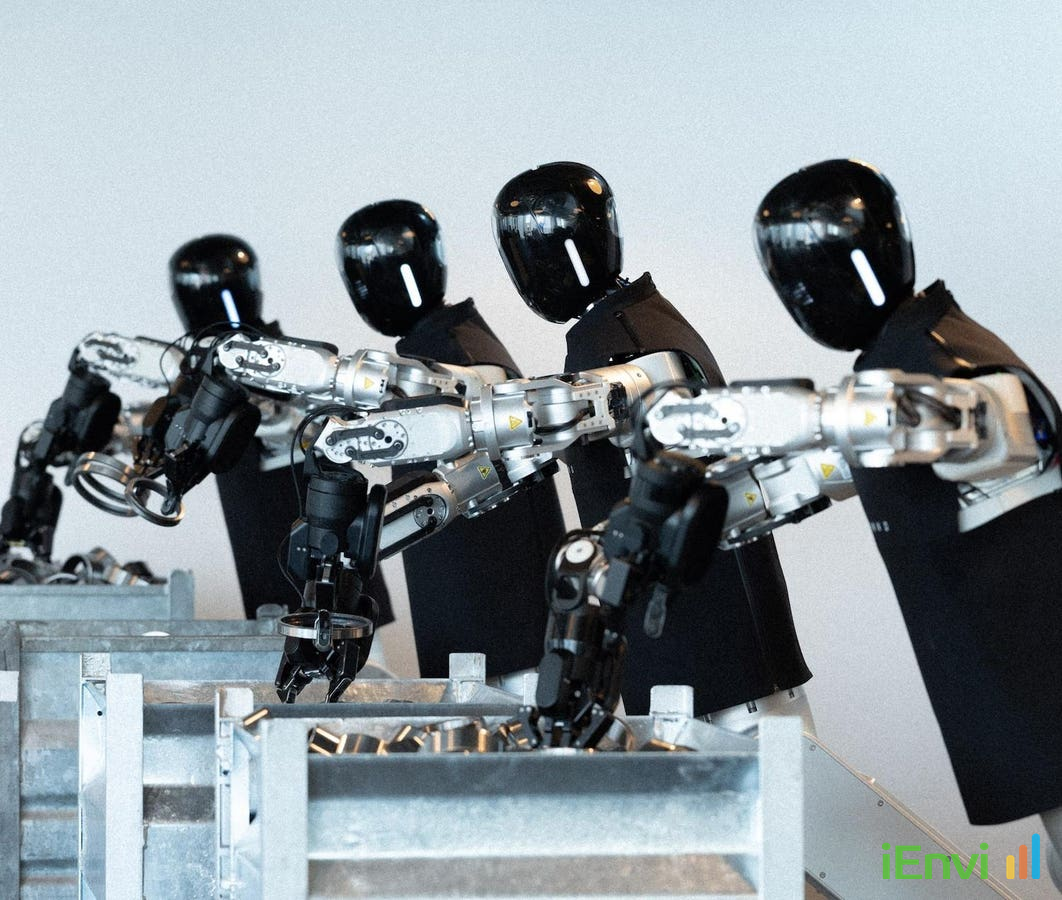
Europe’s First Humanoid Robotics Unicorn: US$152M Series A
On 21 July 2026, London-based robotics startup Humanoid announced a Series A funding round of US$152 million at a post-money valuation of US$1.35 billion, making it Europe’s first pure-play humanoid robotics unicorn. The company, which was founded only two years prior, has now raised a total of US$270 million, and this Series A is on record as the largest ever completed by a humanoid-first robotics company in Europe. The round was led by Prime Movers Lab and included investment from Robert Bosch GmbH, Schaeffler, Fubon Financial Holding Venture Capital, and Aglaé Ventures.
The significance of this milestone extends well beyond the headline valuation figure. Until this point, the race to commercialise physical AI and humanoid robotics has been dominated by large American corporations such as Tesla with its Optimus platform, and by a cluster of well-capitalised Chinese manufacturers. Humanoid’s emergence as a billion-dollar European company signals that the competitive geography of this sector is broadening. For enterprise leaders, industrial operators, logistics planners, and asset managers, this development marks a clear inflection point: humanoid robotics is transitioning from speculative laboratory research into revenue-generating industrial deployments at scale.
What makes this funding round particularly notable is the composition of the investors. Robert Bosch GmbH and Schaeffler are not venture capital firms placing speculative bets on distant technology horizons. They are major global industrial and automotive component suppliers with deeply embedded supply chains and manufacturing operations. Their participation signals that the largest industrial operators in the world are now treating humanoid robotics as a near-term operational consideration rather than a futuristic concept. For Australian businesses operating in logistics, manufacturing, resources, and infrastructure, this development warrants close attention.
Key details of the Humanoid funding round and HMND 01 technology
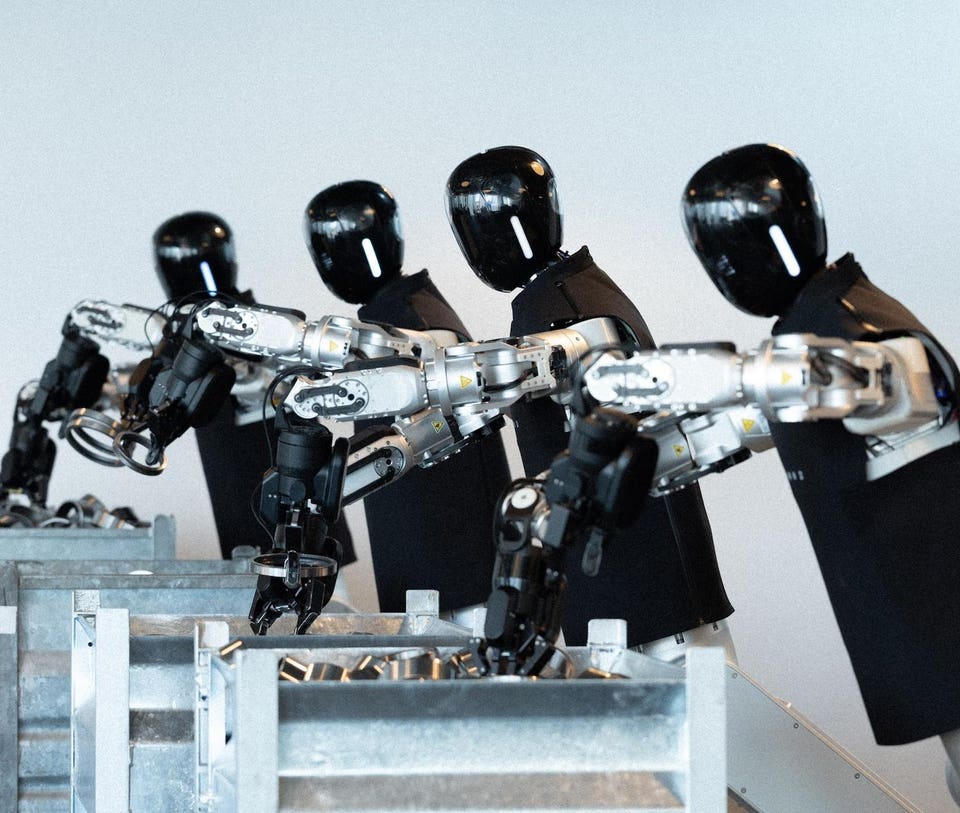
The flagship product at the centre of Humanoid’s commercial strategy is the HMND 01, a robot that distinguishes itself from most humanoid competitors through its wheeled bipedal locomotion design. Where rivals such as Tesla’s Optimus and the Figure platform rely on fully bipedal two-legged walking, the HMND 01 uses a wheeled base paired with an upper-body humanoid form. This hybrid approach delivers meaningful engineering advantages in structured industrial environments such as warehouses, manufacturing floors, and logistics facilities. Wheeled locomotion is substantially more energy-efficient than bipedal walking, which requires continuous computational and mechanical effort to maintain balance. It also enables faster movement speeds across flat surfaces, which are the dominant terrain in the logistics and manufacturing settings Humanoid is targeting.
The regulatory dimension of this design choice is equally important. In European markets, fully bipedal autonomous systems face complex safety certification requirements under machinery directives that govern dynamic balance, fall risk, and interaction with human workers. By using a wheeled base, Humanoid reduces the regulatory surface area of the safety certification process, allowing the company to move more rapidly through European market approval pathways. The company has announced plans to deploy beta versions of the HMND 01 at customer facilities during the fourth quarter of 2026, targeting logistics, manufacturing, and retail environments. Schaeffler, one of the lead investors, has indicated plans involving thousands of robots in its own operations, which represents one of the largest announced deployment commitments for humanoid systems outside of the United States.
On the software side, Humanoid is developing a proprietary AI framework called KinetIQ. The system operates across four distinct functional layers: spatial perception of the real-world environment, interpretation of human instructions, autonomous decision-making, and precise physical execution of tasks. This layered architecture is designed to allow the robot to adapt to changing conditions in a dynamic industrial environment without requiring constant manual reconfiguration by operators. The funding from this Series A round will accelerate the development and refinement of KinetIQ, which the company positions as the core differentiator between a general-purpose manipulator and a genuinely autonomous industrial worker. Robert Bosch GmbH is acting as Humanoid’s contract manufacturing partner, providing hardware design expertise, production capability, and supply chain management. This arrangement addresses one of the most common failure modes for hardware startups: the inability to scale physical production once commercial demand materialises.
Klaus Rosenfeld, Chief Executive of Schaeffler, stated publicly that “humanoid robotics is rapidly moving from a visionary concept to an industrial reality,” and described Schaeffler as actively backing one of the most exciting frontiers in technology. This statement from the head of a company with revenues measured in the tens of billions of euros carries weight that a statement from a venture capitalist would not. It reflects an assessment that the technology has cleared the threshold from interesting prototype to deployable operational tool, at least in the structured environments where Schaeffler and its peers operate.
Australian context: physical AI and workforce automation entering the industrial mainstream
Australia’s industrial and logistics sectors face the same labour market pressures driving humanoid robotics investment globally. Workforce shortages in warehousing, manufacturing, and resource processing have intensified since 2020, and the pipeline of skilled and semi-skilled workers available to fill repetitive industrial roles remains constrained.
References and related sources
- Primary source: www.forbes.com
- thehumanoid.ai
- pulse2.com
- humanoidhub.ai
- euronext.com
How iEnvi can help
iEnvi integrates technology and data-driven approaches into environmental consulting. We monitor AI and technology developments that affect how environmental professionals deliver services to clients.
This is an iEnvi Machete news summary. Prepared by iEnvi to summarise the source article for environmental professionals tracking AI, data, and technology developments that affect consulting and project delivery.
Published: 23 Jul 2026
Need advice on this topic? Speak to an iEnvi expert at info@ienvi.com.au or 1300 043 684, or contact us online.
Need advice on this issue? iEnvi provides practical, senior-led environmental consulting across contaminated land, remediation, ecology and environmental risk.
Contaminated land advice Remediation services Discuss your site Talk to iEnvi