
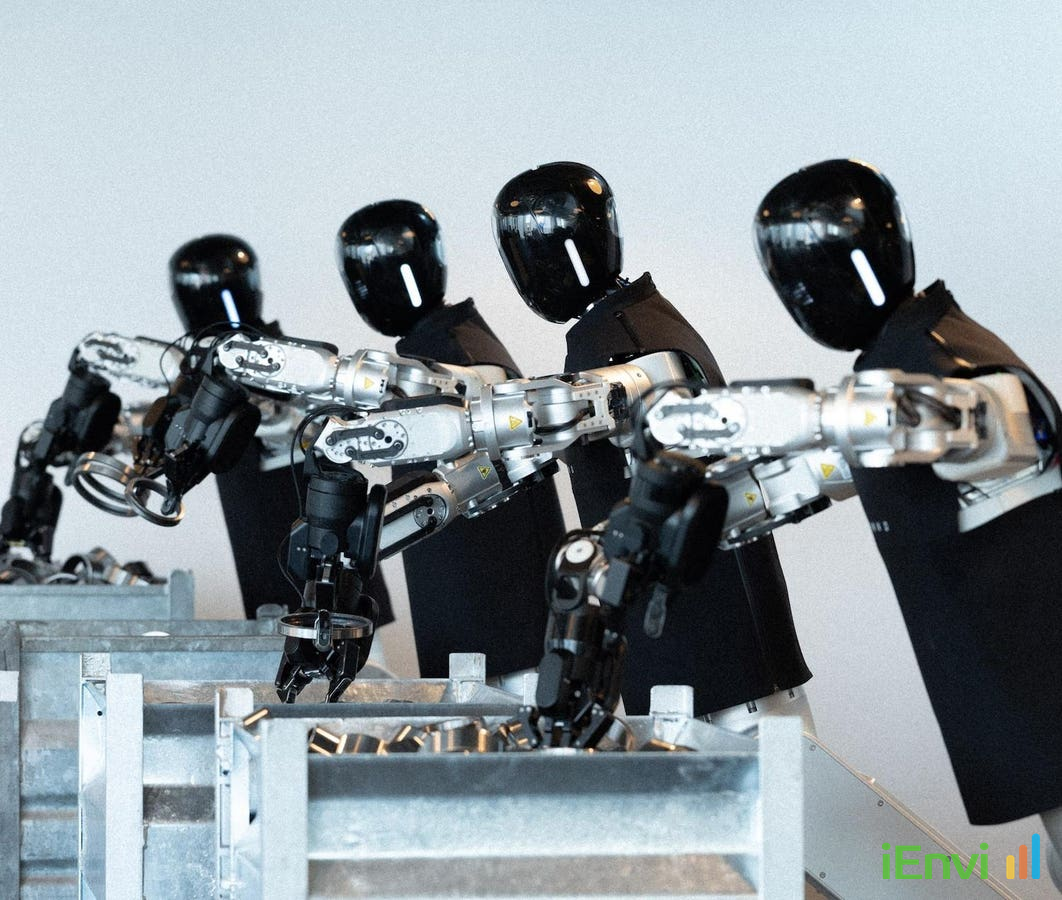
Humanoid exits stealth with USD $152 million Series A, becoming Europe’s first humanoid robotics unicorn
London-based robotics startup Humanoid exited stealth mode on 21 July 2026, announcing a USD $152 million (approximately AUD $230 million) Series A funding round at a post-money valuation of USD $1.35 billion (approximately AUD $2.04 billion). The raise crowns Humanoid as Europe’s first pure-play humanoid robotics unicorn, a milestone that marks a meaningful shift in the global geography of physical AI development. The round was led by Prime Movers Lab, with strategic participation from German industrial heavyweights Schaeffler and Bosch, Taiwan’s Fubon Financial Holding Venture Capital, and Aglaé Ventures, the venture capital arm backed by the LVMH Arnault family.
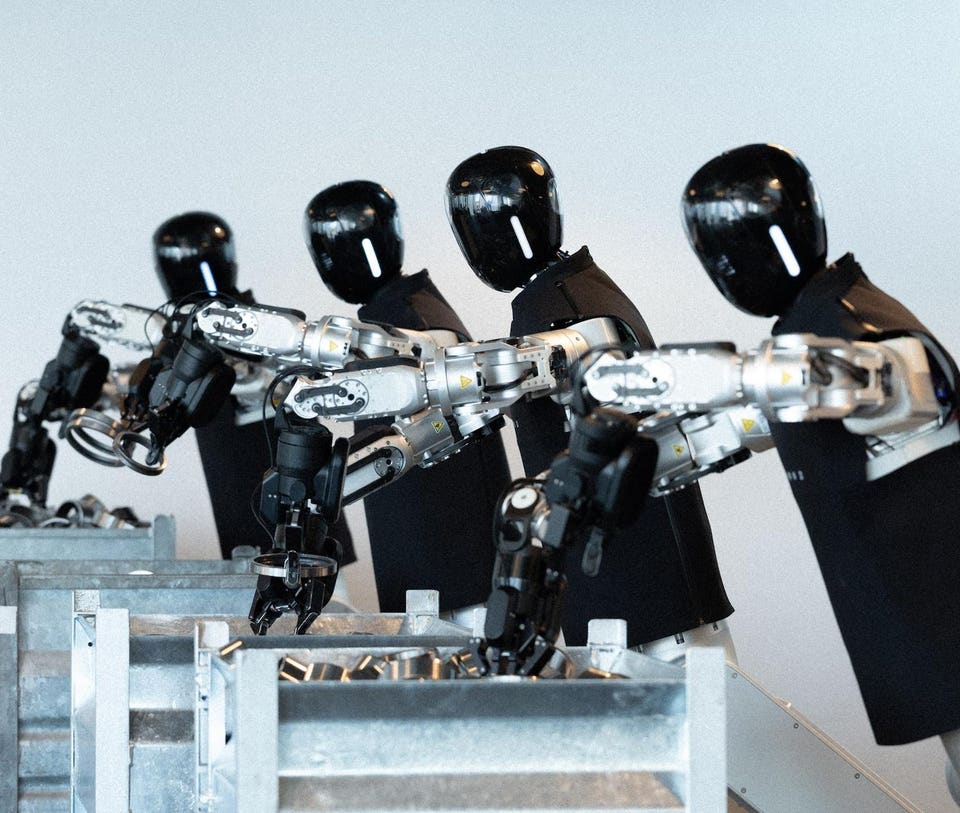
The significance of this funding event extends well beyond the headline valuation. For the better part of a decade, the humanoid robotics field has been dominated by American programmes such as Boston Dynamics and Tesla’s Optimus, and a wave of heavily capitalised Chinese entrants. Humanoid’s emergence as a credible, commercially oriented European competitor introduces a new axis of competition, and signals that the industrial deployment of physical AI is maturing from laboratory demonstrations into contractually committed production pipelines. The company’s approach is deliberately pragmatic: rather than pursuing the technically ambitious but commercially slow path of bipedal locomotion, Humanoid has built its flagship platform, the HMND 01, on a wheeled base optimised for flat-floor factory environments.
For Australian professionals operating in industrial, logistics, environmental, and professional services sectors, the speed of this commercial transition is the most important signal to absorb. The gap between robotics as a theoretical future and robotics as a budgetary line item in operational planning is closing faster than most business cases have accounted for. When a two-year-old startup can secure a contractual order for 1,000 units and a manufacturing agreement covering up to 100,000 units over five years, the technology is no longer early-stage. It is a procurement decision.
Key details of the Humanoid HMND 01 platform and its commercial agreements
The HMND 01 robot is built around a wheeled base rather than articulated legs. This design choice is not a compromise but a deliberate engineering position. Wheeled locomotion on flat industrial floors eliminates an enormous category of mechanical complexity: the balance control systems, multi-joint actuation, and energy-intensive stabilisation algorithms that bipedal robots require consume substantial computing resources and introduce significant points of failure. A wheeled platform maximises battery efficiency, improves payload stability, and reduces per-unit manufacturing cost, three factors that collectively determine whether a robotics product can scale commercially within a reasonable capital envelope.
Humanoid has secured a commercial agreement to deploy 1,000 HMND 01 robots at Schaeffler facilities, with Schaeffler also participating as a strategic investor in the Series A. Separately, Bosch has been engaged as the contract manufacturing partner, with confirmed capacity to produce up to 100,000 humanoid units over the next five years. European CE certification is projected as early as 2027. The regulatory pathway to that certification is, crucially, already established. Because the HMND 01 operates as a wheeled platform, it can be assessed under existing autonomous mobile robot (AMR) and collaborative robot standards rather than requiring new regulatory frameworks developed for legged locomotion. This is the core of the company’s regulatory strategy: let competitors absorb the cost of establishing novel certification pathways, then certify a purpose-built platform under frameworks that already exist.
The software architecture underpinning the HMND 01 fleet is a proprietary platform called KinetIQ. This system is designed for multi-robot fleet coordination, enabling groups of humanoid units to dynamically divide labour across complex manipulation tasks and execute them at near-human speeds. Fleet-level AI coordination of this type is important because it shifts the unit of productivity from the individual robot to the coordinated team, which substantially changes the return-on-investment calculation for industrial operators. Rather than asking what one robot can do, operators can ask what a coordinated fleet of twenty robots can accomplish on a single shift.
The company’s talent strategy has been equally deliberate. Rather than building R&D capability incrementally, Humanoid recruited more than 50 senior engineers directly from organisations including Boston Dynamics, Sanctuary AI, Apptronik, and 1X. Chief Product Officer Sotirios Stasinopoulos described this approach as the “second-mover advantage”: the ability to absorb lessons that competitors paid millions or billions of dollars to learn, without bearing those experimental costs directly. For a company that is only two years old, this recruitment strategy has compressed the typical development timeline considerably.
Australian context: physical AI, industrial automation, and the professional services implications
Australia does not currently host a humanoid robotics manufacturer of comparable scale, and the domestic regulatory environment for autonomous mobile robots is still developing. The relevant frameworks include the Work Health and Safety Act provisions applicable in each jurisdiction, the emerging Safe Work Australia guidance on automated plant and machinery, and Australian Standard AS 4024 (Safety of Machinery). The Robotic and Autonomous Systems in the Workplace guidance produced by Safe Work Australia provides an initial framework, but it was not written with fleet-coordinated humanoid platforms in mind. As commercial deployments of platforms like the HMND 01 move from European factories toward global supply chains, Australian operators in industrial, environmental, and infrastructure sectors will need to assess both the operational opportunities and the compliance obligations that accompany them. The pace of international deployment is likely to outrun domestic regulatory guidance, placing the burden of due diligence squarely on individual organisations and their advisers.
References and related sources
- Primary source: www.forbes.com
- eicker.news
How iEnvi can help
iEnvi integrates technology and data-driven approaches into environmental consulting. We monitor AI and technology developments that affect how environmental professionals deliver services to clients.
This is an iEnvi Machete news summary. Prepared by iEnvi to summarise the source article for environmental professionals tracking AI, data, and technology developments that affect consulting and project delivery.
Published: 26 Jul 2026
Need advice on this topic? Speak to an iEnvi expert at info@ienvi.com.au or 1300 043 684, or contact us online.
Need advice on this issue? iEnvi provides practical, senior-led environmental consulting across contaminated land, remediation, ecology and environmental risk.