
Overview
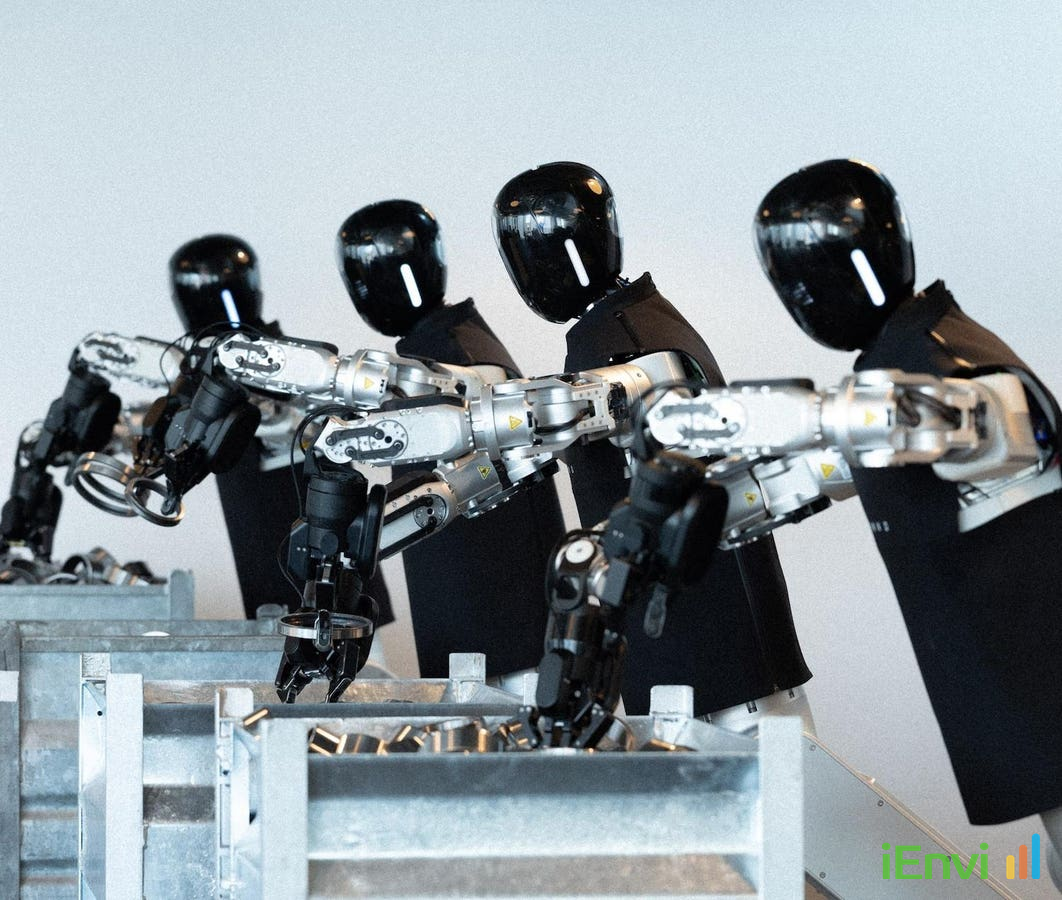
On 21 July 2026, London-based robotics startup Humanoid announced a $152 million Series A funding round at a post-money valuation of $1.35 billion, formally becoming Europe’s first pure-play humanoid robotics unicorn. Founded only two years earlier in 2024, the company has now raised a cumulative total of $270 million despite not having commercially shipped a single robot. The round was led by Prime Movers Lab and includes strategic industrial investors Schaeffler, Bosch, Taiwan’s Fubon Financial, and Aglaé Ventures, the investment arm of Bernard Arnault’s LVMH group. Simultaneous with the funding announcement, Bosch confirmed it will serve as Humanoid’s official contract manufacturing partner for its next-generation robot platforms.
The significance of this raise extends well beyond a headline valuation. For the past several years, the dominant narrative around artificial intelligence centred on generative AI, large language models, and software-layer applications. Capital is now demonstrably rotating toward physical AI, which refers to systems capable of perceiving, planning, and acting within the real physical world rather than generating text or code outputs. AI researcher Yann LeCun argued publicly in July 2026 that autoregressive token predictors face fundamental architectural limitations when it comes to continuous, physical-world planning, a position that aligns with the investment thesis now being expressed through Humanoid’s raise. Humanoid’s valuation signals that major industrial and venture capital is treating embodied robotics not as a speculative future technology but as a near-term industrial reality.
For professionals operating across asset-heavy sectors, including logistics, construction, and infrastructure, this development is not peripheral. The transition from digital AI assistants to physically adaptive machines that can operate in unstructured environments represents a structural shift in how labour-intensive field and facility work will be planned, staffed, and executed. Understanding the technical structure of Humanoid’s raise, the manufacturing strategy behind it, and the realistic deployment timeline is essential for businesses evaluating their operational and workforce strategies over the next three to five years.
Key details of the Humanoid Series A raise and technology platform
The $152 million Series A round values Humanoid at $1.35 billion on a post-money basis, placing it firmly in unicorn territory and establishing it as the first European company to achieve that threshold in the pure-play humanoid robotics category. The total capital raised since founding in 2024 now stands at $270 million. Prime Movers Lab led the round, with co-investment from Schaeffler AG, Robert Bosch GmbH, Fubon Financial of Taiwan, and Aglaé Ventures. Each of these strategic investors brings something beyond capital: Schaeffler is a precision components and bearings manufacturer central to automotive and industrial drivetrain systems, while Bosch is one of the world’s largest engineering and technology groups with established automotive-grade contract manufacturing infrastructure.
The most operationally significant element of the announcement is Bosch’s role as contract manufacturer. Rather than attempting to build its own production lines, a process that has historically taken hardware startups five to ten years and consumed enormous capital, Humanoid will draw upon Bosch’s existing automotive-grade assembly infrastructure to scale production of its robot platforms. This arrangement directly addresses what is commonly described as the “hardware is hard” problem in deep tech investment: the majority of hardware startups fail not because their technology is inadequate but because they cannot efficiently transition from prototype to manufactured product at commercially viable unit costs. By embedding its manufacturing partner and key component suppliers directly into its capital structure, Humanoid has structurally de-risked the production scaling phase in a way that few robotics ventures have achieved.
On the deployment side, Humanoid has stated that beta robots will be placed at customer industrial sites before the end of 2026, targeting repetitive, labour-intensive warehouse and factory tasks. The company’s proprietary AI system is described as being designed to adapt dynamically to changing industrial environments without relying on rigid, pre-programmed sequences. This adaptive capacity is technically important because conventional industrial automation, including robotic arms and automated guided vehicles, typically requires highly controlled, predictable environments. A system that can replan and respond to variation in real time is a material step forward in the applicability of robotics to less structured environments, which includes many logistics and field operations contexts.
The funding will be directed at accelerating both the next-generation hardware platform and the underlying AI system. Humanoid CEO Artem Sokolov stated at the time of the announcement that the company had built one of the strongest commercial pipelines in the industry within two years, a timeline he described as typically requiring a decade. While this claim reflects the unusually compressed development cycle enabled by the industrial partnership model, it also reflects the broader acceleration in physical AI investment that has characterised 2025 and 2026 globally, with competing programmes from Tesla Optimus, Figure, Apptronik in the United States and Unitree, Agibot, and UBTech in China all progressing rapidly.
Australian business and professional services context for physical AI and humanoid robotics
Australia does not yet have a domestic humanoid robotics manufacturer at commercial scale, which means developments like Humanoid’s raise are directly relevant to how Australian businesses anticipate and respond to the arrival of these platforms through import, partnership, or early adoption agreements. Sectors with significant labour exposure, including logistics, construction, and infrastructure maintenance, will be among the first to evaluate whether humanoid platforms can address persistent workforce shortages and rising operational costs. For Australian businesses, the practical question is not whether humanoid robotics will arrive but how quickly commercially viable platforms will be available and at what price point they become economically competitive with human labour or conventional automation.
References and related sources
- Primary source: www.forbes.com
- techarcade.io
- menlotimes.com
- ground.news
- explainx.ai
- NEPM Assessment of Site Contamination
How iEnvi can help
iEnvi integrates technology and data-driven approaches into environmental consulting. We monitor AI and technology developments that affect how environmental professionals deliver services to clients.
This is an iEnvi Machete news summary. Prepared by iEnvi to summarise the source article for environmental professionals tracking AI, data, and technology developments that affect consulting and project delivery.
Published: 23 Jul 2026
Need advice on this topic? Speak to an iEnvi expert at info@ienvi.com.au or 1300 043 684, or contact us online.
Need advice on this issue? iEnvi provides practical, senior-led environmental consulting across contaminated land, remediation, ecology and environmental risk.
Contaminated land advice Remediation services Discuss your site Talk to iEnvi