
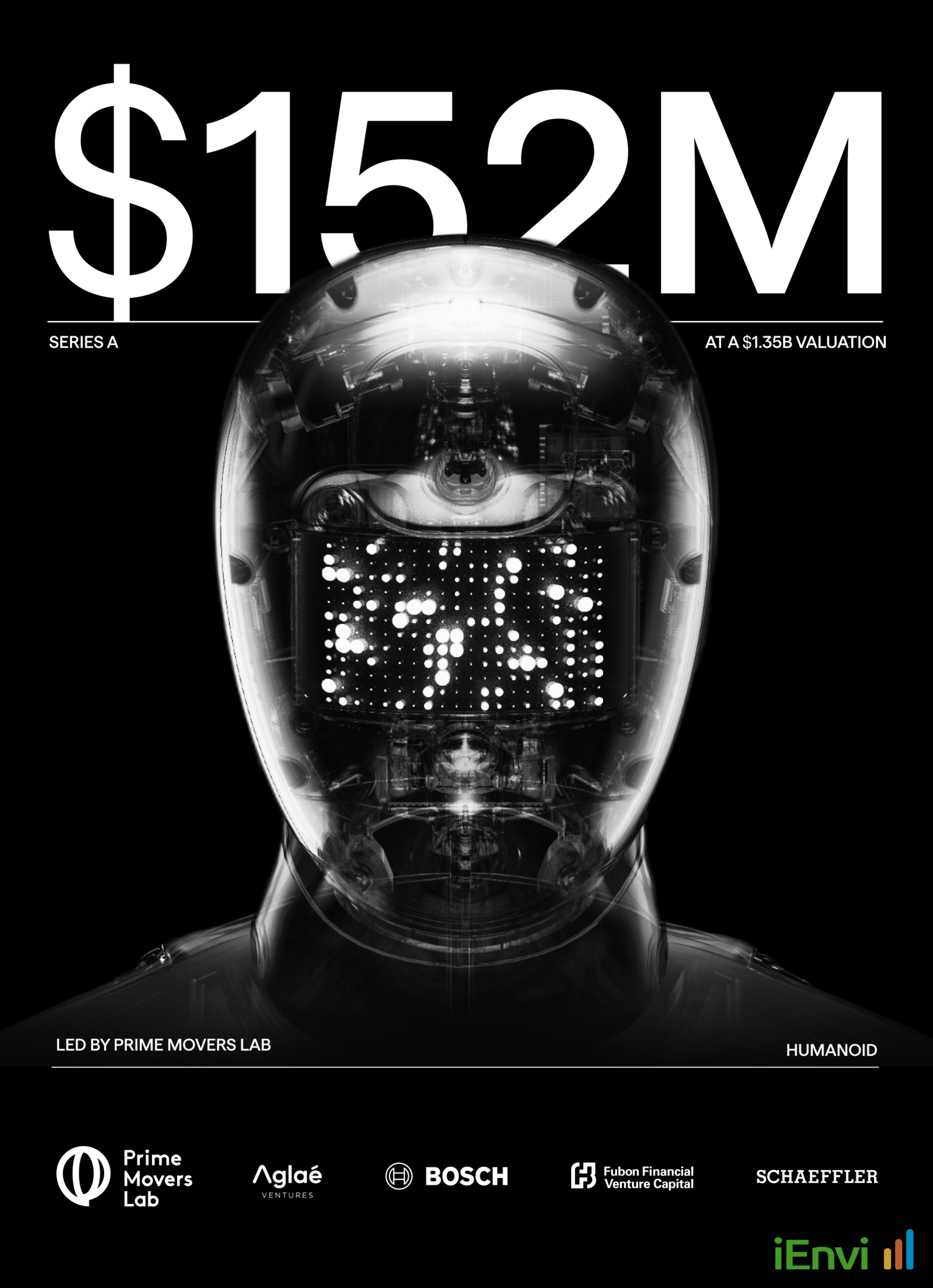
Humanoid raises USD $152 million Series A, becoming Europe’s first humanoid robotics unicorn
London-based robotics startup Humanoid raised a USD $152 million (approximately AUD $242 million) Series A funding round in July 2025, achieving a post-money valuation of USD $1.35 billion (approximately AUD $2.1 billion). The round was led by Prime Movers Lab and included participation from global industrial manufacturers Bosch and Schaeffler, alongside Fubon Financial Holding Venture Capital and Aglaé Ventures. With this milestone, Humanoid became Europe’s first pure-play humanoid robotics unicorn, a significant marker in the global race to commercialise physical AI at industrial scale.
The company was founded just two years before this announcement and has now raised a total of USD $270 million (approximately AUD $430 million) as it moves from stealth-mode development into active commercial deployment. The speed of this trajectory is notable. What the company’s CEO describes as a journey that would typically take a decade has been compressed into two years, driven by a deliberate strategy of partnering with established industrial manufacturers rather than building supply chains from scratch. For Australian business leaders, asset managers, and facility operators watching the global technology landscape, this development signals that humanoid robotics is transitioning from speculative prototype technology into a commercially deployable labour solution within a five-year planning horizon.
The involvement of Bosch and Schaeffler as both investors and operational partners sets this funding round apart from typical venture capital announcements. These are not passive financial backers. Bosch has entered a contract manufacturing agreement, while Schaeffler has committed to deploying thousands of robots across its own manufacturing facilities. This structure means Humanoid enters the market with a built-in deployment pipeline and an established hardware production pathway, addressing two of the most common bottlenecks that have historically prevented robotics startups from scaling beyond pilot programmes.
Key details of the Humanoid funding round and HMND 01 deployment plan
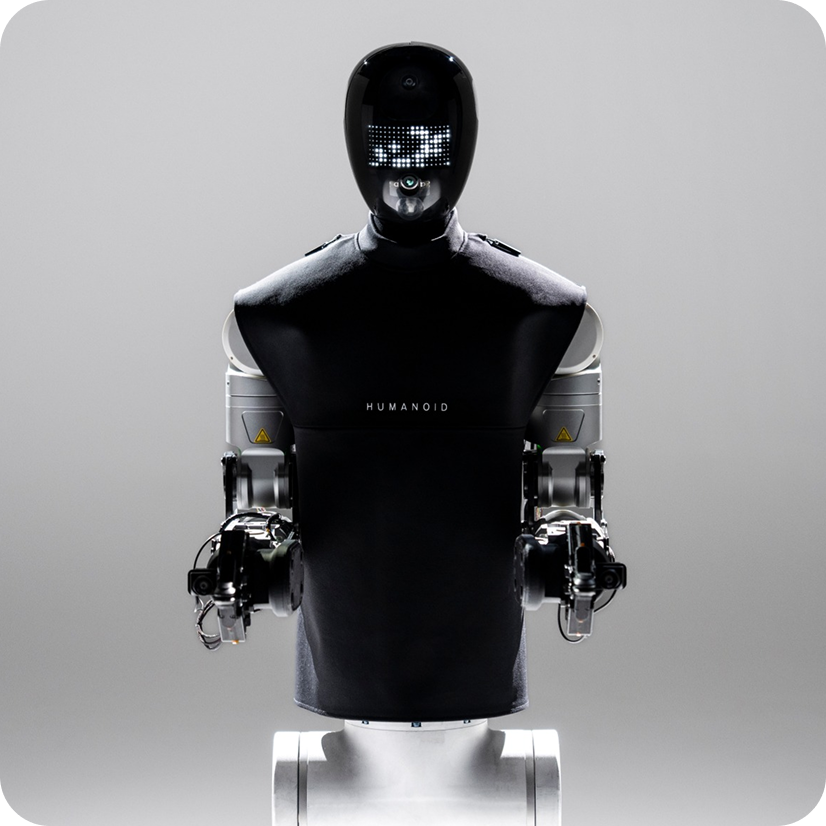
The flagship product is the HMND 01, a wheeled humanoid robot. The decision to use a wheeled base rather than a bipedal design is a deliberate engineering and regulatory strategy. Bipedal robots face considerably more complex safety certification requirements under European standards, and their dynamic stability remains an active area of engineering research. By contrast, the wheeled HMND 01 offers immediate stability and energy efficiency in structured warehouse and manufacturing environments, allowing Humanoid to begin regulated factory deployments significantly faster than competitors pursuing bipedal-first approaches. The company is developing bipedal systems in parallel, but the commercial priority is the wheeled platform.
The HMND 01 operates on KinetIQ, a proprietary four-layer AI framework developed in-house by Humanoid. KinetIQ integrates physical AI, real-time perception, and reinforcement learning to deliver what the company describes as human-level dexterity and decision-making capability. A newly showcased component of this framework, called KinetIQ Ascend, focuses on continuous learning and adaptation. A defining operational feature of the system is its capacity for fenceless co-working, meaning the robots are designed to operate safely alongside human workers in active industrial spaces without requiring physical segregation barriers. This has meaningful implications for facility layout, occupational health and safety planning, and the economics of retrofitting existing industrial sites.
Under the contract manufacturing agreement with Robert Bosch Robotics GmbH, the parties are targeting production of up to 100,000 units over the next five years. Bosch’s role extends beyond simple fabrication; the agreement encompasses optimising the hardware design and supply chain to achieve that production volume. Schaeffler, a global automotive and industrial supplier, has committed to deploying thousands of HMND 01 units across its own manufacturing plants, with beta testing scheduled to commence in the fourth quarter of 2026. This deployment commitment from Schaeffler provides Humanoid with a controlled, large-scale real-world testing environment that most robotics startups cannot access without years of market development.
The funding round also carries geopolitical significance. Zia Huque, General Partner at Prime Movers Lab, stated publicly that humanoid robotics will consolidate around a handful of category leaders across the United States, Europe, and China. Until this announcement, the competitive landscape was effectively a duopoly between American and Chinese developers. Humanoid’s emergence as a European contender at unicorn valuation introduces a third axis to that competition, which has implications for technology licensing, export controls, and the sourcing decisions of multinational manufacturers with facilities in Australia.
Australian context: physical AI, workforce automation, and facility management implications
Australia does not have a domestic humanoid robotics industry at comparable scale, but Australian enterprises are direct participants in the global market that Humanoid and its competitors are targeting. Manufacturing, logistics, mining services, and waste management facilities in Australia face the same structural labour cost pressures and workforce availability challenges that are driving adoption in European and North American markets. The Technology Investment Roadmap published by the Australian Government, alongside the National Robotics Strategy released in 2023, explicitly identifies advanced robotics and automation as priority areas for Australian industrial competitiveness. Humanoid’s commercial trajectory is directly relevant to how quickly these policy frameworks translate into procurement decisions at the facility level.
References and related sources
- Primary source: thehumanoid.ai
- ramaonhealthcare.com
- techmeme.com
- pulse2.com
- menlotimes.com
How iEnvi can help
iEnvi integrates technology and data-driven approaches into environmental consulting. We monitor AI and technology developments that affect how environmental professionals deliver services to clients.
This is an iEnvi Machete news summary. Prepared by iEnvi to summarise the source article for environmental professionals tracking AI, data, and technology developments that affect consulting and project delivery.
Published: 23 Jul 2026
Need advice on this topic? Speak to an iEnvi expert at info@ienvi.com.au or 1300 043 684, or contact us online.
Need advice on this issue? iEnvi provides practical, senior-led environmental consulting across contaminated land, remediation, ecology and environmental risk.
Contaminated land advice Remediation services Discuss your site Talk to iEnvi