
Independent Hydrogeological Investigation Vindicates NSW Composting Facility in Upper Belubula River PFAS Contamination Dispute
Overview
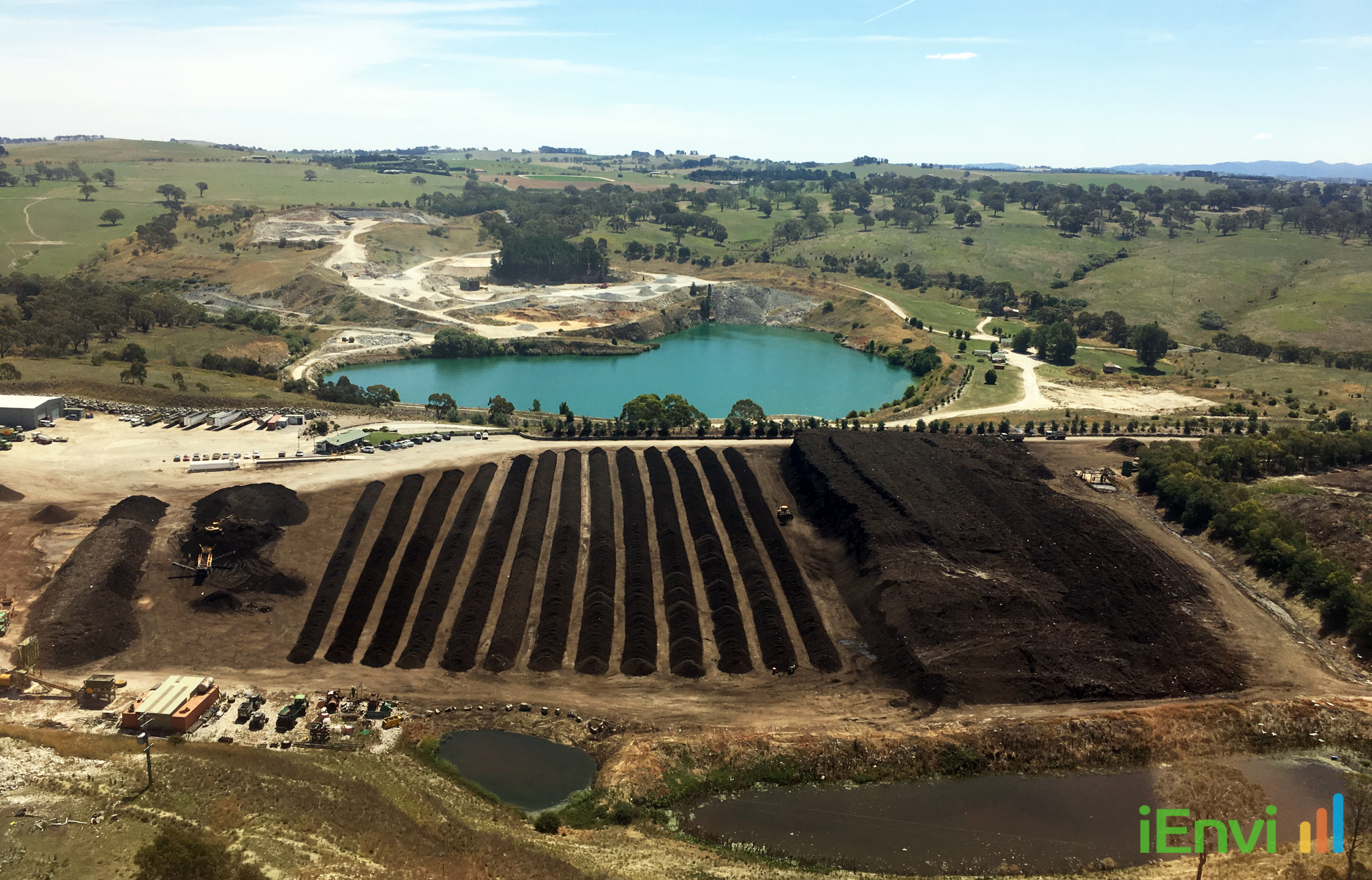
On 15 July 2026, Australian Native Landscapes (ANL) released a media statement welcoming the findings of a comprehensive, independent environmental investigation into PFAS detections near its Blayney composting facility on Browns Creek Road in regional New South Wales. The facility, which processes organic waste including garden organics and food organics as part of the regional circular economy, had been publicly identified by the NSW Environment Protection Authority (NSW EPA) and media reports in April 2025 as the most likely source of PFAS contamination in the Upper Belubula River catchment and Cowriga Creek. The release of independent technical findings more than fourteen months later represents a significant turning point for ANL and carries broad implications for how PFAS source investigations are scoped and conducted across Australia.
The independent technical assessments, prepared by environmental consultants engaged by ANL, concluded that PFAS detections in local groundwater and surface water are not attributable to the facility’s composting operations. The investigations demonstrated that water samples identified by the NSW EPA are instead associated with broader regional hydrogeological conditions and groundwater migration pathways transporting PFAS from an unknown upslope or upgradient source that is separate from ANL’s active composting areas. ANL General Manager Andrew Schlick confirmed that the company’s finished compost, mulch, and soil products have been extensively tested and do not contain PFAS concentrations presenting any measurable risk to human health, livestock, or the environment.
For contaminated land practitioners, environmental lawyers, and their clients across Australia, this case represents a landmark example of the critical importance of rigorous, multi-dimensional site investigations when dealing with PFAS in complex hydrogeological settings. It also highlights the very real commercial, regulatory, and reputational risks that arise when source attribution conclusions are drawn prematurely from incomplete datasets, a risk that is particularly acute for licensed waste management facilities operating in catchments where historical PFAS use may be widespread and diffuse.

Key Details of the ANL Blayney PFAS Investigation
The core technical finding of the independent investigation is that the PFAS detections identified in the Upper Belubula River catchment and Cowriga Creek are not derived from ANL’s composting operations at the Blayney facility. The investigation established this through analysis of regional hydrogeological conditions, including assessment of groundwater flow directions, vertical aquifer stratification, and groundwater migration pathways. Critically, the findings demonstrate that surface topography at and around the facility does not reliably predict subsurface groundwater flow directions, meaning that sampling locations positioned downstream by surface-water logic may in fact be receiving groundwater inputs from entirely different catchment areas or aquifer units.
The investigation identified an unknown upgradient or upslope source as the probable origin of the PFAS detected in groundwater and surface water samples collected by the NSW EPA. This finding is consistent with the known behaviour of PFAS compounds in the environment: perfluorooctane sulfonate (PFOS) and related compounds are highly mobile in aqueous environments, capable of travelling considerable distances through connected aquifer systems, and are persistent under ambient environmental conditions. Under the PFAS National Environmental Management Plan version 3.0 (PFAS NEMP 3.0), which is the current national framework for managing PFAS contamination in soil, groundwater, surface water, and waste streams, accurate source-receptor pathway characterisation is a foundational requirement before any regulatory liability or remediation obligation can be fairly assigned.
With respect to the facility’s outputs, extensive product testing confirmed that ANL’s finished compost, mulch, and soil products do not contain PFAS at concentrations that would trigger concern under relevant human health or ecological protection thresholds. The Australia and New Zealand Guidelines for Fresh and Marine Water Quality (ANZG 2018) establish default guideline values (DGVs) for aquatic ecosystem protection, and PFAS NEMP 3.0 provides soil and water investigation thresholds for land-use-specific assessment. The product testing results did not exceed these thresholds, providing a further technical line of evidence that the facility’s operations were not contributing PFAS to the receiving environment.
From a regulatory enforcement perspective, the ANL situation also raises important questions about the evidentiary basis on which the NSW EPA made its April 2025 public attribution. Under the Protection of the Environment Operations Act 1997 (NSW) (POEO Act), the EPA holds broad investigation and licensing powers over scheduled activities including organic waste composting. However, a public identification of a licensed facility as the most likely PFAS source carries immediate and severe consequences for that operator’s social licence, commercial relationships, and product marketability, even before any formal regulatory notice is issued. The Contaminated Land Management Act 1997 (NSW) (CLM Act) governs declarations of significantly contaminated land and imposes duties to report contamination under Section 60, and a premature source attribution can trigger notifications and investigations that may prove to be entirely unwarranted, as this case demonstrates.
Australian Context: PFAS Source Attribution, Regulatory Frameworks, and Hydrogeological Complexity
The ANL Blayney case sits within a rapidly evolving national regulatory landscape for PFAS contamination management. Australia has seen a significant expansion in PFAS investigation and remediation activity over the past decade, driven primarily by legacy use of aqueous film-forming foam (AFFF) at defence sites, airports, and fire training facilities. However, as investigations have broadened, it has become increasingly apparent that PFAS contamination in many catchments is not attributable to a single discrete source, but rather reflects the cumulative legacy of widespread historical use across agriculture, manufacturing, and firefighting sectors.
The PFAS NEMP 3.0 framework, developed under the auspices of the National Environment Protection Council and administered through the jurisdictional EPAs, sets out tiered investigation and risk assessment requirements that are intended to ensure source-receptor pathway analysis is conducted before remediation or liability obligations are imposed. The ANL case illustrates the practical consequences that can arise when regulatory attribution occurs ahead of this full investigative process. Where a facility is publicly named as a probable source on the basis of proximity and limited sampling data alone, the burden of disproving that attribution effectively shifts to the operator, at significant cost and reputational risk.
From a hydrogeological perspective, the Upper Belubula River catchment presents conditions that are not uncommon in regional New South Wales: fractured rock aquifer systems with complex and spatially variable flow pathways, overlying unconsolidated alluvial sediments with differing hydraulic conductivities, and catchment boundaries that do not necessarily align with topographic divides at the surface. In these settings, PFAS plume delineation requires a combination of geological mapping, nested piezometer installation to assess vertical hydraulic gradients, stable isotope and hydrochemical analysis to fingerprint water sources, and compound-specific PFAS profiling to identify source signatures. The independent investigation conducted on ANL’s behalf appears to have applied this multi-line-of-evidence approach, and the findings stand in contrast to the more limited dataset on which the NSW EPA’s initial attribution was based.
For practitioners advising clients who operate licensed facilities in catchments with potential legacy PFAS contamination, the ANL case reinforces several key risk management principles. First, proactive baseline environmental monitoring programmes that pre-date any regulatory inquiry provide a critical evidentiary foundation for defending against unwarranted source attribution. Second, when a regulatory agency makes a public attribution, engaging independent technical experts promptly and conducting a structured, multi-dimensional investigation is essential to establishing an evidentiary record capable of withstanding scrutiny. Third, the hydrogeological complexity of a site should be thoroughly characterised before any conclusions about source-receptor pathways are drawn, and this characterisation must account for the potential disconnect between surface water and groundwater flow directions. Fourth, product quality testing for PFAS in facility outputs provides an important additional line of evidence that can support or refute operational source hypotheses.
The broader policy implication of the ANL case is that regulatory agencies conducting PFAS source investigations in complex hydrogeological settings should apply the full suite of investigative tools contemplated by PFAS NEMP 3.0 before making public source attributions. The reputational and commercial harm caused by a premature public identification is not readily reversible, even when a subsequent independent investigation exonerates the named operator. As PFAS regulation in Australia continues to mature, establishing clear procedural safeguards around the evidentiary threshold for public source attribution will be an important development for both industry and regulators.
References and related sources
- Primary source: anlscape.com.au
- foe.org.au
- nsw.gov.au
- anlscape.com.au
- anlscape.com.au
- PFAS National Environmental Management Plan (NEMP)
How iEnvi can help
iEnvi provides specialist consulting services relevant to this topic. Our team includes CEnvP Site Contamination Specialists with experience across contaminated land, groundwater, remediation, ecology, and regulatory compliance.
- iEnvi contaminated land services
- iEnvi remediation and validation services
- iEnvi expert services and independent review services
This is an iEnvi Machete news summary. Prepared by iEnvi to summarise the source article for contaminated land, groundwater, remediation, approvals and site risk professionals.
Published: 17 Jul 2026
Need advice on this topic? Speak to an iEnvi expert at info@ienvi.com.au or 1300 043 684, or contact us online.
Need advice on this issue? iEnvi provides practical, senior-led environmental consulting across contaminated land, remediation, ecology and environmental risk.
Team credentials Environmental management plans Contaminated land advice Remediation services Talk to iEnvi