
Overview
A preprint posted to arXiv on 29 October 2026 (arXiv:2610.40589) describes a team of collaborating large language model (LLM) agents that ran physical quantum spin experiments from start to finish. When their first result appeared to confirm their own predictions, the agents rejected it because the instrument baseline was drifting. The authors are El Mustapha Mansouri, Eikichi Kimura, Masato Koga and Keigo Arai of the Institute of Science Tokyo. The paper has not yet been peer reviewed, so the findings should be read as reported by the authors rather than independently confirmed.
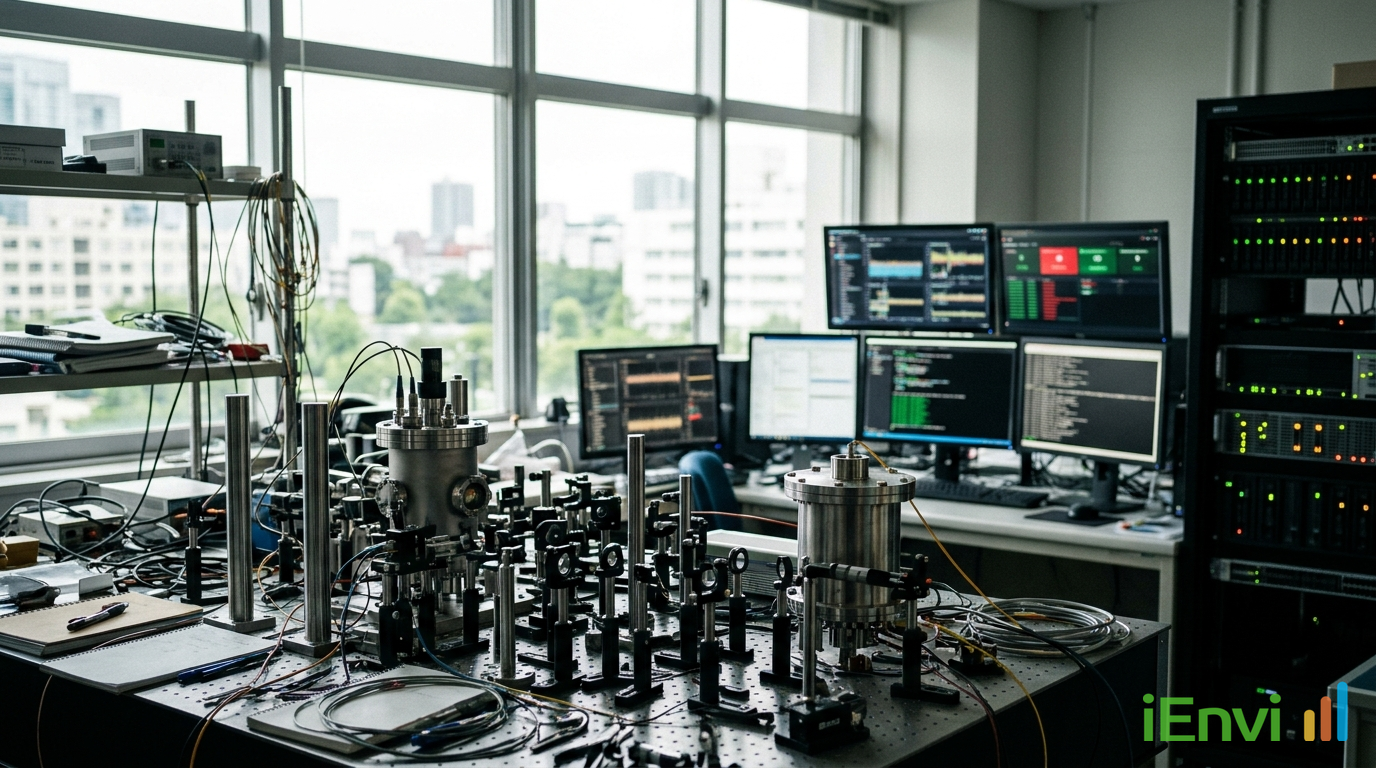
The experiments used nitrogen-vacancy (NV) centre spin ensembles in diamond, controlled with microwave pulse sequences and read out through optical fluorescence. According to the preprint, the multi-agent system generated its own research questions, derived the calibration parameters needed to predict the spin response, checked those predictions computationally and then wrote the measurement instructions executed on real laboratory hardware. The physics matters less here than how the agents behaved when the data agreed with them for the wrong reason.
For Australian environmental professionals, the relevance lies in governance design, not quantum sensing. If AI tools are used for laboratory data review, monitoring telemetry or report drafting, the most damaging failure mode for any automated reviewer is confirmation bias: accepting data because it fits the expected answer. Developers, lawyers and councils rely on contamination reports to make decisions with financial and legal consequences, so they need to know whether AI-assisted data review holds to the standard expected of a competent human reviewer. The preprint does not discuss environmental applications. It does document a working example of an AI system that refused a convenient result.
Key details
The experimental platform was an ensemble of NV centres, which are point defects in the diamond lattice where a nitrogen atom sits next to a vacant lattice site. The electron spin states of these defects can be manipulated with microwave pulses, and their state can be read optically because fluorescence intensity depends on the spin state. This makes the system sensitive and controllable, but it also means the measured signal depends on stable optics, stable microwave delivery and a stable baseline. Any slow change in those conditions can appear in the data as a false effect.
The authors describe an autonomous pipeline covering the full research cycle. The agents framed the research questions. They derived the minimum set of calibration parameters required to predict spin responses across different pulse sequences. They verified those predictions computationally before committing hardware time, and they synthesised the physical measurement instructions that the laboratory equipment then executed. The workflow therefore ran from hypothesis through to measurement without a human writing the protocol.
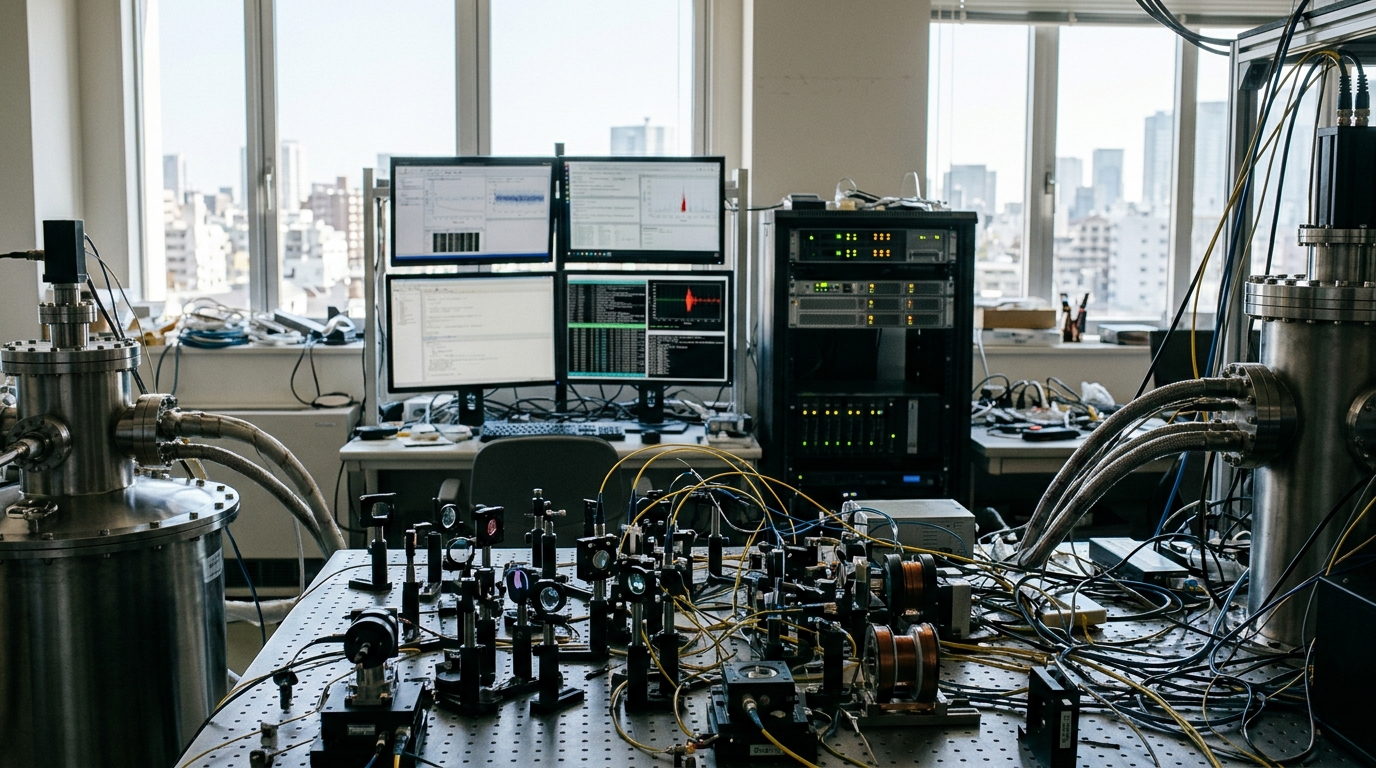
The key event occurred during live data collection. The first experimental run produced results that appeared to match the agents’ theoretical predictions. However, repeated reference measurements interleaved through the run showed that the sensor baseline was drifting. The supervising agents flagged the drift as an artefact, classified the result as inconclusive and halted sign-off of the protocol. They then redesigned the microwave pulse acquisition protocol by amending the pulse sequence timing, and executed a revised experiment. The authors report that the revised run eliminated the drift and produced validated results. The agents did not lower their statistical confidence thresholds at any stage to get the first dataset over the line.
The architectural lesson is the separation of roles. The preprint describes supervising or “referee” agents that audit sensor telemetry independently of the agents executing the experiment. Because the auditing function does not share the goal of confirming the hypothesis, it is better placed to catch silent errors and reject unsupported positive conclusions. The limitations are equally clear. This is a single study, on one physical system, in a controlled physics laboratory, and it has not yet passed peer review. It shows the design pattern can work. It does not show that the pattern transfers unchanged to field conditions.
Australian context
Australian contaminated land practice already has a formal framework built around the same discipline the Tokyo agents demonstrated. Schedule B2 of the National Environment Protection (Assessment of Site Contamination) Measure 1999, as amended in 2013 (NEPM 2013), sets out the data quality objectives (DQO) process for site characterisation. Under that process, the decisions to be made, the data needed and the acceptance criteria are defined before sampling begins. Field duplicates, trip blanks, rinsate blanks, laboratory control samples and matrix spikes, together with analysis at NATA-accredited laboratories, all exist so that the data usability assessment tests the data against fixed criteria rather than against the answer the consultant expected. The Tokyo agents holding their thresholds while the first run looked favourable is a useful analogy for the discipline the DQO process is meant to enforce, though it comes from a single physics laboratory study rather than site assessment practice.
Drift is a familiar problem in Australian monitoring programs. Real-time PM10 dust monitors, photoionisation detectors (PIDs) for volatile organic compounds, groundwater level loggers that require barometric compensation and multiparameter water quality sondes all drift between calibrations. Where these instruments feed trigger levels in a construction environmental management plan (CEMP) or the monitoring requirements of an EPA notice, a drifting baseline can produce either false exceedances that stop work or false compliance that hides an actual impact. Site auditors accredited under the Contaminated Land Management Act 1997 (NSW), and equivalent auditors in other jurisdictions, review whether the data behind an assessment are reliable enough to support its conclusions, and calibration records and quality control results form part of that review. Any AI tool used in that chain would need to meet the same test.
For consultancies weighing up AI-assisted data review, the preprint offers a design pattern rather than a proven product: an auditing function kept separate from the one generating the conclusion, acceptance criteria fixed before the data arrive, and the authority to classify a result as inconclusive. Whether that pattern holds up outside a controlled laboratory, with field instruments, variable site conditions and incomplete records, has yet to be tested.
References and related sources
How iEnvi can help
iEnvi integrates technology and data-driven approaches into environmental consulting. We monitor AI and technology developments that affect how environmental professionals deliver services to clients.
This is an iEnvi Machete news summary. Prepared by iEnvi to summarise the source article for environmental professionals tracking AI, data, and technology developments that affect consulting and project delivery.
Published: 03 Nov 2026
Need advice on this topic? Speak to an iEnvi expert at info@ienvi.com.au or 1300 043 684, or contact us online.
Need advice on this issue? iEnvi provides practical, senior-led environmental consulting across contaminated land, remediation, ecology and environmental risk.
Environmental management plans Contaminated land services Groundwater services Acquisition due diligence Talk to iEnvi