
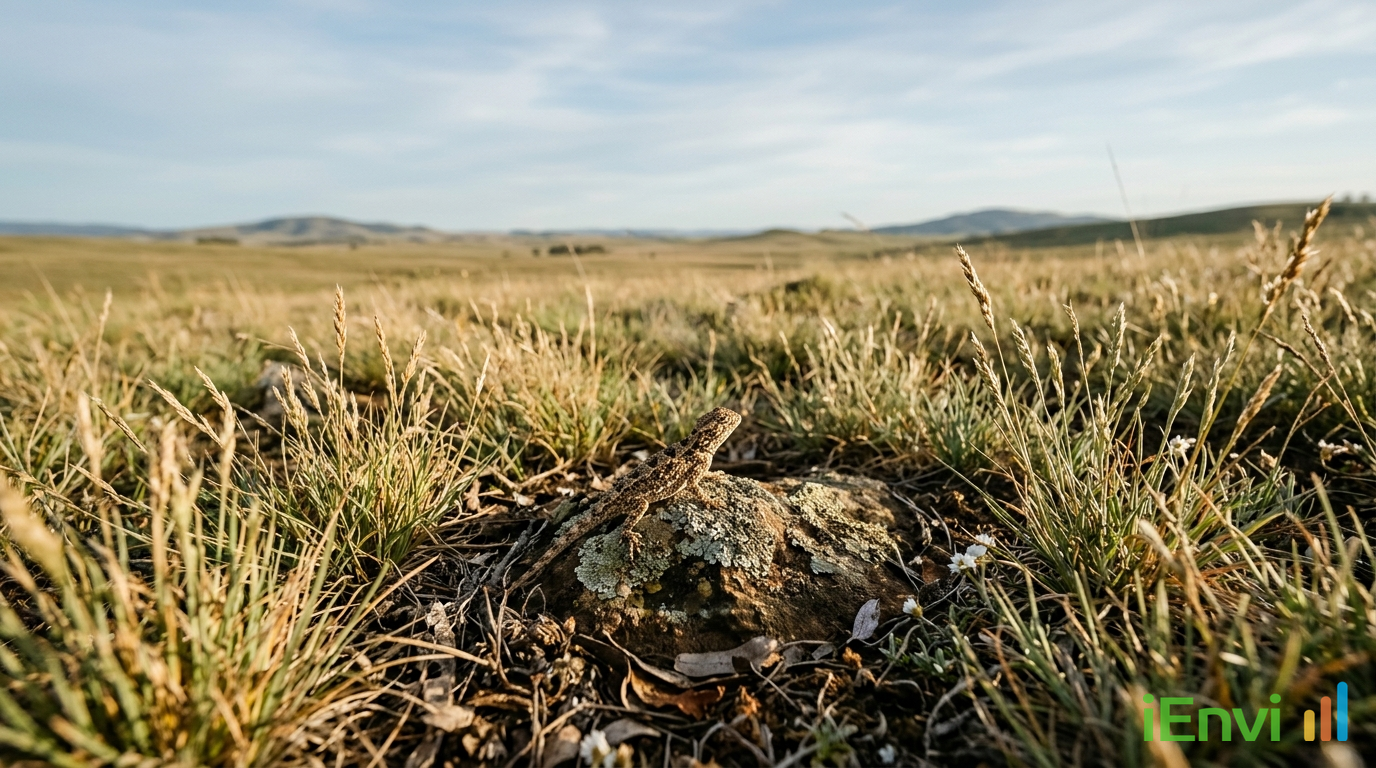
National Recovery Plan for four grassland earless dragons takes effect under the EPBC Act
On 3 November 2026, the Commonwealth Department of Climate Change, Energy, the Environment and Water (DCCEEW), together with the Australian Capital Territory and Victorian governments, announced that a joint National Recovery Plan for four grassland earless dragon species had taken effect under the Environment Protection and Biodiversity Conservation Act 1999 (Cth) (EPBC Act). The plan covers the Victorian grassland earless dragon (Tympanocryptis pinguicolla), the Canberra grassland earless dragon (Tympanocryptis lineata), the Bathurst grassland earless dragon (Tympanocryptis mccartneyi) and the Monaro grassland earless dragon (Tympanocryptis osbornei). Three of these species are listed as Critically Endangered under the EPBC Act. The Monaro species is listed as Endangered.
The four species have been separately listed for some time. What changes now is the legal weight attached to them. Once a recovery plan is in force, section 139(1)(b) of the EPBC Act prevents the Minister from acting inconsistently with that plan when deciding whether to approve an action for the purposes of sections 18 or 18A, and what conditions to attach to that approval. For proponents, this turns the plan’s objectives and actions into a test that every relevant approval and every set of approval conditions must pass.
The development is most relevant to developers, infrastructure and renewable energy proponents, planning and environmental lawyers, and local councils working in the native temperate grasslands of western Melbourne, the Canberra and Queanbeyan corridor, the Monaro tablelands and the Bathurst area. These grasslands are among the most heavily cleared and fragmented ecosystems in south-eastern Australia, and they also sit in the path of urban expansion, transmission upgrades and large-scale solar, wind and battery projects.
EPBC listing, taxonomy and survey requirements for the four species
The joint recovery plan addresses four species of very different status in the wild. The Victorian grassland earless dragon was rediscovered in 2023, more than 50 years after its last confirmed record. The Bathurst grassland earless dragon has not been detected in the wild since the 1990s. The Canberra grassland earless dragon is listed as Critically Endangered, and the Monaro grassland earless dragon is listed as Endangered. The plan sets coordinated, cross-jurisdictional conservation priorities and threat abatement actions across the range of all four species.
The plan follows taxonomic work published in 2019 that split what was previously treated as a single taxon into four separate species. Each species has its own distribution and its own EPBC Act listing status. In practice, this means desktop assessments, ecological reports and referral documentation should identify the specific species likely to occur at a site, rather than referring to a generic “grassland earless dragon”. Habitat requirements and the relevant recovery actions differ between the species, so a generic approach is no longer adequate.
The statutory mechanics sit across several parts of the EPBC Act. Listed threatened species are a Matter of National Environmental Significance under Part 3. Recovery plans are made under Part 13, Division 5. Section 139(1)(b) applies when the Minister decides whether to approve an action for the purposes of sections 18 or 18A (the listed threatened species provisions), and when deciding what conditions to attach to an approval. Conditions include offsets, so any proposed offset package must also be consistent with the plan’s objectives and actions.
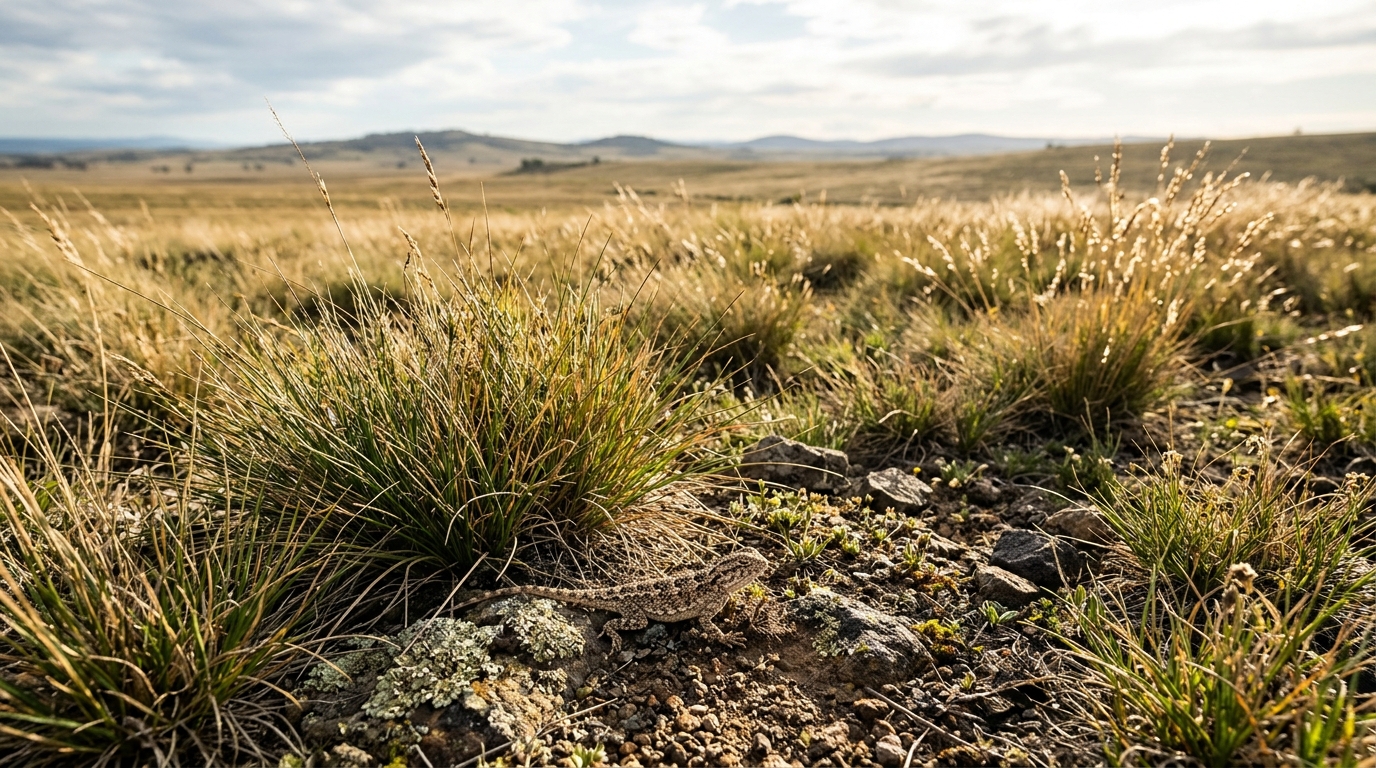
Detection is the principal technical challenge. Grassland earless dragons are small, cryptic reptiles that shelter underground in arthropod burrows, including those made by wolf spiders and crickets. Standard active searching can return false negatives for this reason. Specialised detection techniques are used instead, including artificial spider burrows and lines of ground tiles that the dragons use for shelter. Survey timing also matters, and fieldwork outside an appropriate seasonal window may not be accepted as evidence of absence.
Australian context
Commonwealth requirements under the EPBC Act run in parallel with state and territory biodiversity legislation, and the recovery plan does not displace those regimes. In New South Wales, the Biodiversity Assessment Method (BAM) under the Biodiversity Conservation Act 2016 (NSW) applies where the Biodiversity Offsets Scheme is triggered. In Victoria, the Flora and Fauna Guarantee Act 1988 (Vic) is the primary threatened species statute. In the ACT, assessments are made under the Nature Conservation Act 2014 (ACT). The recovery plan does not amend these state and territory schemes or their offset calculations, so a single project may need to satisfy separate Commonwealth and state or territory requirements for the same dragon population.
The geographic exposure is well defined. The Victorian species occurs in the grasslands west and north of Melbourne, where urban growth areas, freight corridors and transmission projects already compete for land. The Canberra species occurs in the ACT and surrounding NSW, including the Queanbeyan area. The Monaro species occurs on the Monaro tablelands in south-eastern NSW, a region attracting significant wind and solar interest. The Bathurst species is associated with the Bathurst Basin in central western NSW. Projects in Queensland and South Australia fall outside the known range of all four species.
For multidisciplinary consultants, this plan is a reminder that greenfield and fringe-urban sites often carry more than one statutory constraint. A site being assessed for contamination under the National Environment Protection (Assessment of Site Contamination) Measure 1999 (as amended 2013) may also sit within remnant native grassland that supports a listed dragon species. The two issues are usually handled by different specialists, but intrusive investigations, earthworks and remediation can damage grassland habitat and the burrows the dragons depend on. Scoping ecological and contamination advice together at the start of a project allows site investigation and remediation plans to account for any dragon habitat before ground disturbance begins.
References and related sources
- Primary source: www.miragenews.com
- legislation.gov.au
- legislation.gov.au
- https://www.miragenews.com/new-plan-to-protect-grassland-earless-dragons/
- EPBC Act
How iEnvi can help
iEnvi provides specialist consulting services relevant to this topic. Our team includes CEnvP Site Contamination Specialists with experience across contaminated land, groundwater, remediation, ecology, and regulatory compliance.
- iEnvi contaminated land investigation services
- iEnvi remediation and validation services
- iEnvi expert services and independent review services
This is an iEnvi Machete news summary. Prepared by iEnvi to summarise the source article for contaminated land, groundwater, remediation, approvals and site risk professionals.
Published: 07 Nov 2026
Need advice on this topic? Speak to an iEnvi expert at info@ienvi.com.au or 1300 043 684, or contact us online.
Need advice on this issue? iEnvi provides practical, senior-led environmental consulting across contaminated land, remediation, ecology and environmental risk.
Team credentials Flora and fauna assessment Contaminated land services Remediation services Talk to iEnvi