
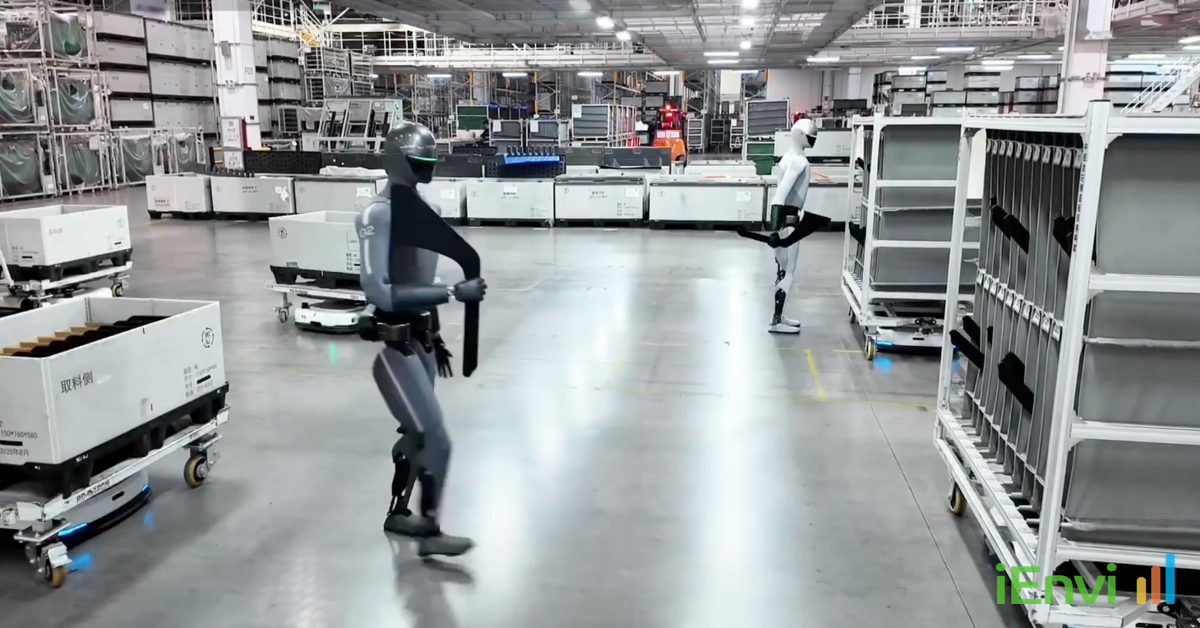
Xiaomi humanoid robots complete an 8-hour shift on a live EV production line
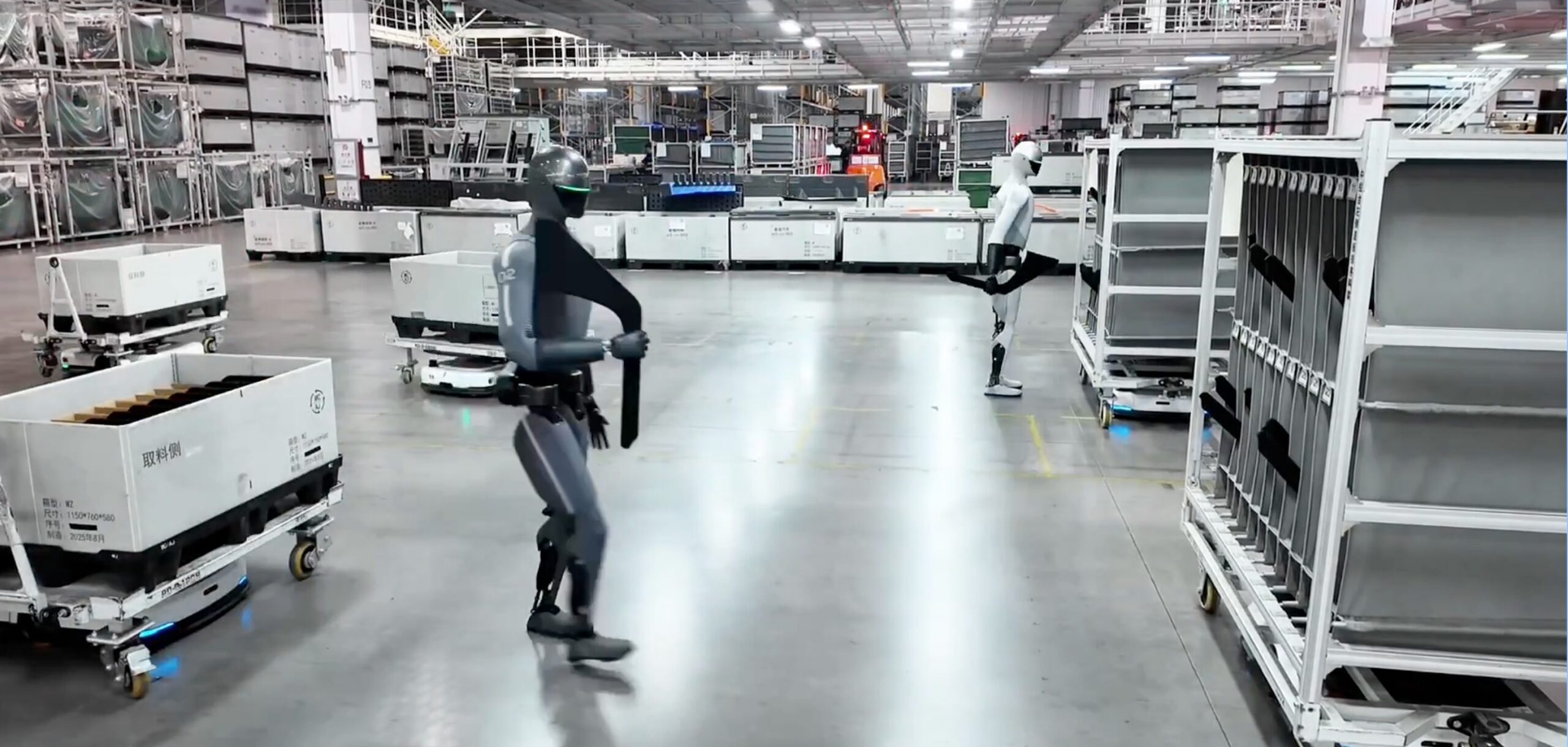
Xiaomi has released video footage showing its full-size humanoid robots working a continuous 8-hour shift on the live production line of its electric vehicle (EV) factory in Beijing. The robots were assigned to the Center Console Side-Cover Sorting Workstation. There they pulled side covers from bins, carried them to dedicated storage racks and loaded them into designated slots, producing enough sorted stock to supply a full production shift. Electrek reported the development on 4 November 2026.
According to Xiaomi, the robots worked autonomously. They communicated directly with the factory’s central control system and identified and corrected errors in real time without stopping the line. This is the third public milestone in a manufacturing trial that Xiaomi began in March 2026. It moves the robots from a single repetitive fastening task to multi-hour materials handling inside an operating plant.
For Australian professionals, the news matters less as a story about cars and more as an indication of where physical automation is heading. Humanoid robots are moving out of controlled demonstrations and into workstations designed for people. Developers, facility operators and lawyers will increasingly be asked to assess claims about what these systems can do, who is responsible when they fail, and how they fit within existing safety frameworks. The Xiaomi announcement is a useful case study in reading those claims carefully, because the company has released some performance data and withheld other figures that matter.
Xiaomi’s humanoid trial: from 90.2% fastening success to an 8-hour sorting shift
Xiaomi’s humanoid trial has three publicly reported stages, each with a different task and level of disclosure. In March 2026, a robot described as an “intern” installed self-tapping nuts on the production line. It achieved a 90.2% success rate with a cycle time of 76 seconds per operation. By July 2026, Xiaomi reported that reliability on the same type of task had improved to 98%. The November 2026 demonstration shifted from fastening to component sorting and extended the run to a full 8-hour shift.
The technical claim that separates this demonstration from conventional factory automation is autonomous error recovery. Traditional pick-and-place equipment typically follows fixed paths and faults when a part is out of position. Xiaomi states that its humanoid units detected displaced components, adjusted their handling in real time and stayed synchronised with the plant’s supervisory control system throughout. If accurate, this means the robots were working within the factory’s production logic rather than running as an isolated cell that staff had to restart manually after each fault.
Shift duration is a meaningful test in its own right. A continuous 8-hour run puts sustained load on thermal management, joint wear and battery charging or swap cycles. Short laboratory demonstrations rarely test these. Problems such as overheating actuators, drifting calibration and power management gaps tend to appear only after hours of repeated movement, which is why multi-hour operation in a live plant is a more credible indicator than a staged clip lasting a few minutes.
The disclosure gaps are just as important as the reported results. Xiaomi has not published parts-per-hour throughput for the sorting task, error-rate telemetry across the 8-hour shift, or how often a human operator intervened. This matters because the robotics sector is under scrutiny over demonstrations that relied on teleoperation or tightly controlled conditions, including questions raised about staged Tesla Optimus showcases. For comparison, GeekWire reported in 2026 that Agility Robotics’ Digit 5 humanoid can lift 22.7 kg (50 pounds) and work up to 20 hours a day alongside people. GeekWire also reported that Agility plans to go public in a deal valued at US$2.5 billion. Those figures show the commercial stakes, and they explain why buyers increasingly want audited operating data rather than video.
Australian context
No humanoid robot deployment in Australia sits outside existing work health and safety law, however autonomous the vendor says the system is. In every jurisdiction except Victoria, the harmonised Work Health and Safety Act places the primary duty of care on the person conducting a business or undertaking (PCBU). The associated WHS Regulations include specific duties for managing risks from plant. In Victoria, the Occupational Health and Safety Act 2004 places equivalent duties on employers. Under either framework, introducing a humanoid robot into a shared workspace requires a documented risk assessment, consultation with affected workers and clear supervision arrangements. These obligations stay with the business that deploys the robot, not with the manufacturer.
The international standards most relevant to this kind of deployment are ISO 10218, which covers safety requirements for industrial robots, and ISO/TS 15066, which addresses collaborative robot applications where people and robots share space. Both were written largely with fixed or arm-type robots in mind. Mobile humanoids that walk between bins and racks raise questions those documents were not designed to answer fully, such as fall risk, unpredictable movement paths and contact with workers in open aisles. Australian businesses should expect regulators and insurers to apply the existing hierarchy of controls while standards catch up, rather than treat humanoids as exempt from scrutiny.
On the governance side, the Australian Government’s Voluntary AI Safety Standard, published by the Department of Industry, Science and Resources in 2024, sets out guardrails on accountability, testing, transparency and human oversight for AI systems. A humanoid robot that makes real-time decisions on a factory floor is an embodied AI system, and the same governance questions apply. These include who validated the system before it was put into service, how its decisions and errors are recorded, and how a person can step in and stop it when something goes wrong. Until vendors such as Xiaomi publish the operating data behind their demonstrations, Australian businesses considering humanoid robots will need to ask for that evidence directly.
References and related sources
- Primary source: electrek.co
- youtube.com
- geekwire.com
- geekwire.com
- pymnts.com
- NEPM Assessment of Site Contamination
How iEnvi can help
iEnvi integrates technology and data-driven approaches into environmental consulting. We monitor AI and technology developments that affect how environmental professionals deliver services to clients.
This is an iEnvi Machete news summary. Prepared by iEnvi to summarise the source article for environmental professionals tracking AI, data, and technology developments that affect consulting and project delivery.
Published: 06 Nov 2026
Need advice on this topic? Speak to an iEnvi expert at info@ienvi.com.au or 1300 043 684, or contact us online.
Need advice on this issue? iEnvi provides practical, senior-led environmental consulting across contaminated land, remediation, ecology and environmental risk.
Contaminated land advice Remediation services Discuss your site Talk to iEnvi