

Overview
On 25 June 2026, Liquid AI, an artificial intelligence startup founded by former MIT computer scientists, released its smallest language model to date: the LFM2.5-230M. The model contains just 230 million parameters and was pre-trained on 19 trillion tokens, making it one of the most data-dense compact models available. Its defining characteristic is the ability to run entirely on local, on-device hardware, including smartphones, laptops, and embedded robotics compute modules, without requiring a persistent internet connection or cloud API call. Despite its compact size, benchmark testing reported by VentureBeat shows it outperforms models more than four times its parameter count on structured data extraction and tool-calling tasks.
The release is significant because it challenges a long-held assumption in enterprise AI deployment: that useful, reliable language model performance requires large cloud-hosted models with substantial compute infrastructure. LFM2.5-230M demonstrates that a carefully designed, architecturally efficient model can match or exceed the practical output of far larger competitors on specific high-value tasks, particularly those involving the parsing, classification, and extraction of structured information from documents and data streams. For professional services sectors that handle sensitive, proprietary, or regulated data, this shift has direct operational implications.
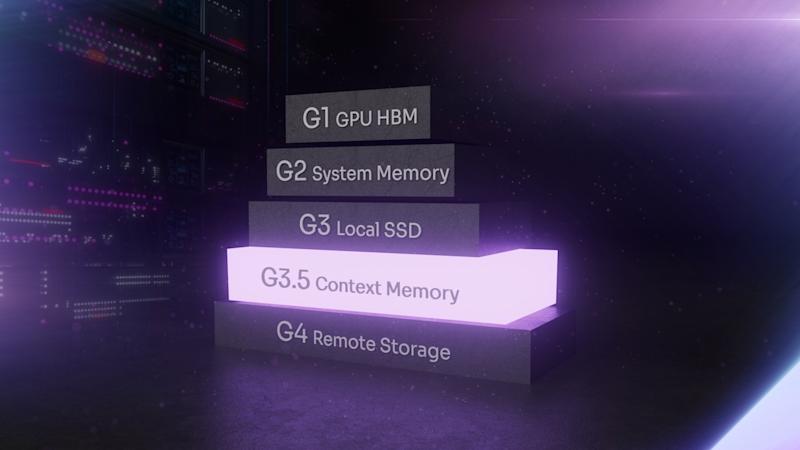
The broader industry context matters here. Jeff Harthorn, AI applied research lead at Solidigm, speaking on 22 June 2026, identified context management as the defining bottleneck of 2026, noting that the persistent state AI systems must maintain between sessions has grown faster than both GPU cost reductions and inference efficiency improvements. LFM2.5-230M represents a direct architectural response to that constraint, trading brute-force parameter scale for efficiency in exactly the tasks where enterprise and professional services workflows get stuck: structured data processing, document analysis, and low-latency decision routing.
Key details of the LFM2.5-230M architecture and benchmark performance
The LFM2.5-230M departs from the transformer architecture that has dominated language model development since 2017. Standard transformer models scale quadratically with context length, meaning memory and compute demands grow rapidly as the amount of information being processed increases. Liquid AI’s LFM2 (Liquid Foundation Model 2) architecture instead interleaves gated short-range convolutions with grouped-query attention mechanisms. This hybrid design retains the ability to capture long-range dependencies in text while significantly reducing the memory overhead typically associated with processing large documents or extended conversation histories. The practical result is high inference speed on hardware that would struggle with a standard transformer model of equivalent capability.
The context window of LFM2.5-230M is 32,000 tokens, which is a substantial figure for a model of this size. A 32K context window allows the model to ingest lengthy technical documents, regulatory guidance, lengthy datasets presented as text, or continuous telemetry streams in a single pass without needing to chunk and re-process content across multiple API calls. For reference, a standard environmental site assessment report of 80 to 150 pages would typically fall within or near this context window, making single-pass document analysis a realistic operational capability. The model achieves this on-device, with no data transmitted to an external server.
In head-to-head benchmark comparisons, the LFM2.5-230M outperformed Alibaba’s Qwen3.5-0.8B Instruct model and Google’s Gemma 3 1B on structured data extraction tasks. Both competing models are approximately three to four times larger by parameter count. The specific benchmark categories where LFM2.5-230M led were structured data extraction and structured tool-calling, which are the functions most directly relevant to automated document processing, form completion, and workflow automation in professional services environments. These are not general reasoning benchmarks; they reflect the specific capability of parsing semi-structured or unstructured text and returning clean, usable structured outputs.
Liquid AI demonstrated the model’s practical deployment by running it on a Unitree G1 humanoid robot, using the robot’s onboard NVIDIA Jetson Orin compute module. In that application, LFM2.5-230M operated as a low-latency skill-selection layer, processing natural language commands locally and routing them to the appropriate physical actions without relying on any external network connection. The NVIDIA Jetson Orin is an embedded AI compute platform commonly used in robotics and edge AI applications. Its inclusion in this demonstration confirms the model’s compatibility with the class of hardware already found in industrial and field-deployed systems. The model is available under a dual licensing structure: free for individuals and organisations with annual revenue below 10 million US dollars, with a paid enterprise agreement required for larger corporations.
Australian context for professional services and consulting firms
Australian professional services firms, including environmental consultancies, legal practices, engineering groups, and government agencies, operate under data sovereignty and privacy obligations that create genuine friction with cloud-hosted AI tools. The Privacy Act 1988 (Cth), as amended by the Privacy Legislation Amendment (Enforcement and Other Measures) Act 2022, imposes obligations around the handling, storage, and cross-border transfer of personal information. State-level equivalents and sector-specific frameworks add further layers. For firms handling confidential client data, site investigation records, legally privileged materials, or documents subject to regulatory confidentiality requirements, the ability to run a capable language model entirely on local hardware — with no data leaving the device — removes a significant compliance barrier to AI adoption.
References and related sources
- Primary source: venturebeat.com
- venturebeat.com
How iEnvi can help
iEnvi integrates technology and data-driven approaches into environmental consulting. We monitor AI and technology developments that affect how environmental professionals deliver services to clients.
This is an iEnvi Machete news summary. Prepared by iEnvi to summarise the source article for environmental professionals tracking AI, data, and technology developments that affect consulting and project delivery.
Published: 26 Jun 2026
Need advice on this topic? Speak to an iEnvi expert at info@ienvi.com.au or 1300 043 684, or contact us online.
Need advice on this issue? iEnvi provides practical, senior-led environmental consulting across contaminated land, remediation, ecology and environmental risk.