
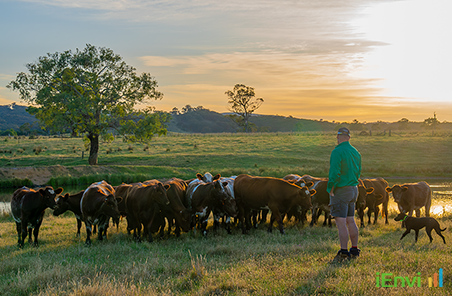
National Water Quality Credit Pilot for Australian Graziers
Meat and Livestock Australia (MLA) announced on 25 June 2024 a formal partnership with Verterra Ecological Engineering to pilot a nationally expanded water quality credit program for Australian graziers. The pilot operates under the Australasian Catchment Water Improvement Standard (ACWIS) Version 1.0, administered by EcoMarkets Australia under the ENVOMARK brand. The practical significance of this announcement is that water quality credit eligibility, previously confined to the Great Barrier Reef catchment through the established Reef Credits framework, has now been extended to all sensitive waterways across Australia. This is not an incremental adjustment to an existing scheme. It represents a structural expansion of Australia’s environmental markets into catchment restoration at a national scale.
The mechanism at the centre of the pilot is the Grazing Land Management (GLM) Method Version 1.0, which scientifically quantifies reductions in fine sediment loads achieved through improved grazing land practices. Verification of these reductions is handled remotely through Verterra’s proprietary DROVER Land Management service, which uses remote sensing to compare historical and present-day sediment loss data across a given property. The combination of a rigorous quantification methodology, an independent standard, and tech-driven verification positions this pilot as a credible, scalable framework rather than a project-level workaround.
For environmental professionals advising landholders, rural developers, corporate ESG buyers, and natural resource managers, the timing of this announcement matters. Australia’s voluntary environmental markets are maturing rapidly, and the introduction of a nationally consistent water quality credit standard creates a new asset class that can sit alongside, and be stacked upon, existing soil carbon projects under the Australian Carbon Credit Unit (ACCU) Scheme. That dual-revenue opportunity is the immediate commercial hook, but the regulatory and technical architecture underpinning ACWIS has broader implications for how catchment restoration work is designed, verified, and reported across multiple jurisdictions.
Key details of the ACWIS framework and GLM method for fine sediment abatement
The Australasian Catchment Water Improvement Standard Version 1.0 is the foundational document for this program. Administered by EcoMarkets Australia under its ENVOMARK brand, ACWIS provides a peer-reviewed, independently governed framework for quantifying pollutant reduction across diverse Australian catchments. The standard is designed to accommodate multiple pollutant types, but the MLA and Verterra pilot specifically targets fine sediment abatement using the Grazing Land Management Method Version 1.0. Fine sediment is the dominant diffuse-source pollutant degrading water quality in many of Australia’s most ecologically sensitive receiving environments, including the Great Barrier Reef lagoon, where grazed catchment runoff has long been identified as a primary pressure on coral and seagrass condition.
The GLM method quantifies fine sediment reductions by measuring improvements in ground cover achieved through a defined set of on-farm management actions. These actions include infrastructure installation such as exclusion fencing and watering points to redistribute livestock pressure, targeted weed control to improve pasture density, and rotational or time-controlled grazing to ensure adequate ground cover is present before high-intensity rainfall events. The logic of the method is straightforward: increasing ground cover reduces the kinetic energy of rainfall reaching bare soil, which in turn reduces sheet erosion and the generation of fine sediment loads that enter waterway systems. The quantification step converts those cover improvements into verified sediment reduction figures that can be issued as tradeable credits.
Verification is a critical element of any credible environmental market, and the DROVER platform addresses this directly. Verterra’s remote sensing service compares historical sediment loss data for a property against performance achieved under the improved land management regime. This approach reduces the cost and logistical burden of repeated physical site inspections, which have historically limited the scalability of environmental market programs in remote and semi-arid grazing regions. By anchoring verification in satellite-derived data, the program maintains the integrity that corporate ESG buyers require while making participation commercially viable for landholders managing large properties in areas with limited service access.
The credit stacking dimension of this pilot is explicitly encouraged. Landholders already registered under the ACCU Scheme for soil carbon projects can layer water quality credits on the same property, provided the management actions meet the requirements of both methodologies. The ACCU Scheme is administered by the Clean Energy Regulator and covers a range of land-sector carbon abatement methods, including soil carbon sequestration through improved grazing management. Because many of the on-farm actions that build soil carbon, such as improved ground cover and reduced bare areas, are the same actions that reduce fine sediment generation, there is genuine additionality in recognising both outcomes through separate credit streams. The pilot’s connection to the Reef 2050 Water Quality Improvement Plan also provides a policy anchor, given that plan’s specific targets for reducing fine sediment and dissolved inorganic nitrogen loads from grazed catchments entering the Great Barrier Reef.
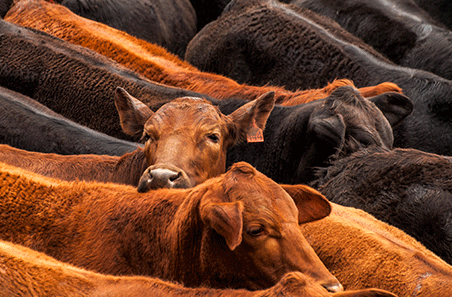
Australian context: water quality markets, national waterway frameworks, and catchment regulation
Australia does not currently have a single national legislative framework governing water quality credits in the way the ACCU Scheme governs carbon credits.
References and related sources
- Primary source: www.mla.com.au
- eco-markets.org.au
- agriprove.io
- eco-markets.org.au
- eco-markets.org.au
How iEnvi can help
iEnvi provides specialist consulting services relevant to this topic. Our team includes CEnvP Site Contamination Specialists with experience across contaminated land, groundwater, remediation, ecology, and regulatory compliance.
- iEnvi ESG services
- iEnvi contaminated land investigation services
- iEnvi remediation and validation services
- iEnvi expert services and independent review services
This is an iEnvi Machete news summary. Prepared by iEnvi to summarise the source article for contaminated land, groundwater, remediation, approvals and site risk professionals.
Published: 26 Jun 2026
Need advice on this topic? Speak to an iEnvi expert at info@ienvi.com.au or 1300 043 684, or contact us online.
Need advice on this issue? iEnvi provides practical, senior-led environmental consulting across contaminated land, remediation, ecology and environmental risk.
Team credentials Contaminated land services Remediation services Groundwater services Talk to iEnvi