
Overview of the Lord Howe Island Ecological Recovery
A peer-reviewed study published in the journal Biological Invasions in May 2026 has documented a 60 per cent surge in total native invertebrate populations across survey sites on World Heritage-listed Lord Howe Island, just five years after one of Australia’s most ambitious invasive species eradication programmes. The research was conducted by Maxim Adams and Professor Nathan Lo from the University of Sydney’s Molecular Ecology, Evolution and Phylogenomics laboratory. The findings represent one of the most empirically strong demonstrations of rapid ecosystem recovery following large-scale invasive predator removal yet recorded in Australian ecological science.
Lord Howe Island sits approximately 600 kilometres off the New South Wales coast and supports an extraordinary concentration of endemic species. The island’s World Heritage listing reflects its global biodiversity significance, yet invasive black rats and house mice had been reshaping its ecology for over a century before the 2019 eradication. Professor Nathan Lo summarised the scale of that disruption: “Rodents didn’t just affect a few iconic species, they reshaped ecological relationships across the island. What we’re seeing now is evidence of an ecosystem beginning to reorganise itself after that pressure was removed.” That process of reorganisation, now measured and published in a peer-reviewed forum, carries direct implications for how ecological restoration is designed, monitored, and verified across Australia.
For environmental professionals advising developers, councils, infrastructure proponents, and conservation land managers, this study matters for reasons well beyond its island setting. It provides a rare, quantified, time-series dataset showing how quickly invertebrate communities can rebound once the dominant ecological stressor is eliminated. At a time when biodiversity offset frameworks are under intense regulatory scrutiny and ecological outcome verification is becoming a condition of approval rather than a post-project aspiration, the Lord Howe Island results offer a genuine evidence base for what rigorous restoration monitoring looks like in practice.
Key details of the Lord Howe Island invertebrate recovery study
The 2019 rodent eradication campaign removed an estimated 300,000 invasive rats and mice from Lord Howe Island at a total cost of approximately $15 million. The programme used aerially distributed brodifacoum bait across the island’s approximately 1,455 hectares of land area. This was not the first attempt to eradicate rodents from Lord Howe Island; earlier, smaller-scale efforts had failed, making the 2019 programme’s apparent success all the more significant. Post-eradication monitoring required sustained effort over subsequent years to confirm rodent absence and then to quantify ecological responses.
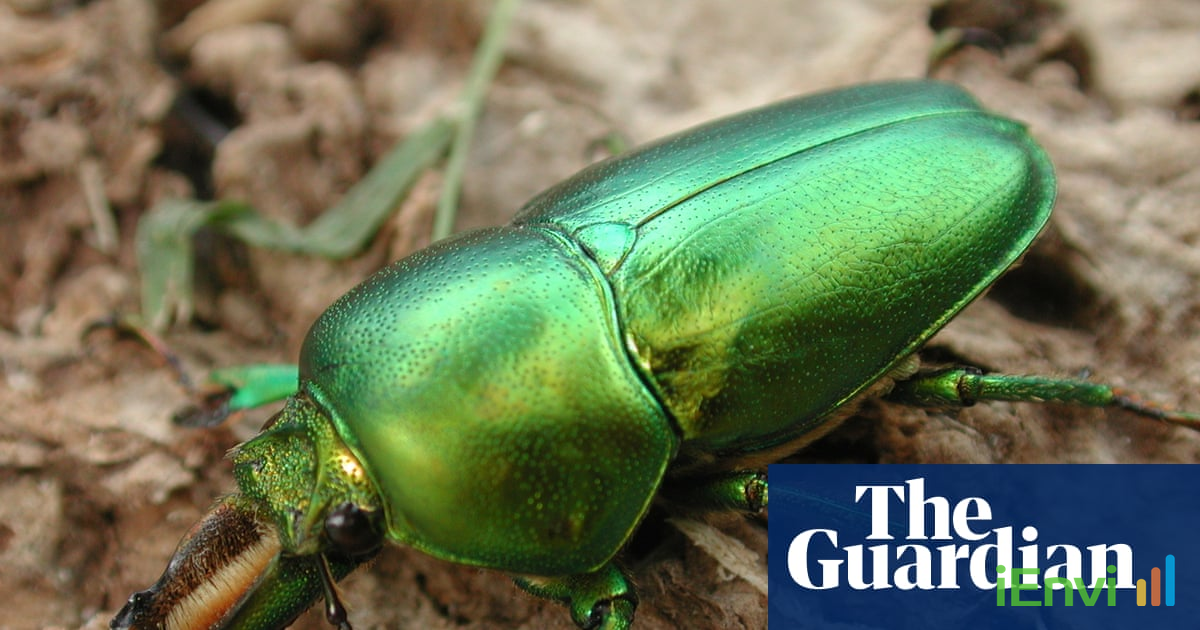
The University of Sydney study, published in Biological Invasions in May 2026, documented population-level changes across multiple invertebrate taxa by comparing pre-eradication baseline survey data with post-eradication surveys conducted up to five years after the 2019 programme. The recorded 60 per cent increase in total native invertebrate numbers was measured across defined survey sites using consistent methodologies, allowing direct before-and-after comparison. Among the species showing recovery are the iridescent green stag beetle, multiple weevil species, and the critically endangered Lord Howe Island wood-feeding cockroach (Panesthia lata). The wood-feeding cockroach is particularly significant: it is endemic to the island and was considered functionally suppressed by rodent predation pressure in the forest floor environment.
The ecological mechanism driving recovery is not simply a reduction in direct predation on invertebrates. Rodents also consumed seeds, disrupted litter layers, and altered fungal and decomposer communities that underpin invertebrate habitat. Removing that top-down pressure allowed cascading recovery across trophic levels. The study’s documentation of this ecosystem-wide reorganisation within a five-year window is ecologically notable because it suggests that for some invertebrate communities, the recovery trajectory is rapid once the primary driver of decline is removed, rather than requiring decades-long succession processes.
The study’s scientific credibility rests heavily on the quality of its pre-eradication baseline data. Without quantitative invertebrate population surveys conducted before 2019, a post-eradication comparison would have been impossible to defend. The research team’s ability to report a statistically meaningful 60 per cent population increase depends entirely on those pre-existing baselines. This methodological point is as important as the ecological finding itself for practitioners designing monitoring programmes for restoration projects or biodiversity offset sites.

Australian context: biodiversity offsets, EPBC Act obligations, and ecological monitoring standards
Lord Howe Island’s World Heritage listing places it directly within the scope of the Commonwealth Environment Protection and Biodiversity Conservation Act 1999 (EPBC Act). Any action likely to have a significant impact on the island’s World Heritage values or on listed threatened species requires referral to the federal environment minister. The critically endangered Lord Howe Island wood-feeding cockroach, among other endemic species documented in this study, is listed under the EPBC Act, meaning its recovery triggers reporting obligations and informs species recovery planning at the national level. The study’s findings will likely feed into updated recovery plan targets for affected listed species.
At the state level, the Biodiversity Conservation Act 2016 (NSW) governs the protection of native vegetation and threatened fauna across New South Wales (NSW).
References and related sources
- Primary source: www.theguardian.com
- impactful.ninja
- theguardian.com
- EPBC Act
How iEnvi can help
iEnvi provides specialist consulting services relevant to this topic. Our team includes CEnvP Site Contamination Specialists with experience across contaminated land, groundwater, remediation, ecology, and regulatory compliance.
- iEnvi contaminated land investigation services
- iEnvi remediation and validation services
- iEnvi expert services and independent review services
This is an iEnvi Machete news summary. Prepared by iEnvi to summarise the source article for contaminated land, groundwater, remediation, approvals and site risk professionals.
Published: 28 May 2026
Need advice on this topic? Speak to an iEnvi expert at info@ienvi.com.au or 1300 043 684, or contact us online.
Need advice on this issue? iEnvi provides practical, senior-led environmental consulting across contaminated land, remediation, ecology and environmental risk.
Team credentials Contaminated land services Remediation services Groundwater services Talk to iEnvi