
Overview
On 25 May 2024, the Australian Government and the Queensland Government jointly launched public consultation on the nation’s first pilot Bioregional Guidance Plans under the Environment Protection and Biodiversity Conservation Act 1999 (EPBC Act). These draft plans represent the most significant structural shift in Commonwealth environmental assessment methodology in over two decades, moving the regulatory lens from individual project referrals to landscape-scale ecological analysis. Public comment on the draft plans is open until 17 July 2024, giving proponents, consultants, and regulators a narrow window to engage with frameworks that will shape federal environmental approvals for years to come.
Two Queensland regions are the focus of this pilot programme. The Brigalow Belt North, centred on the Collinsville area, has been scoped to support wind farm development. The Gulf Plains, covering the Julia Creek and Richmond area, has been designed to guide critical minerals mining proposals. The selection of these two regions is deliberate: both are experiencing concentrated development pressure, both host nationally significant ecological assets, and both sectors, renewable energy and critical minerals, sit at the intersection of Australia’s clean energy transition and sovereign resource security objectives. The pilot effectively tests whether bioregional planning can accelerate approvals without compromising ecological outcomes in precisely the environments where that tension is sharpest.
For environmental consultants, developers, mining proponents, and their legal advisers, the immediate significance is twofold. First, these non-binding guidance plans create a shared, high-integrity regional dataset that proponents can use to design projects around ecological constraints before a referral is lodged. Second, they establish the precedent and administrative architecture for future binding Bioregional Plans, under which projects located within pre-approved development zones may require no separate federal environmental assessment at all, provided they comply with the plan conditions. That prospect fundamentally changes the risk calculus for large infrastructure and resources projects in regional Queensland and, eventually, across Australia.
Key details of the pilot Bioregional Guidance Plans and their EPBC Act framework
The legal foundation for Bioregional Plans sits in Part 10 of the EPBC Act, specifically Sections 171 to 181, with the capacity to make bioregional plans explicitly provided under Section 176. These provisions allow the Commonwealth Minister for the Environment to prepare plans that describe the biodiversity, ecological character, and other natural features of a bioregion, and to set out objectives and actions for the management of Matters of National Environmental Significance (MNES) within that region. The pilot guidance plans are structured to align with draft Commonwealth National Environmental Standards, which establish measurable thresholds for MNES protection and environmental offset obligations. Critically, the guidance plans sit one step below formal binding instruments in the regulatory hierarchy: they are intended to inform project design and assessment methodology rather than to legally bind proponents or decision-makers at this stage.
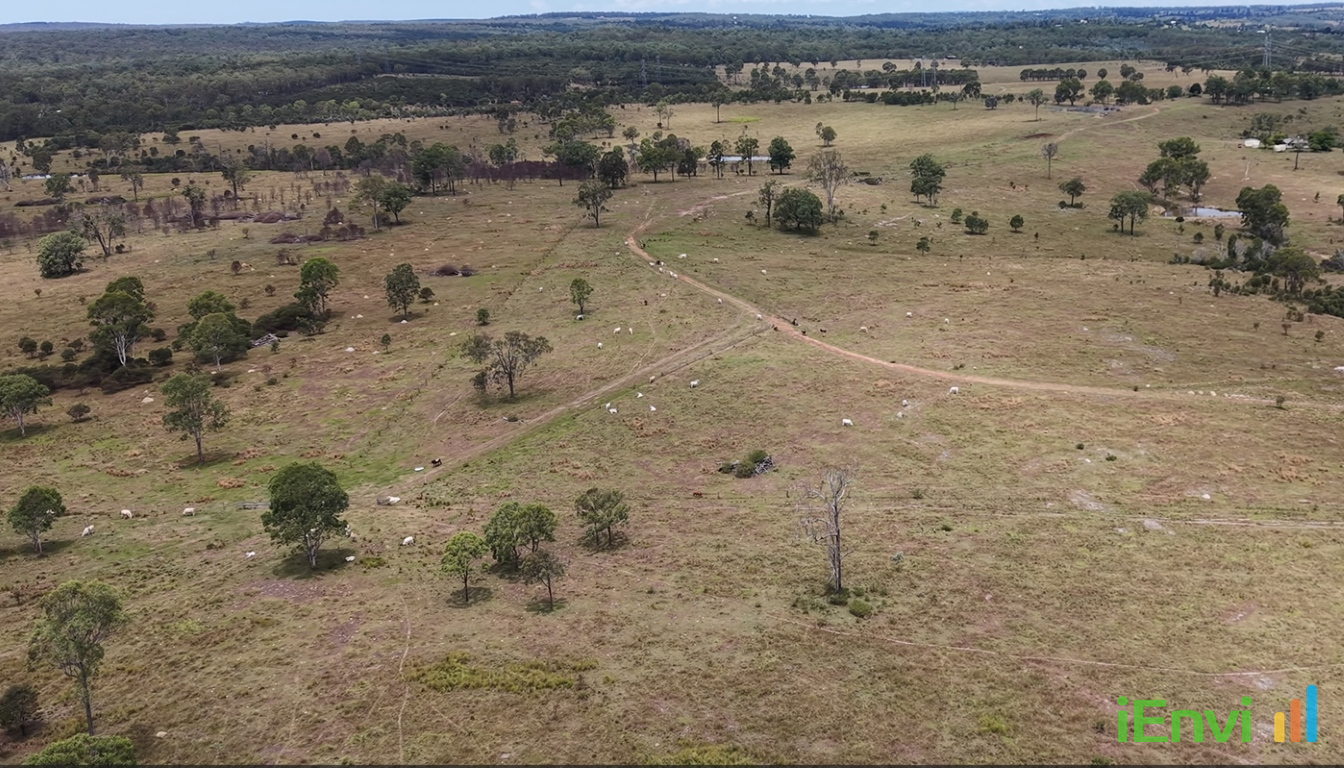
The Brigalow Belt North plan covers the Collinsville district in the Bowen Basin hinterland, a landscape characterised by remnant brigalow (Acacia harpophylla) ecosystems, which constitute a listed threatened ecological community under the EPBC Act, as well as habitat for species such as the koala (listed as endangered), the black-throated finch (endangered), and various migratory birds protected under bilateral treaties including JAMBA, CAMBA, and ROKAMBA. Wind farm development in this region has historically triggered controlled action determinations under the EPBC Act due to potential impacts on these MNES. The bioregional mapping identifies areas of high and low ecological value at a landscape scale, enabling proponents to select turbine layouts, access corridors, and substation locations that avoid or minimise impacts on critical habitat before lodging a referral.
The Gulf Plains plan covers the Julia Creek and Richmond districts, a region under active exploration and development pressure for critical minerals including cobalt, vanadium, and phosphate. The Gulf Plains bioregion supports significant populations of the Julia Creek dunnart (Sminthopsis douglasi), an endangered marsupial with a highly restricted range, as well as waterbird habitat associated with the Flinders and Norman river systems. The plan introduces a spatial framework for cumulative impact assessment (CIA) that requires consultants to evaluate the combined ecological stress of multiple simultaneous or sequential developments across the bioregion, rather than assessing each project’s impacts in isolation. This is a methodological departure from current standard practice under most state and Commonwealth EIS frameworks, where cumulative impact analysis is often acknowledged but rarely quantified with regional-scale baseline data.
The consultation process is managed through the Department of Climate Change, Energy, the Environment and Water (DCCEEW) and invites submissions from proponents, land managers, Traditional Owners, local governments, and the broader community. Submissions close on 17 July 2024. Feedback received during this pilot consultation will directly inform the development of binding Bioregional Plans, which, once gazetted, would create legally operative development zones and conservation zones across the covered bioregions. Projects sited within compliant development zones under a binding plan would be exempt from triggering a controlled action determination under the EPBC Act, provided they meet the conditions set out in the plan.


References and related sources
- Primary source: environment.qld.gov.au
- ess-news.com
- 4elementsconsulting.com.au
- environment.qld.gov.au
- mccullough.com.au
- NEPM Assessment of Site Contamination
- EPBC Act
How iEnvi can help
iEnvi provides specialist consulting services relevant to this topic. Our team includes CEnvP Site Contamination Specialists with experience across contaminated land, groundwater, remediation, ecology, and regulatory compliance.
- iEnvi contaminated land investigation services
- iEnvi remediation and validation services
- iEnvi expert services and independent review services
This is an iEnvi Machete news summary. Prepared by iEnvi to summarise the source article for contaminated land, groundwater, remediation, approvals and site risk professionals.
Published: 28 May 2026
Need advice on this topic? Speak to an iEnvi expert at info@ienvi.com.au or 1300 043 684, or contact us online.
Need advice on this issue? iEnvi provides practical, senior-led environmental consulting across contaminated land, remediation, ecology and environmental risk.
Team credentials Contaminated land services Remediation services Groundwater services Talk to iEnvi