
Autonomous Laboratory Automation in Environmental Analysis
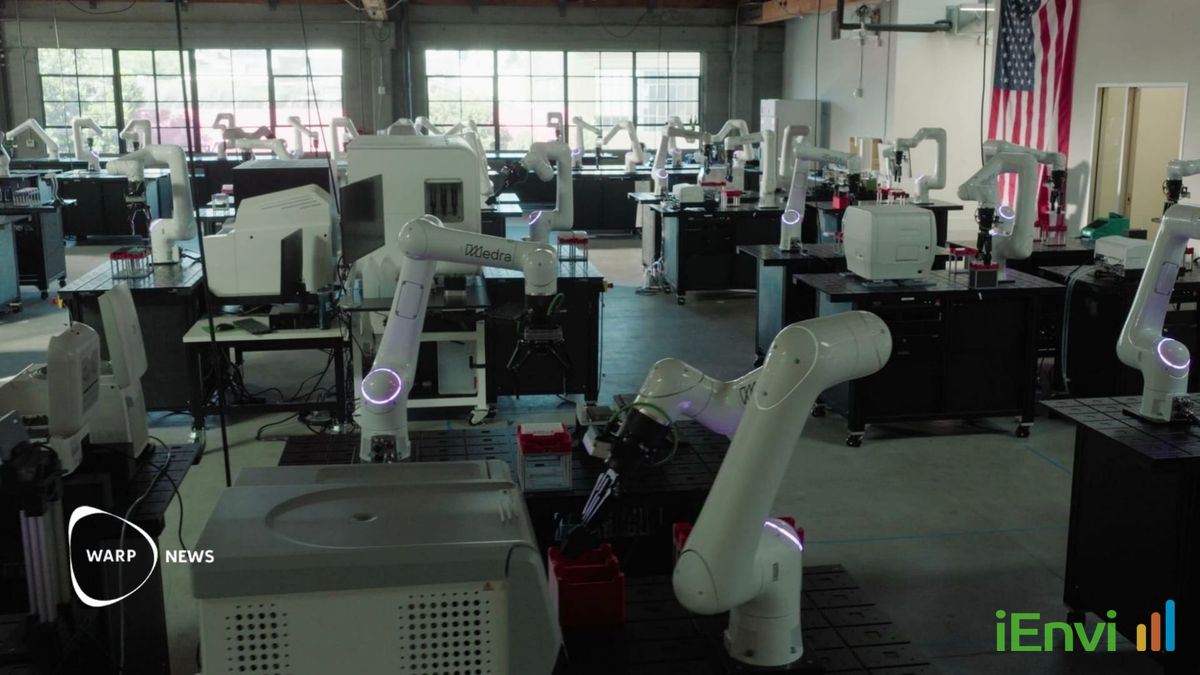
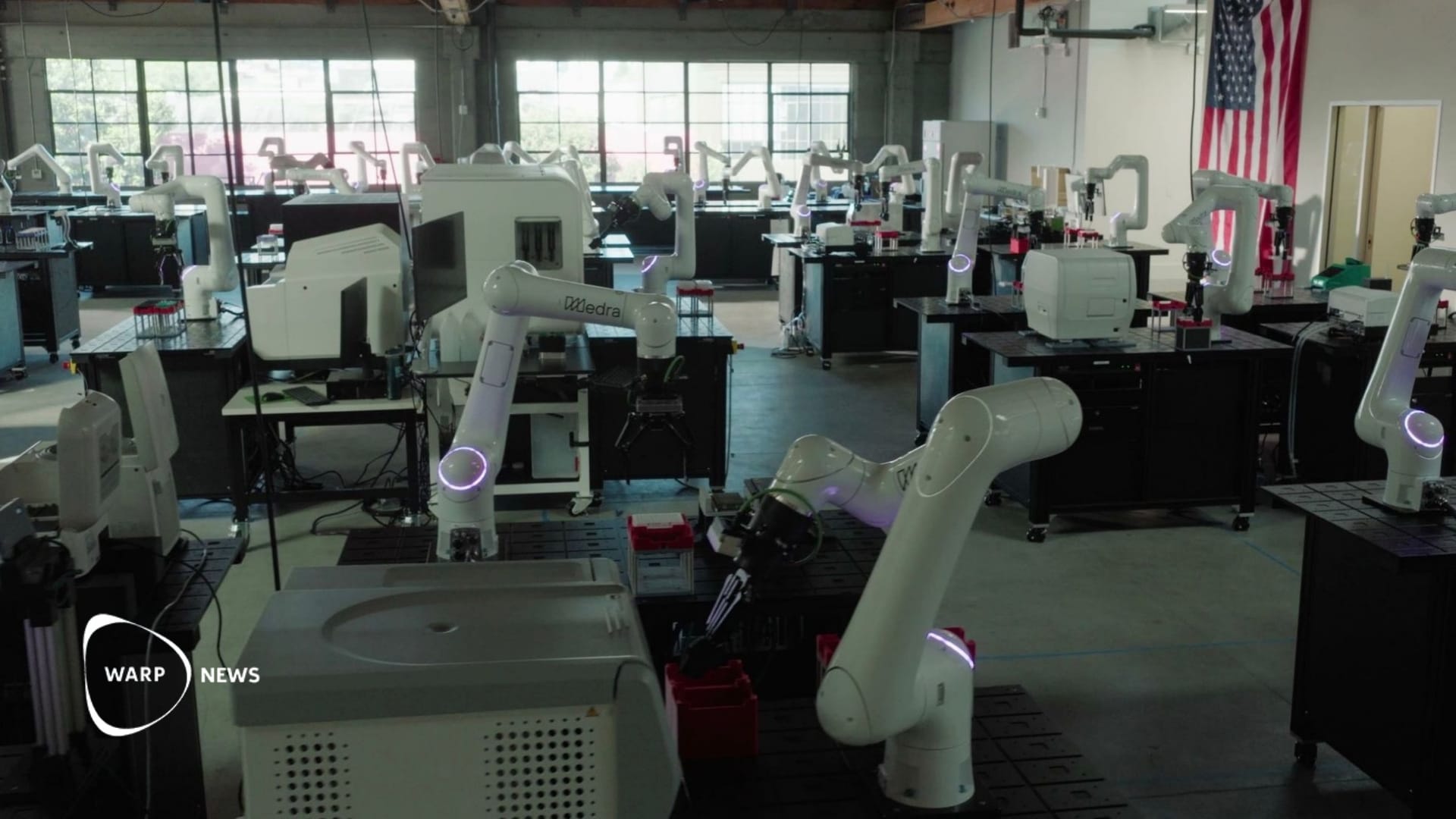
A Bay Area startup called Medra has launched an autonomous laboratory platform that uses embodied artificial intelligence to conduct biological drug discovery experiments continuously, without human operators present at the bench. Announced in May 2026, the platform allows scientists to direct robotic laboratory systems using everyday natural language instructions, in a manner comparable to prompting a large language model. Medra has raised $52 million to scale the infrastructure, and has already deployed five systems with commercial partners including Genentech and Addition Therapeutics.
What Medra has demonstrated is that physical laboratory infrastructure can now be orchestrated by artificial intelligence with the same flexibility and programmability previously associated with software systems. The platform operates over 75 per cent of standard laboratory instruments, logs every micro-action from pipette angles to reagent mixing speeds into a proprietary vision-language-lab-action model, and uses that data to improve future experimental runs autonomously. The result is a closed-loop research system that reasons about outcomes rather than simply executing pre-programmed steps.
For scientific disciplines beyond drug discovery, including environmental analytical chemistry, geotechnical testing, and contaminated site sample analysis, this development signals a substantial change in expectations around laboratory automation, data traceability, and reproducibility. The question is no longer whether autonomous laboratory systems can perform complex physical tasks. The question is how quickly adjacent industries will adopt comparable frameworks, and what that means for professional practice standards in fields where data defensibility is a regulatory requirement rather than a quality aspiration.
Key details of the Medra autonomous laboratory platform
Medra’s platform is built around what the company describes as a vision-language-lab-action model. This architecture connects natural language reasoning, visual interpretation of the laboratory environment, and physical robotic execution into a single integrated loop. When a scientist issues an instruction in plain language, the system translates that instruction into a sequence of precise physical movements, selects the appropriate instruments, and carries out the procedure. Critically, it does not rely on hard-coded scripts for each task. Instead, it reasons through the instruction and adapts its execution based on the physical state of the laboratory at the time.
The metadata capture capability is technically significant. Every micro-action performed by the robotic system is logged, including instrument parameters, reagent volumes, mixing durations, environmental conditions, and procedural sequencing. This metadata is fed back into the model as training data, enabling the system to optimise future experimental runs without human intervention. This closed-loop design addresses one of the most persistent problems in traditional laboratory environments: the difficulty of precisely reproducing experimental conditions across operators, shifts, or sites. In conventional wet-lab settings, variability in manual technique is a known source of data quality degradation that is difficult to control even with rigorous standard operating procedures.
The deployment logistics are also noteworthy. According to Warp News, Medra constructed its laboratory infrastructure in under 90 days. This rapid deployment timeline is deliberately designed to reduce reliance on overseas outsourcing for early-stage drug discovery, which has historically meant sending samples or experimental programmes to contract research organisations in Asia or Europe. By bringing autonomous capability in-house and at speed, Medra’s model compresses the early discovery cycle while maintaining a complete digital audit trail of all experimental activity.
Five systems are currently operational with commercial partners. Genentech, a major biopharmaceutical company, is among the early adopters, which lends credibility to the platform’s capacity to handle commercially demanding research workflows. The fact that the system controls more than 75 per cent of standard laboratory instruments out of deployment highlights that it is not a narrow-use prototype but a broadly capable platform applicable across a wide range of analytical and experimental procedures.
Australian context: implications for scientific services, laboratory standards, and professional practice
Australia’s scientific consulting and laboratory services sector operates within a framework of accreditation and regulatory requirements that place high demands on data traceability and reproducibility. National Association of Testing Authorities (NATA) accreditation, for example, requires laboratories to demonstrate documented procedures, instrument calibration records, chain of custody compliance, and quality control sample performance. The audit trail that Medra’s platform generates automatically, as a byproduct of normal operation, closely mirrors the documentation obligations that Australian laboratories currently meet through manual record-keeping and laboratory information management systems. An autonomous laboratory that logs every pipette movement and instrument parameter at the hardware level would, in principle, produce a more granular and tamper-evident audit trail than most current NATA-accredited processes.
In the context of contaminated land investigation in Australia, analytical data quality is governed by a combination of NATA accreditation requirements, the National Environment Protection (Assessment of Site Contamination) Measure (NEPM (ASC) 2013), and state EPA guidelines across Queensland, New South Wales, Victoria, and South Australia.
References and related sources
- Primary source: www.warpnews.org
- mean.ceo
How iEnvi can help
iEnvi integrates technology and data-driven approaches into environmental consulting. We monitor AI and technology developments that affect how environmental professionals deliver services to clients.
This is an iEnvi Machete news summary. Prepared by iEnvi to summarise the source article for contaminated land, groundwater, remediation, approvals and site risk professionals.
Published: 06 May 2026
Need advice on this topic? Speak to an iEnvi expert at info@ienvi.com.au or 1300 043 684, or contact us online.
Need advice on this issue? iEnvi provides practical, senior-led environmental consulting across contaminated land, remediation, ecology and environmental risk.
Contaminated land services Remediation services Groundwater services Talk to iEnvi