
Overview
The rapid expansion of artificial intelligence infrastructure is pushing the physical limits of power grids and data centre architectures globally. As massive graphics processing unit clusters scale up to handle complex generative artificial intelligence models, the energy required to transmit data between these processing units has become a primary bottleneck. Microsoft Research has recently introduced MOSAIC, a novel optical interconnect technology designed to address this challenge. By replacing traditional laser-based communication channels with micro-scale light-emitting diodes, known as MicroLEDs, and utilising specialised optical fibre originally developed for medical imaging, this technology offers a practical pathway to lower power consumption in high-density computing environments.
For Australian environmental consultants, property developers, infrastructure planners, and legal advisors, this development marks a shift in how the environmental footprint of digital infrastructure is evaluated. Data centres are no longer seen simply as large warehouses with high electrical connection requirements, but as highly complex thermal systems where hardware-level choices directly dictate local environmental impacts. As local councils and state planning authorities increase their scrutiny of the energy intensity and carbon emissions associated with large-scale developments, technological shifts that reduce internal energy demands become critical variables in the planning and approvals process.
Rather than relying solely on external mitigation strategies, such as purchasing carbon offsets or installing large-scale solar arrays, early-stage research into energy-efficient hardware like MOSAIC points to ways of targeting energy consumption at the source. By reducing the energy required for networking within data centres, technologies of this kind could, if commercialised, lower the baseline electricity demand of a facility. For now, however, MOSAIC remains a Microsoft Research proof of concept rather than a deployable product, and any planning benefits would only flow through once it reaches commercial availability and is adopted at scale.
Key details
The technical architecture of MOSAIC represents a departure from standard data centre networking design, which has historically relied on either copper cabling or laser-based optical transceivers. Standard copper interconnects are effective for short distances, but they suffer from rapid signal attenuation and high electromagnetic interference when pushed beyond a narrow physical range. In practice, high-speed copper cabling is generally limited to roughly 2 metres [6.5 feet] before signal integrity degrades to unacceptable levels. This limitation forces data centre operators to pack high-heat-generating hardware tightly together, compounding the local thermal management challenges within server racks.
To extend communication distances within data halls, operators have relied on optical cables driven by specialised semiconductor lasers. While these lasers offer high bandwidth, they are expensive to manufacture, highly sensitive to temperature fluctuations, and consume a substantial amount of electrical power. The MOSAIC system, developed as a proof of concept in partnership with semiconductor manufacturer MediaTek, replaces these complex laser systems with cheap, durable MicroLED emitters. MicroLEDs operate at a fraction of the power of traditional lasers and generate significantly less heat, which in turn reduces the energy required for the active cooling of the optical transceivers themselves.
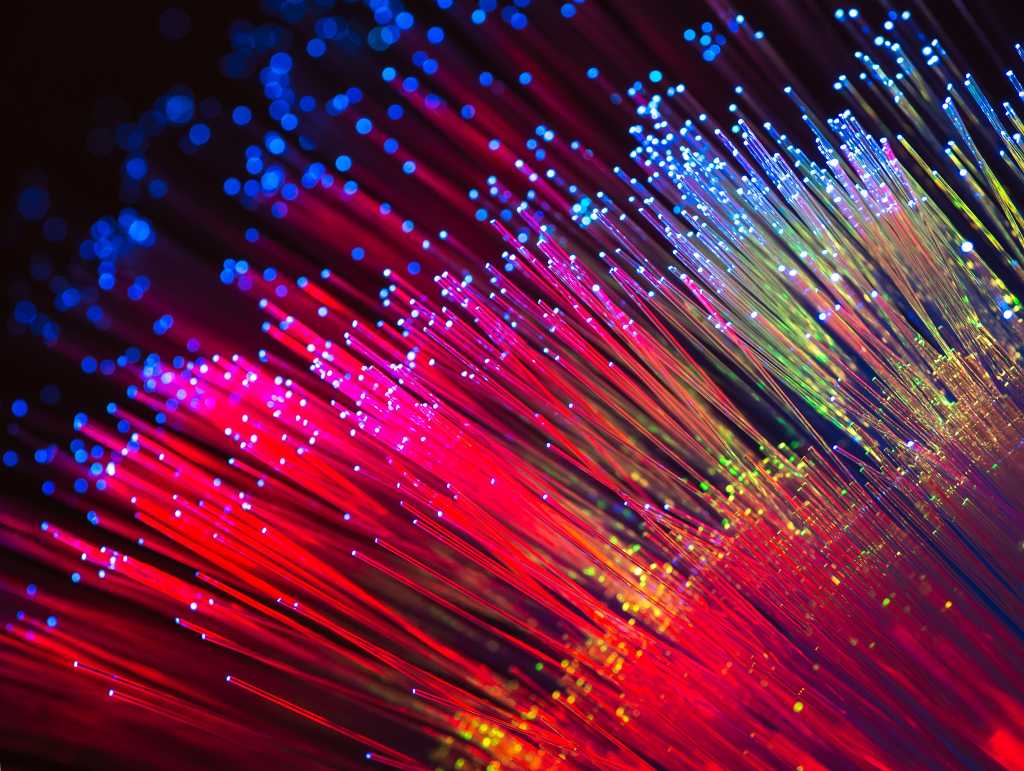
To transmit the light emitted by these MicroLEDs, MOSAIC utilises multicore medical imaging optical fibre, a material originally designed for high-resolution endoscopes and medical imaging devices. This fibre structure allows for parallel data transmission across multiple cores within a single physical cable sheath, matching the high bandwidth requirements of modern artificial intelligence workloads. The proof of concept demonstrated that this laser-free configuration can achieve high-speed, reliable data transmission over physical distances of up to 50 metres [164 feet]. Furthermore, Microsoft has designed this technology to fit directly into standard optical transceiver form factors, ensuring compatibility with existing network switch architectures and hardware deployment processes.
From a resource efficiency perspective, the primary benefit of the MOSAIC technology is a reduction in cabling energy consumption of up to 50 per cent compared to mainstream laser-based optical cables. In large-scale facilities where networking and interconnects can account for 10 to 20 per cent of the total power infrastructure, a halving of this energy load represents a major step forward in operational efficiency. Additionally, extending the reliable interconnect distance to 50 metres [164 feet] allows physical cluster architectures to be distributed across larger floorplates rather than being tightly concentrated, which eases local floor-loading and heat dissipation constraints.
Australian context
In Australia, the rapid expansion of data centres is concentrated in key metropolitan corridors, most notably in Western Sydney, New South Wales, and the western suburbs of Melbourne, Victoria. These developments are subject to strict environmental planning frameworks, including state-significant development assessments and local environmental plans. Under the National Greenhouse and Energy Reporting Act 2007, large energy consumers must report their scope 1 and scope 2 emissions, placing immense pressure on data centre operators to demonstrate energy efficiency. The deployment of technologies like MOSAIC directly assists in lowering scope 2 emissions by improving the fundamental Power Usage Effectiveness of these facilities.
The physical constraints of the Australian electricity grid also make local energy-efficiency gains particularly valuable. Transmission capacity in New South Wales and Victoria is already under pressure from the broader shift toward electrification and the integration of variable renewable generation, and the Australian Energy Market Operator has repeatedly warned that hyperscale data centre loads are emerging as a significant new source of demand. Hardware-level reductions in networking energy, of the kind MOSAIC aims to demonstrate, would ease the volume of new generation and transmission infrastructure required to support continued data centre growth. For now, Australian planners, consultants and legal advisors should treat MOSAIC as a signal of where data centre design is heading rather than a near-term compliance tool, while continuing to focus approvals on proven measures such as efficient cooling, on-site renewables and grid-friendly load management.
References and related sources
- Primary source: www.networkworld.com
- NEPM Assessment of Site Contamination
How iEnvi can help
iEnvi provides specialist consulting services relevant to this topic. Our team includes CEnvP Site Contamination Specialists with experience across contaminated land, groundwater, remediation, ecology, and regulatory compliance.
- iEnvi contaminated land investigation services
- iEnvi remediation and validation services
- iEnvi expert services and independent review services
This is an iEnvi Machete news summary. Prepared by iEnvi to summarise the source article for contaminated land, groundwater, remediation, approvals and site risk professionals.
Published: 17 Jun 2026
Need advice on this topic? Speak to an iEnvi expert at info@ienvi.com.au or 1300 043 684, or contact us online.
Need advice on this issue? iEnvi provides practical, senior-led environmental consulting across contaminated land, remediation, ecology and environmental risk.
Team credentials Contaminated land services Remediation services Groundwater services Talk to iEnvi