
Scaling Terrestrial eDNA Monitoring via Spiderwebs
The successful conclusion of a landmark three-year research partnership between mining services leader Mineral Resources, commonly known as MinRes, and Curtin University has delivered a major technical breakthrough in biodiversity monitoring. This collaborative effort has resulted in the largest terrestrial environmental DNA, or eDNA, survey conducted to date. The core scientific discovery of this project is that simple, ubiquitous spiderwebs act as highly efficient, passive natural DNA traps. These webs continuously collect shed genetic material, including hair, scales, skin cells, and pollen, from the surrounding ecosystem, transforming a common site feature into a highly sophisticated environmental monitoring tool.
For environmental consultants, project developers, planning lawyers, and local councils across Australia, this development represents a major step forward. Historically, terrestrial biodiversity monitoring in remote or highly disturbed environments has been an expensive, slow, and resource-intensive undertaking. Traditional physical survey techniques often struggle to detect rare, cryptic, or nocturnal species, creating significant schedule and compliance risks during the environmental impact assessment process. By converting terrestrial eDNA from an academic novelty into a highly structured, commercially scalable tool, this research offers a faster, more cost-effective, and scientifically rigorous methodology to establish ecological baselines.
As regulatory expectations continue to rise across Australia, having access to defensible, high-resolution ecological data is increasingly critical. Major infrastructure, resources, and urban development projects face intense scrutiny from state and federal regulatory bodies during planning and approvals pathways. The ability to deploy non-invasive, passive sampling techniques like spiderweb eDNA collection allows project proponents to identify ecological constraints early, streamline assessment timeframes, and demonstrate a proactive commitment to environmental stewardship.
How Spider Silk Acts as a Natural DNA Trap
The technical foundation of this pioneering research lies in the physical and electrostatic properties of spider silk. Spiderwebs are composed of complex protein fibres that are naturally sticky and frequently hold an electrostatic charge, which enables them to attract and capture fine airborne particulates. As wind passes through a web, it acts as an active-passive air filter, trapping microscopic biological materials shed by local fauna and flora. These materials include skin cells, hair, feathers, scales, faecal matter, and pollen. Over time, the web aggregates these genetic signatures, providing a temporal and spatial record of the biological community in the immediate vicinity without requiring direct contact with the target organisms.
The three-year partnership between MinRes and Curtin University successfully scaled this methodology by executing the largest terrestrial eDNA survey of its kind across diverse, remote operational sites. The primary objective was not merely to prove the concept, but to establish the baseline parameters required for industrial and commercial application. To achieve this, researchers developed a comprehensive set of practical criteria and standardised guidelines designed to guide practitioners through the entire lifecycle of an eDNA monitoring programme. These guidelines cover field collection protocols, containment procedures, contamination control, DNA extraction methodologies, and high-throughput sequencing analysis.
Standardisation is a critical milestone for the commercial adoption of eDNA technologies, as it ensures that the data generated is repeatable, auditable, and scientifically defensible. Prior to this research, the absence of standardised field and laboratory protocols made it difficult to compare results across different sites or sampling periods, limiting the utility of eDNA in formal regulatory submittals. By establishing clear, step-by-step procedures, the MinRes and Curtin University partnership has provided the industry with a blueprint for quality assurance and quality control, ensuring that biological data can withstand the scrutiny of regulators, auditors, and legal challenges.
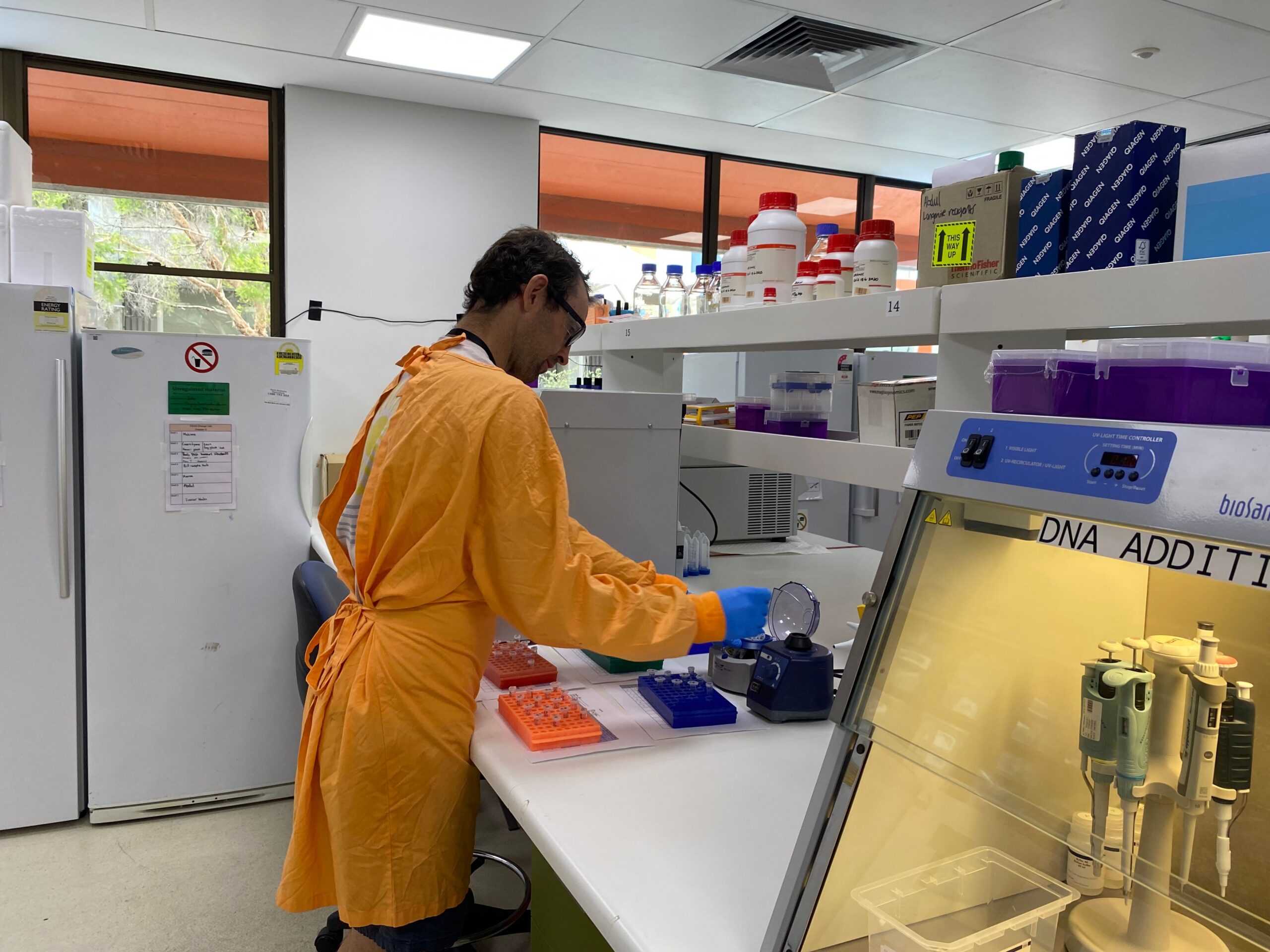
From an operational perspective, the laboratory analysis of web-derived eDNA involves extracting total genomic DNA from the web matrix, followed by polymerase chain reaction amplification targeting specific marker genes. Through high-throughput metabarcoding, multiple taxonomic groups, ranging from terrestrial vertebrates like mammals, reptiles, and birds, to invertebrates and plant species, can be identified from a single physical sample. This multi-taxa detection capability provides a significantly broader ecological characterisation than traditional targeted surveys, which are usually restricted to specific animal groups and require multiple specialised field sub-consultants.

Australian context
The introduction of standardised terrestrial eDNA monitoring protocols arrives at a critical juncture for environmental practice in Australia. At the Commonwealth level, the ongoing transition toward the Nature Positive framework and the establishment of Environment Protection Australia as an independent national regulator represent a fundamental shift in how biodiversity impacts are assessed and regulated. Evolving guidelines under the Environment Protection and Biodiversity Conservation Act 1999 demand that project proponents provide comprehensive, high-quality, and scientifically rigorous ecological baseline data. Standardised eDNA methodologies, such as those developed through the Curtin and MinRes partnership, provide a direct, reliable pathway to meet these heightened federal standards.
At the state level, environmental regulators are similarly raising the bar for biodiversity reporting and ecological characterisation. In Western Australia, where much of the MinRes and Curtin fieldwork was conducted, the WA Environmental Protection Authority requires increasingly detailed flora and fauna surveys to support assessments under Part IV of the Environmental Protection Act 1986, with particular emphasis on detecting Threatened and Priority species in arid and semi-arid landscapes. Comparable expectations are emerging in Queensland, New South Wales, and Victoria, where biodiversity offset frameworks and native vegetation regulations rely on accurate species-level data. Standardised spiderweb eDNA sampling offers state regulators and proponents a consistent, auditable method for generating that data, particularly in regions where conventional trapping and observational surveys are logistically difficult or ecologically intrusive.
References and related sources
- Primary source: www.mineralresources.com.au
- EPBC Act
How iEnvi can help
iEnvi provides specialist consulting services relevant to this topic. Our team includes CEnvP Site Contamination Specialists with experience across contaminated land, groundwater, remediation, ecology, and regulatory compliance.
- iEnvi site assessment services
- iEnvi remediation and validation services
- iEnvi expert services and independent review services
This is an iEnvi Machete news summary. Prepared by iEnvi to summarise the source article for contaminated land, groundwater, remediation, approvals and site risk professionals.
Published: 17 Jun 2026
Need advice on this topic? Speak to an iEnvi expert at info@ienvi.com.au or 1300 043 684, or contact us online.
Need advice on this issue? iEnvi provides practical, senior-led environmental consulting across contaminated land, remediation, ecology and environmental risk.
Team credentials Flora and fauna assessment Contaminated land services Remediation services Talk to iEnvi