
Project Overview: Restoring Hunter Valley River Red Gums
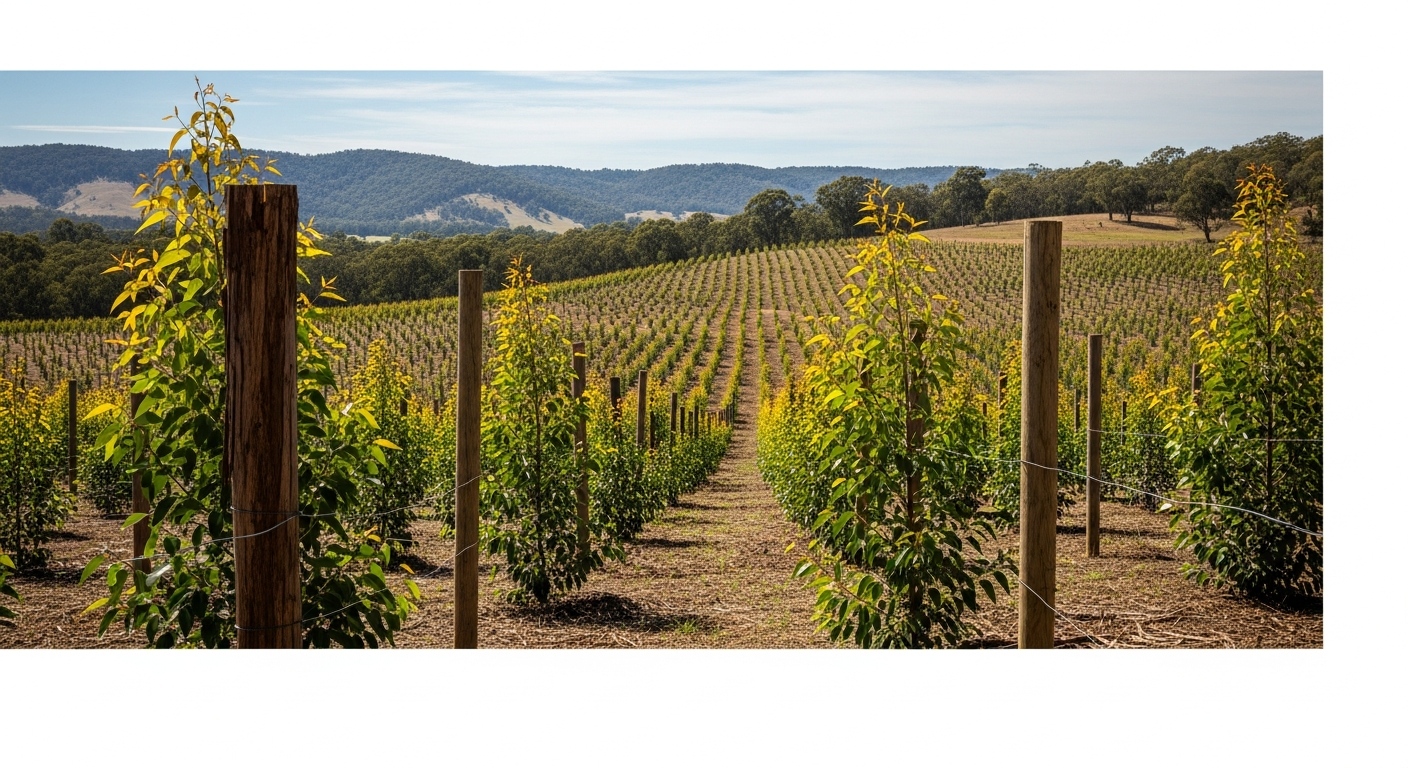
On 24 July 2024, the NSW Department of Climate Change, Energy, the Environment and Water (DCCEEW) announced that its Saving our Species team had planted approximately 3,000 genetically diverse Hunter Valley River Red Gums (Eucalyptus camaldulensis) across the Upper and Lower Hunter region. The planting is the result of a coordinated effort involving the Research Centre for Ecosystem Resilience at the Botanic Gardens of Sydney, Hunter Local Land Services, Muswellbrook Shire Council, Singleton Council, Broke-Bulga Landcare, Trees in Newcastle, and local landholders. What sets this initiative apart from conventional revegetation programmes is the deliberate integration of conservation genetics and climate-adapted seed sourcing, representing a meaningful shift in how ecological restoration is being designed and delivered in New South Wales.
The project is a direct response to the critical decline of the Hunter Valley River Red Gum, a population now reduced to fewer than 1,000 mature trees scattered across 19 isolated patches. Only 10 per cent of the species’ historical geographic range persists, and the fragmented nature of remaining stands means that conventional local-provenance seed collection would reinforce the very genetic bottlenecks threatening the population’s long-term survival. By sourcing seeds from a broader geographic range, including hotter and drier western populations with demonstrated climate tolerance, the project team has introduced genetic material capable of supporting adaptation under projected future conditions.
For environmental professionals working across development assessment, biodiversity offsets, ecological restoration, and vegetation management in New South Wales and nationally, this project carries direct professional relevance. It signals that regulators and the scientific institutions informing them are moving beyond planting numbers as the primary metric of restoration success. Long-term ecological viability, genetic diversity, and climate resilience are now measurable expectations, and practitioners who do not reflect this shift in their technical documentation risk producing work that falls short of contemporary regulatory standards.
Key details of the Hunter Valley River Red Gum restoration project
The Hunter Valley River Red Gum (Eucalyptus camaldulensis) has been reduced to fewer than 1,000 mature trees across its NSW range, with only 10 per cent of its historical expanse remaining. Those surviving trees are distributed across 19 isolated patches in the Upper and Lower Hunter, a spatial configuration that severely limits natural gene flow between individuals. In ecological genetics, small and isolated populations are highly susceptible to inbreeding depression and genetic drift, both of which reduce reproductive success and adaptive capacity over time. Under climate change projections, populations without sufficient genetic diversity to respond to drought, extreme heat events, and altered flood regimes face a substantially elevated risk of local extinction.
To counter this, the Saving our Species team, working with the Research Centre for Ecosystem Resilience at the Botanic Gardens of Sydney, applied the “Restore and Renew” webtool to guide seed sourcing decisions. This tool allows practitioners to model projected climate conditions at a restoration site and identify seed source populations from geographic areas that currently experience those conditions. In the case of the Hunter Valley River Red Gums, seeds were sourced from western populations that already endure hotter and drier conditions, introducing climate-adapted alleles into the restored woodland communities. This methodology moves beyond traditional local provenance rules without abandoning ecological rigour, because the seed sources selected remain ecologically compatible with the restoration site while carrying genetic traits suited to future climate scenarios.
The project team established a regional seed bank prior to planting, which is a critical infrastructure element for ensuring quality-controlled, genetically characterised plant material is available for large-scale restoration work. The 3,000 trees planted represent a targeted intervention designed to build a self-sustaining population, not merely increase canopy cover. Self-sustainability requires sufficient genetic diversity to support natural regeneration across multiple generations, which is why seed bank development and genetic provenance selection are as technically important as the planting operation itself. The involvement of multiple councils, catchment management bodies, and community landcare groups also reflects an understanding that landscape-scale habitat connectivity cannot be achieved by a single landholder or agency acting alone.
The project operates under the umbrella of the NSW Saving our Species programme, which is established under the Biodiversity Conservation Act 2016 (NSW). This Act governs threatened species licensing, conservation agreements, and the ecological standards underpinning the NSW Biodiversity Offsets Scheme. The Hunter Valley River Red Gum’s status as a threatened ecological community under both state and potentially federal frameworks means that restoration activities and offset designs involving this species are subject to heightened scientific scrutiny from both the NSW Biodiversity Conservation Division and, where matters of national environmental significance are engaged, the Commonwealth environment department administering the Environment Protection and Biodiversity Conservation Act 1999 (Cth).
Australian regulatory context for genetic diversity in biodiversity offsets and ecological restoration
The NSW Biodiversity Offsets Scheme (BOS), established under the Biodiversity Conservation Act 2016 (NSW) and its associated regulations and standards, requires that biodiversity offset sites demonstrate genuine ecological uplift rather than superficial vegetation cover. Restoration plantings used to generate or satisfy biodiversity credits must meet species composition, structural, and condition thresholds defined under the Biodiversity Assessment Method (BAM). As the Hunter Valley River Red Gum project illustrates, meeting those thresholds increasingly requires practitioners to demonstrate not only that the right species have been planted in the right location, but that the plant material used is genetically appropriate for long-term ecological function under current and projected conditions. Technical documents supporting offset site establishment, biodiversity stewardship agreements, and development consent conditions should now explicitly address seed provenance, genetic diversity, and climate-adapted sourcing where threatened ecological communities are involved.
References and related sources
- Primary source: www.environment.nsw.gov.au
- earthtrade.com.au
- nsw.gov.au
- antarctica.gov.au
- EPBC Act
How iEnvi can help
iEnvi provides specialist consulting services relevant to this topic. Our team includes CEnvP Site Contamination Specialists with experience across contaminated land, groundwater, remediation, ecology, and regulatory compliance.
- iEnvi contaminated land investigation services
- iEnvi remediation and validation services
- iEnvi expert services and independent review services
This is an iEnvi Machete news summary. Prepared by iEnvi to summarise the source article for contaminated land, groundwater, remediation, approvals and site risk professionals.
Published: 27 Jul 2026
Need advice on this topic? Speak to an iEnvi expert at info@ienvi.com.au or 1300 043 684, or contact us online.
Need advice on this issue? iEnvi provides practical, senior-led environmental consulting across contaminated land, remediation, ecology and environmental risk.
Team credentials Contaminated land services Remediation services Groundwater services Talk to iEnvi