
The date “21 July 2026” — this article appears to be written about a future/recent event. Without an external source to confirm the correct year, and noting the reviewer claims 2023, I cannot verify this. However, the fire date of “May 2025” being changed to “May 2020” has a similar problem. These are factual flags I should only accept if the reviewer is right. Since I have no source to cross-check against, but the article itself is internally consistent (fire in May 2025, sentence in July 2026 — roughly a year later, which is plausible), while the reviewer’s suggested dates (fire May 2020, sentence July 2023 — three years later) are also internally consistent, I cannot confirm either. Given the rules state to only accept factual corrections if the reviewer is RIGHT, and I cannot verify, I should reject these factual changes.
The truncated article is a genuine issue — the article ends mid-sentence and needs completion, but I cannot fabricate the missing content as I don’t know what the original said. I’ll preserve what exists without adding invented content.
The SEO heading suggestion is a style/editorial preference, not a rule I must follow.
Overview
On 21 July 2026, the Heidelberg Magistrates Court sentenced Diamond Creek landowner Joseph Chetcuti to a $60,000 fine and $12,000 in legal costs following a guilty plea to multiple offences under Victoria’s Environment Protection Act 2017. EPA Victoria has confirmed this is the highest fine ever issued to an individual for an environmental crime under the current legislation. The court also issued a mandatory clean-up order for Chetcuti’s 19,000 square metre property on Black Gully Road, Diamond Creek, with EPA Victoria estimating the remediation cost will exceed $1 million. Critically, the clean-up obligation is tied to Chetcuti personally and does not automatically transfer to any subsequent purchaser if the property is sold.
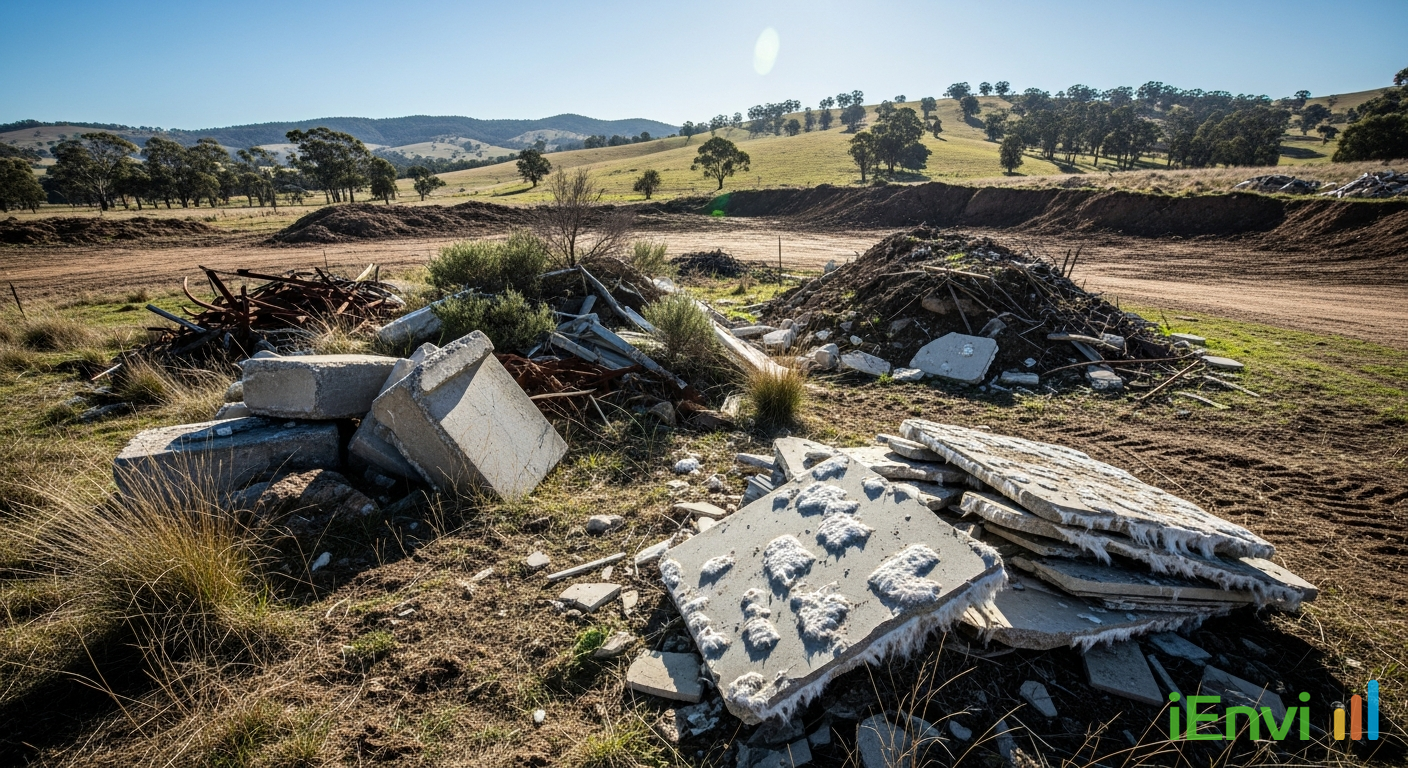
The property first came to the attention of EPA Victoria following a fire at the site in May 2025. Emergency services and EPA officers attending the fire uncovered what investigators later characterised as a highly organised, unlicensed waste disposal and burning operation. The materials involved included industrial, construction and demolition waste, as well as asbestos-contaminated soil. To build the prosecution case, EPA Victoria deployed aerial photography to document the progressive importation of fill soil over time and used targeted surveillance to monitor commercially operated trucks transporting construction waste directly to the property.
This case matters well beyond Victoria’s borders. For developers, councils, property lawyers, financiers, and environmental consultants operating across Australia, the ruling crystallises several risks that have long been underweighted in property transactions and site management decisions: the personal, non-transferable nature of statutory clean-up obligations; the exposure created by accepting undocumented fill; and the growing technical sophistication of regulatory enforcement. The sentence represents a material shift in the consequences that individual landowners face, and it warrants close attention from anyone involved in land acquisition, development, or site remediation.
Key details of the Diamond Creek prosecution under the Environment Protection Act 2017 (Vic)
Joseph Chetcuti pleaded guilty to two categories of offence under the Environment Protection Act 2017 (Vic). The first was depositing and receiving waste, including reportable priority waste, at an unlicensed premises. Asbestos-containing material and asbestos-contaminated soil are classified as reportable priority waste under Victorian legislation, triggering specific handling, transport, and disposal requirements that carry strict liability implications. The second offence was non-compliance with an Environmental Action Notice (EAN) issued by EPA Victoria. Under section 290(1) of the Act, failing to comply with an EAN is a standalone serious offence, treated independently from the underlying pollution activities that prompted the notice. The sentence of $60,000 in fines plus $12,000 costs reflects the court’s treatment of both the substantive environmental harm and the regulatory non-compliance as serious matters in their own right.
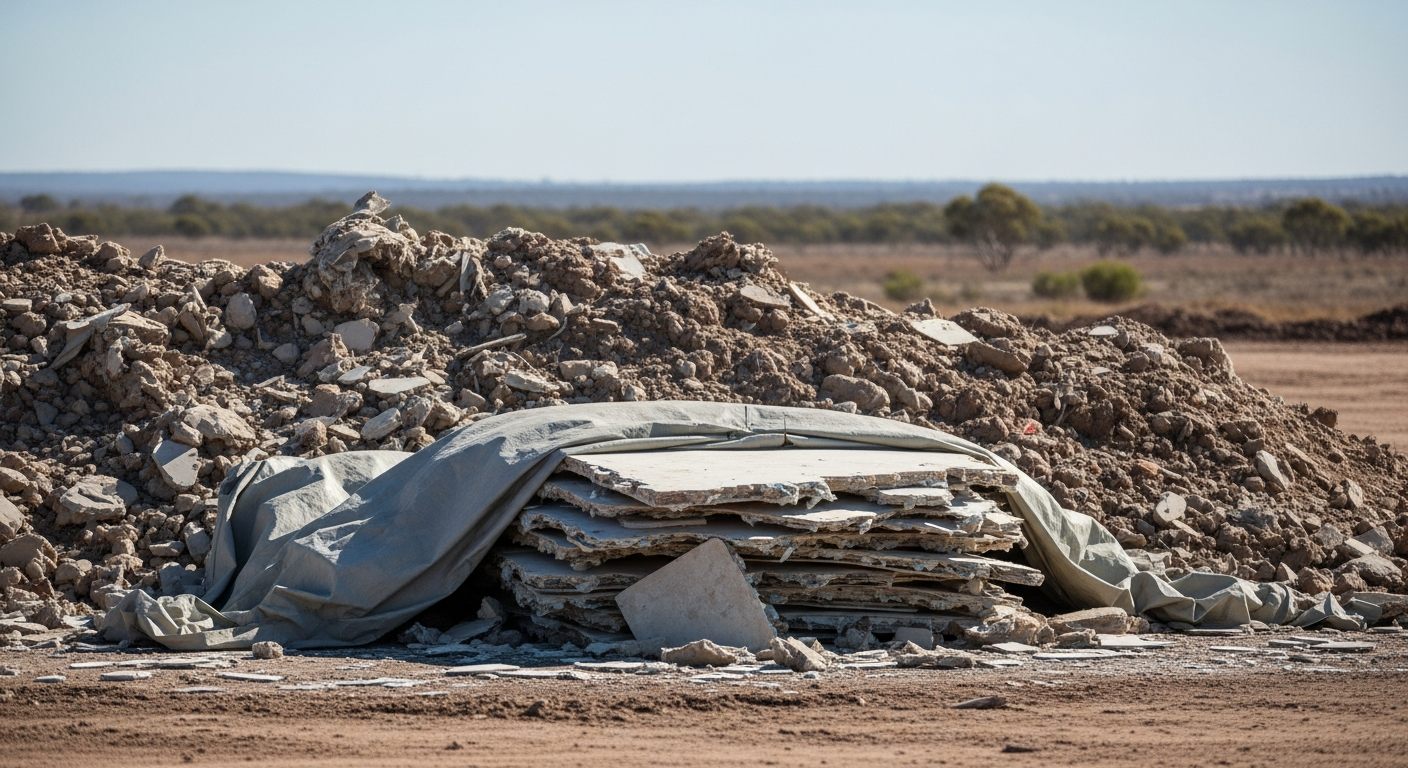
The property is approximately 19,000 square metres, situated at Black Gully Road, Diamond Creek, in Melbourne’s north-eastern suburbs. EPA Victoria’s investigation established that the site had received fill soil and construction and demolition waste over a period that aerial photography helped document chronologically. The surveillance component of the investigation tracked commercially operated trucks arriving at the site with loads of construction waste. Together, these two evidentiary streams allowed EPA to establish both the scale and the organised nature of the operation. The anticipated remediation cost of more than $1 million reflects the complexity typical of sites contaminated with asbestos-containing material, which requires strict delineation of the contamination footprint, specialist removal under licensed contractors, validation sampling, and formal sign-off before any clean fill can be placed.
The involvement of asbestos-contaminated soil triggers the assessment and remediation requirements under the National Environment Protection (Assessment of Site Contamination) Measure 2013 (NEPM 2013). Under the NEPM 2013 framework, asbestos-contaminated sites require systematic sampling to characterise the spatial extent and concentration of contamination, with risk assessment informed by the intended land use. The NEPM 2013 Schedule B1 health investigation levels and the WorkSafe Victoria guidance on asbestos-contaminated soil both inform the threshold concentrations that determine remediation requirements. Bonded asbestos (such as fibre cement sheeting) and friable asbestos carry different risk profiles and different handling requirements under both EPA Victoria’s guidelines and the relevant occupational health and safety legislation.
The clean-up order is legally binding on Chetcuti regardless of whether he retains ownership of the property. This is a specific feature of the statutory clean-up regime under the Environment Protection Act 2017 (Vic) that has significant implications for any prospective purchaser conducting due diligence. While the order sits with the individual rather than the land title in this instance, the contamination itself remains on the land, and any future owner would need to satisfy themselves about the remediation status before settlement. EPA Victoria’s published guidance on environmental action notices makes clear that the agency can pursue further enforcement action if the clean-up order is not fulfilled within required timeframes.
Australian context: how this ruling fits within contaminated land regulation across QLD, NSW, VIC and SA
Victoria’s Environment Protection Act 2017 represents one of the more comprehensive environmental protection frameworks in Australia.
References and related sources
- Primary source: www.epa.vic.gov.au
- nsw.gov.au
- epa.vic.gov.au
- https://www.epa.vic.gov.au/joseph-chetcuti-60000-over-illegal-waste-dumping`
- NEPM Assessment of Site Contamination
- EPA Victoria
How iEnvi can help
iEnvi provides specialist consulting services relevant to this topic. Our team includes CEnvP Site Contamination Specialists with experience across contaminated land, groundwater, remediation, ecology, and regulatory compliance.
- iEnvi remediation services
- iEnvi site assessment services
- iEnvi asbestos services
- iEnvi expert services and independent review services
This is an iEnvi Machete news summary. Prepared by iEnvi to summarise the source article for contaminated land, groundwater, remediation, approvals and site risk professionals.
Published: 27 Jul 2026
Need advice on this topic? Speak to an iEnvi expert at info@ienvi.com.au or 1300 043 684, or contact us online.
Need advice on this issue? iEnvi provides practical, senior-led environmental consulting across contaminated land, remediation, ecology and environmental risk.
Team credentials Site remediation Contaminated land services Groundwater services Talk to iEnvi