
Overview
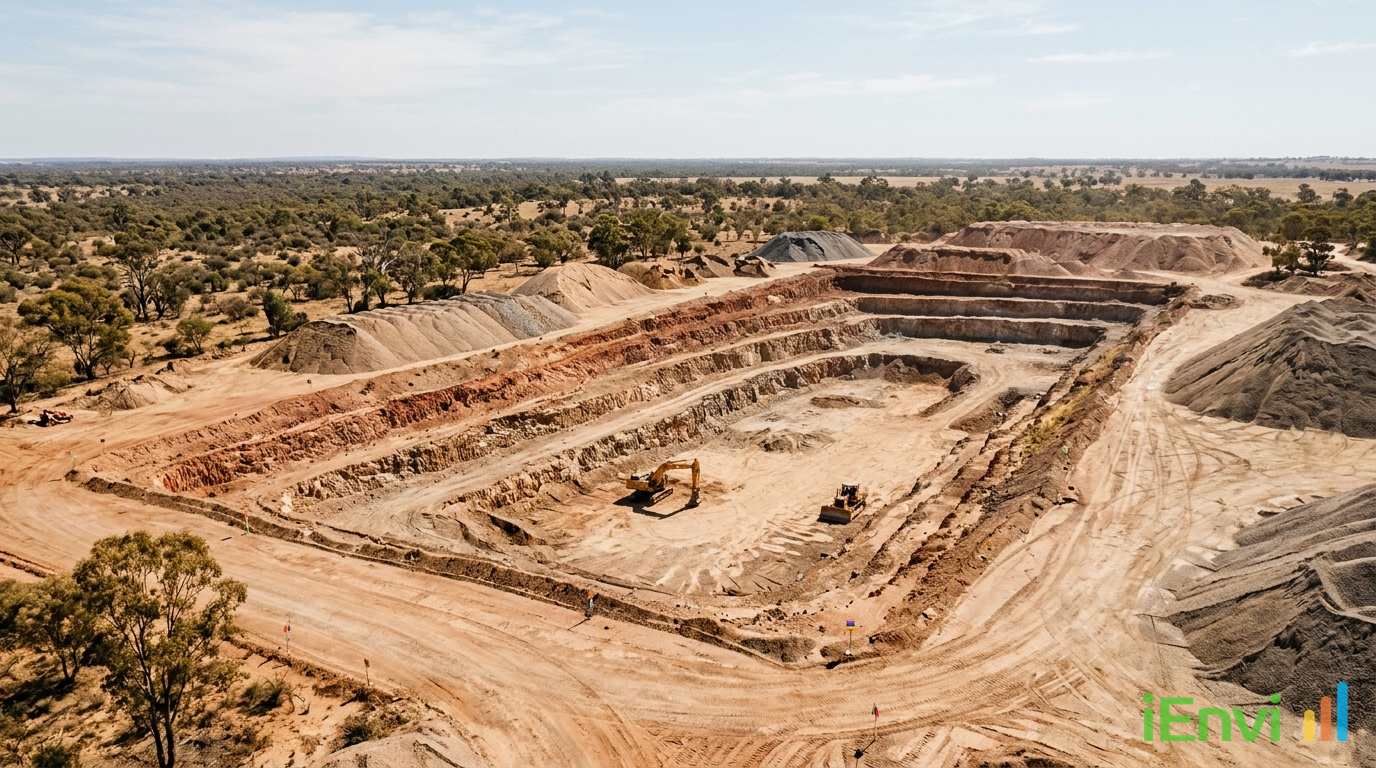
The NSW Environment Protection Authority (EPA) has launched a targeted compliance campaign aimed at quarry operators in 15 areas across the Riverina Murray region of south-western New South Wales. Announced in November 2026, the campaign follows reports to the EPA that some operators have been extracting and processing more material than their Environment Protection Licences (EPLs) allow. The EPA is starting by issuing statutory notices that require operators to hand over records of extraction, processing and haulage volumes. Targeted regulatory and enforcement action will continue through to July 2027.
The approved production limit is the basis of a quarry’s environmental approval. Dust and noise controls, sediment basin sizing, haul road management and buffers to neighbours are all designed around a stated scale of operation. NSW EPA Director of Field Operations Scott Kidd said that operating beyond authorised capacity increases environmental risk. He pointed to excess dust and noise affecting nearby sensitive receptors, disruption to local ecosystems and increased sediment runoff to regional waterways. A quarry producing well above its approved tonnage is, in effect, running an operation that has never been assessed.
Quarry operators are the most exposed, but they are not the only ones. Civil contractors, councils, infrastructure proponents and anyone buying, financing or acquiring a quarry business have a stake in whether the volumes being supplied were lawfully produced. For lawyers and transaction advisers, the campaign is a reminder that an EPL is a set of enforceable conditions with a defined operating envelope, not simply a permit to operate.
Key details
The campaign covers quarries in 15 areas named by the EPA: Albury, Wagga Wagga, Griffith, Berrigan, Greater Hume Shire, Snowy Valleys, Cootamundra, West Wyalong, Temora, Junee, Gundagai, Federation, Leeton, Narrandera and Coolamon. Not all of these are separate council areas. West Wyalong is a town in Bland Shire, and Cootamundra and Gundagai both fall within Cootamundra-Gundagai Regional Council. The areas include major regional centres and a large number of smaller rural extractive operations supplying road base, aggregate, sand and gravel. The EPA has said the campaign was prompted by tip-offs about operators exceeding approved volumetric thresholds. It is not a routine inspection program.
The first step is formal information gathering. The notices fall under Chapter 7, Part 7.3 of the Protection of the Environment Operations Act 1997 (NSW) (POEO Act), which allows authorised officers to require information and records (Sections 191 to 193). Responding is not optional. Failing to comply with a notice without lawful excuse is itself an offence, separate from any underlying licence breach. Operators should expect requests for:
- weighbridge dockets and sales records
- drone or conventional survey volumetrics of pits and stockpiles
- transport manifests and haulage records
- processing plant throughput data
The licensing trigger for quarries sits in Schedule 1, Clause 19 of the POEO Act (“Extractive activities”). A land-based extractive activity becomes a scheduled activity when it extracts, processes or stores more than 30,000 tonnes of extractive material per year, or when it disturbs more than 2 hectares of land. Under Section 48, premises carrying out a scheduled activity must hold an EPL. Under Section 64, failing to comply with an EPL condition is an offence. Many quarry EPLs contain production limits as express conditions, and the scale of the activity also determines the licence fee. An operator who outgrows its licensed scale may therefore be breaching a condition and underpaying fees at the same time.
The EPL is not the only limit. Development consents issued under the Environmental Planning and Assessment Act 1979 (NSW) (EP&A Act) commonly set a maximum annual extraction rate, and production thresholds can trigger designated development requirements. An operator can comply with its consent and breach its EPL, or the reverse. Inspectors are also likely to look beyond the numbers and ask whether environmental controls kept pace with output. That covers sediment retention basin capacity, whether the erosion and sediment control plan (ESCP) is current, boundary air quality monitoring and haul road dust suppression. Where more material moves through the same basin and runoff leaves the site, the problem becomes a potential water pollution offence under Section 120 as well as a licensing issue.
Australian context
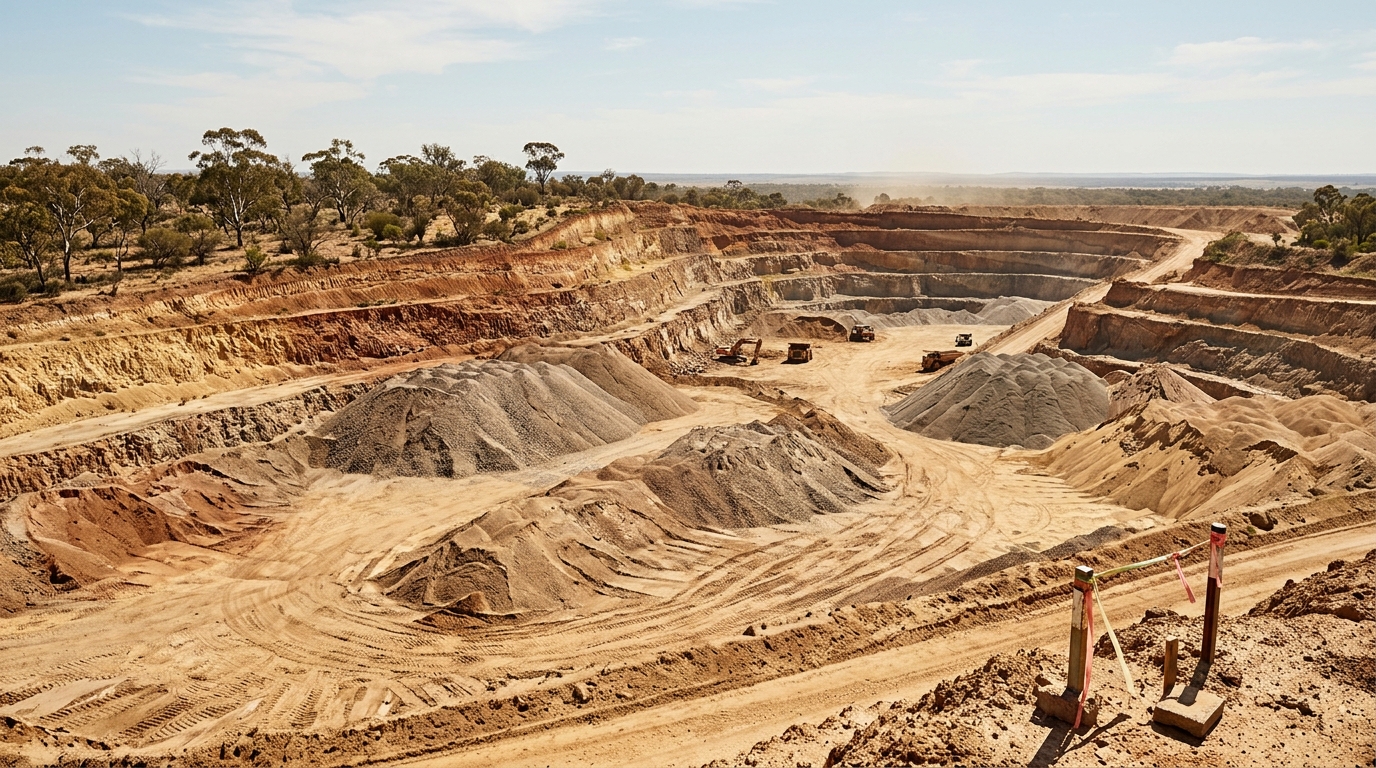
In NSW, quarries operate under two approvals: a planning approval under the EP&A Act and an environmental licence under the POEO Act. Both can carry a production cap, and each needs its own process to change. Licence variations are made under Section 58 of the POEO Act. Consent modifications are usually sought under Section 4.55 of the EP&A Act. Either can take months where the increase in scale needs supporting technical assessment, such as air quality, noise, traffic or water studies. Operators who wait until they are at or over the limit have no lawful way to keep producing at the higher rate while those applications are assessed.
Other jurisdictions also tie quarry regulation to scale. In Queensland, extractive and screening activities are regulated as Environmentally Relevant Activity 16 under the Environmental Protection Regulation 2019, with thresholds based on annual tonnage. In Victoria, quarries generally need a work authority under the Mineral Resources (Sustainable Development) Act 1990, and operators remain subject to the general environmental duty under the Environment Protection Act 2017. South Australian extractive operations are generally tenemented under the Mining Act 1971, with the Environment Protection Act 1993 (SA) applying to environmental matters. The legislation differs between states, but the compliance risk is the same: when production exceeds the approved scale, the environmental controls designed for that scale may no longer be adequate, and the operator carries the legal exposure.
For operators in the Riverina Murray, the immediate task is to reconcile actual production figures against both the EPL and the development consent before responding to any EPA notice. Where output is approaching either limit, applications to vary the licence or modify the consent should be lodged well before the cap is reached.
References and related sources
- Primary source: newshub.medianet.com.au
- amazonaws.com
- nsw.gov.au
- NSW EPA
How iEnvi can help
iEnvi provides specialist consulting services relevant to this topic. Our team includes CEnvP Site Contamination Specialists with experience across contaminated land, groundwater, remediation, ecology, and regulatory compliance.
- iEnvi contaminated land investigation services
- iEnvi remediation and validation services
- iEnvi expert services and independent review services
This is an iEnvi Machete news summary. Prepared by iEnvi to summarise the source article for contaminated land, groundwater, remediation, approvals and site risk professionals.
Published: 14 Nov 2026
Need advice on this topic? Speak to an iEnvi expert at info@ienvi.com.au or 1300 043 684, or contact us online.
Need advice on this issue? iEnvi provides practical, senior-led environmental consulting across contaminated land, remediation, ecology and environmental risk.
Team credentials Contaminated land services Remediation services Groundwater services Talk to iEnvi