

Landmark NSW Court Ruling on Cultural Harm and Environmental Compliance
In a landmark judgement that fundamentally shifts the risk landscape for developers, land managers, and environmental consultants, the Land and Environment Court of New South Wales has fined the Forestry Corporation of New South Wales 450,000 dollars for illegal logging operations. The prosecution, initiated by the New South Wales Environment Protection Authority (EPA), centred on the unauthorised clearing of protected giant and hollow-bearing trees within the Wild Cattle Creek State Forest, located on the Mid North Coast of New South Wales. For environmental professionals, local government planners, and legal advisors, this case represents a critical turning point where environmental compliance intersects directly with Indigenous cultural heritage protection.
While the financial penalty is substantial, the true significance of this case lies in the legal recognition of cultural harm. The court did not merely penalise the defendant for ecological degradation; it explicitly recognised that the destruction of these ancient trees caused severe, long-term cultural harm to the Gumbaynggirr people and their deep spiritual connection to Country. This landmark recognition moves beyond traditional environmental metrics, establishing that the loss of physical habitat features is simultaneously a loss of cultural heritage that cannot be easily replaced, repaired, or compensated through standard offsets.
For developers, infrastructure providers, and their environmental consultants, this case signals that compliance is no longer a siloed exercise. The historical practice of separating ecological impacts from cultural heritage assessments during the planning and delivery phases of major projects is now highly risky. Regulatory authorities are demonstrating an increased willingness to use strict liability provisions and novel enforcement mechanisms, such as restorative justice, to address breaches that impact both the natural environment and First Nations cultural values.
Key Technical Details of the Forestry Corp NSW Prosecution
The technical specifications of the prosecution highlight the precision required in modern environmental compliance and the severe consequences of spatial and operational errors. The breaches occurred in mid-2020 within the Wild Cattle Creek State Forest, a highly sensitive ecological zone that now falls within the footprint of the Great Koala National Park. Specifically, the Forestry Corporation of New South Wales was found to have illegally harvested six giant trees and decommissioned or damaged three hollow-bearing trees. Under the Coastal Integrated Forestry Operation Approval (CIFOA), these specific classes of trees are strictly protected due to their irreplaceable role as critical habitat for threatened and endangered native species, including the koala (Phascolarctos cinereus) and the greater glider (Petauroides volans).
Giant trees are defined under New South Wales forestry regulations as individuals of specific species exceeding predetermined diameter thresholds, typically measuring 140 centimetres or 160 centimetres or greater in diameter at breast height over bark. Hollow-bearing trees, which can take anywhere from one hundred to one hundred and fifty years to form suitable cavities, provide essential nesting and denning sites for hollow-dependent fauna. The physical removal of these specific ecological assets caused immediate, localised habitat fragmentation. The court heard detailed evidence on the ecological significance of these trees, establishing that their loss directly compromised the local carrying capacity for vulnerable marsupial populations.
Beyond the 450,000 dollar fine, the enforcement mechanism utilised by the Land and Environment Court of New South Wales sets a powerful legal precedent. Rather than relying solely on standard financial penalties paid into general government revenue, the court facilitated a restorative justice pathway. This process mandated a formal restorative justice conference that brought together the Traditional Custodians (the Gumbaynggirr people), senior representatives from the New South Wales EPA, and the offender. The outcome of this conference focused on direct dialogue, acknowledging the pain caused by the destruction of sacred and ecologically significant trees, and establishing practical, culturally led remediation strategies to begin healing the damaged landscape.
The legal basis of the prosecution relied on strict liability provisions within the Forestry Act 2012 and the Biodiversity Conservation Act 2016. Under these frameworks, the prosecution did not need to prove intent or negligence regarding the cultural harm; the physical act of removing the protected trees in violation of the Coastal Integrated Forestry Operation Approval was sufficient to trigger liability. This highlights the high standard of care expected of land managers and contractors when operating in areas with identified ecological and cultural constraints.
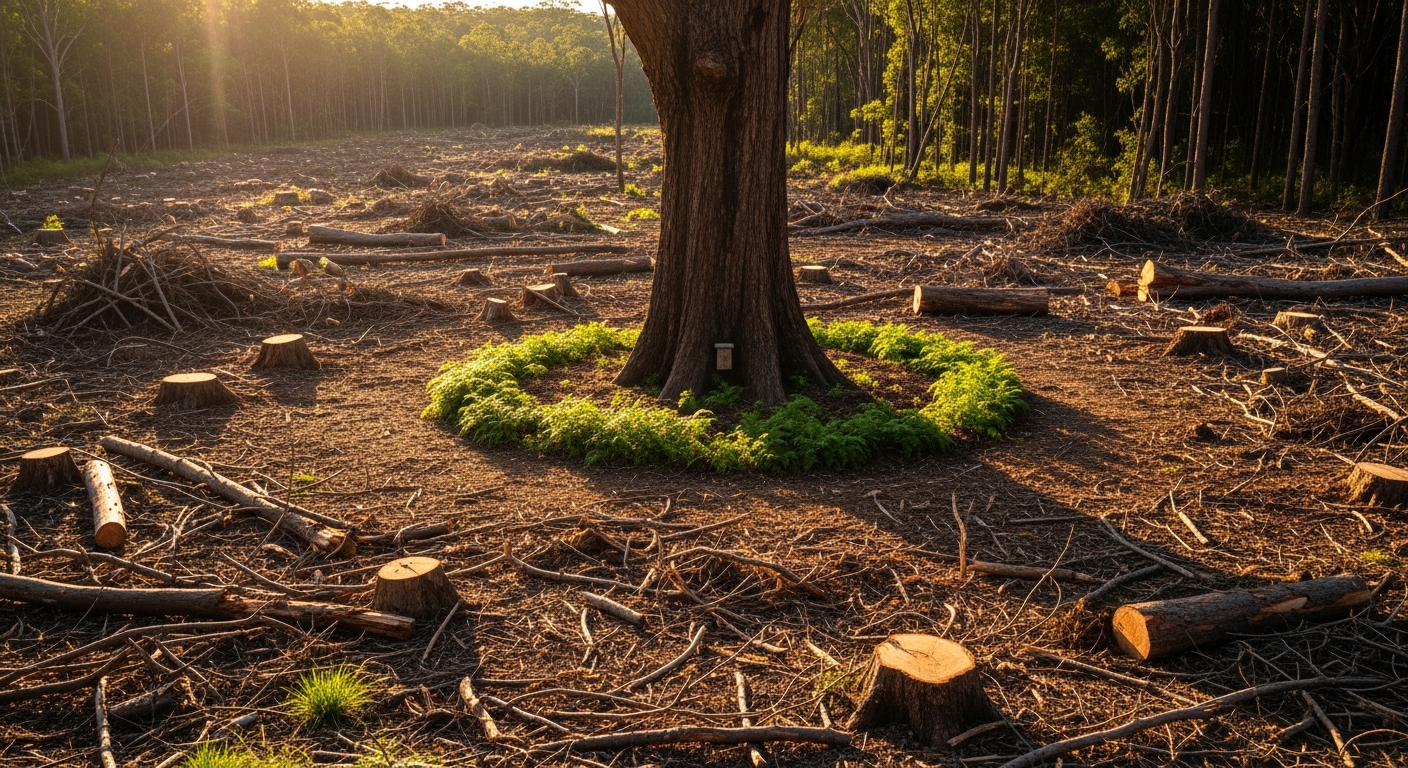
National Shift: Integrating First Nations Cultural Heritage in Environmental Regulation
This ruling aligns with a broader national shift towards integrating First Nations cultural heritage protection with environmental regulation, reflecting reforms occurring across multiple Australian jurisdictions. In the wake of high-profile cultural heritage losses nationally, such as the destruction of Juukan Gorge, state and territory regulators are systematically revising their enforcement strategies. In New South Wales, the Environmental Planning and Assessment Act 1979 and the National Parks and Wildlife Act 1974 are being interpreted with a heightened focus on the intangible values of Country. The Land and Environment Court has demonstrated that it will no longer view cultural heritage as a minor, secondary consideration to be managed via simple administrative permits, but as a core environmental asset of equal standing to water quality, soil stability, or biodiversity.
When compared to national environmental frameworks, the New South Wales approach is now setting a benchmark for how cultural and ecological harm can be jointly addressed within a single prosecution. Federal reforms to the Environment Protection and Biodiversity Conservation Act 1999, alongside parallel reviews in Victoria, Queensland, and Western Australia, are moving in the same direction: tighter enforcement, stronger recognition of Traditional Owner voices, and greater use of restorative mechanisms. For developers, consultants, and public sector planners, the message is clear. Projects that touch areas of ecological sensitivity and cultural significance must be assessed through an integrated lens from the earliest planning stages, with cultural heritage treated as a core compliance obligation rather than a procedural add-on.
References and related sources
- Primary source: www.epa.nsw.gov.au
- NSW EPA
How iEnvi can help
iEnvi provides specialist consulting services relevant to this topic. Our team includes CEnvP Site Contamination Specialists with experience across contaminated land, groundwater, remediation, ecology, and regulatory compliance.
- iEnvi remediation services
- iEnvi groundwater services
- iEnvi expert services and independent review services
This is an iEnvi Machete news summary. Prepared by iEnvi to summarise the source article for contaminated land, groundwater, remediation, approvals and site risk professionals.
Published: 17 Jun 2026
Need advice on this topic? Speak to an iEnvi expert at info@ienvi.com.au or 1300 043 684, or contact us online.
Need advice on this issue? iEnvi provides practical, senior-led environmental consulting across contaminated land, remediation, ecology and environmental risk.
Team credentials Contaminated land services Remediation services Groundwater services Talk to iEnvi