
NSW Inquiry Hears Calls to Withhold Data Centre Approvals Over AI’s Massive Water and Energy Footprint
NSW Data Centre Inquiry and Resource Sustainability
A New South Wales Legislative Assembly inquiry into the state’s rapidly growing data centre industry is generating heated debate about whether planning authorities should tie development approvals directly to measurable environmental and sustainability outcomes. The inquiry, which held its first public hearing in May 2026, is examining the cumulative resource demands of 90 data centres already operating across NSW, a number that has grown rapidly in step with the global surge in artificial intelligence computing infrastructure. The scale of the issue has caught the attention of water utilities, planning advocates, community groups, and environmental professionals alike, and it is increasingly clear that the standard planning assessment toolkit is not keeping pace with the complexity these facilities present.
The central tension driving the inquiry is a projection attributed to Sydney Water, which indicated that data centre cooling demands could account for up to 25 per cent of Sydney’s potable water supply by 2035. Industry lobby groups have pushed back firmly on this figure, pointing to Australian Bureau of Statistics water accounts that show data centre water consumption currently sits at less than 1 per cent of Sydney’s total usage. The distance between these two figures illustrates just how unsettled the evidence base remains, and it signals that environmental assessments for new hyperscale facilities will face increasing scrutiny over the credibility and methodology of resource consumption projections. Regardless of where the final figure lands, the political and regulatory momentum is clearly towards tighter conditions on new approvals.
For environmental planners, ESG consultants, and the lawyers and developers who rely on their advice, this inquiry represents a defining moment. Data centre assessments are rapidly becoming one of the more technically demanding planning referrals in the NSW market, requiring defensible analysis of water sourcing, energy procurement, Scope 1 and Scope 2 emissions, noise from cooling plant and backup generation, and community amenity impacts. The outcomes of this inquiry are likely to shape approval conditions and Environmental Impact Statement requirements for hyperscale AI infrastructure across the state for years ahead.
Key Details: What the NSW Inquiry Is Actually Examining
The inquiry’s first hearing brought together a range of stakeholders, and the water consumption projection from Sydney Water was the headline figure that drew the most attention. The claim that data centres could consume up to 25 per cent of Sydney’s potable water by 2035 for cooling purposes is a striking projection, particularly when set against the current baseline of less than 1 per cent of Sydney’s usage as reported through ABS water accounts. The gap between the current figure and the 2035 projection reflects the anticipated growth in hyperscale AI computing demand rather than current conditions, and it highlights the importance of forward-looking environmental impact analysis rather than assessments based solely on existing consumption patterns.
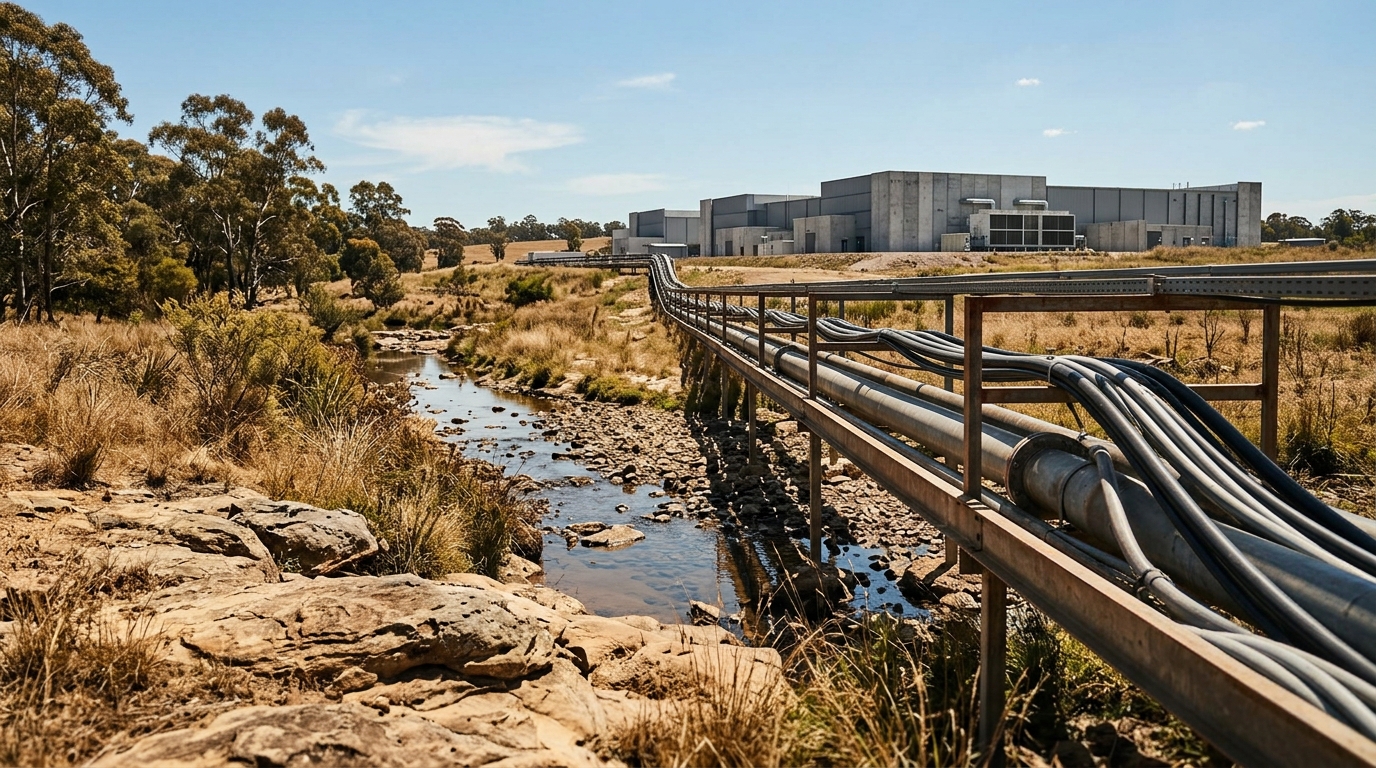
Water consumption in data centres is primarily driven by cooling requirements. Hyperscale facilities, particularly those running the large language models and training workloads associated with modern AI systems, generate substantial heat loads that must be continuously managed. Conventional cooling approaches draw on potable water supplies through evaporative cooling towers, where water is lost to the atmosphere as vapour. The water usage effectiveness (WUE) metric, expressed in litres of water consumed per kilowatt-hour of IT load, is the standard industry measure, though it is not yet a mandated reporting metric in NSW planning conditions. For context, a facility with a WUE of 1.5 litres per kilowatt-hour running at 100 megawatts of IT load would consume approximately 1.3 million litres of water per day under continuous operation.
Beyond water, the inquiry has heard calls from advocates for planning authorities to make approvals conditional on demonstrated commitments to renewable energy use, compliance with local planning controls, and adherence to ethical standards around the AI models the facilities host. On the energy side, data centres are significant consumers of grid electricity, making Scope 2 emissions a material consideration in any environmental assessment. Backup power systems, typically large diesel generator banks capable of sustaining full facility load for extended periods, generate direct Scope 1 emissions and are a source of local air quality and noise impacts. In some hyperscale configurations, backup generator capacity can run into tens of megawatts, a scale that sits well above the thresholds that typically attract air quality assessment obligations under state environment protection policies.
The inquiry is also examining the encroachment of data centre facilities into areas near residential zones, raising concerns about noise from cooling plant, traffic from construction and maintenance, visual amenity, and the appropriateness of industrial-scale infrastructure in locations that were not originally zoned to accommodate it. These are not novel planning issues, but the scale and operational profile of hyperscale data centres adds complexity that standard industrial development assessment frameworks were not designed to address.
Australian Context: How This Fits Within NSW and National Planning Frameworks
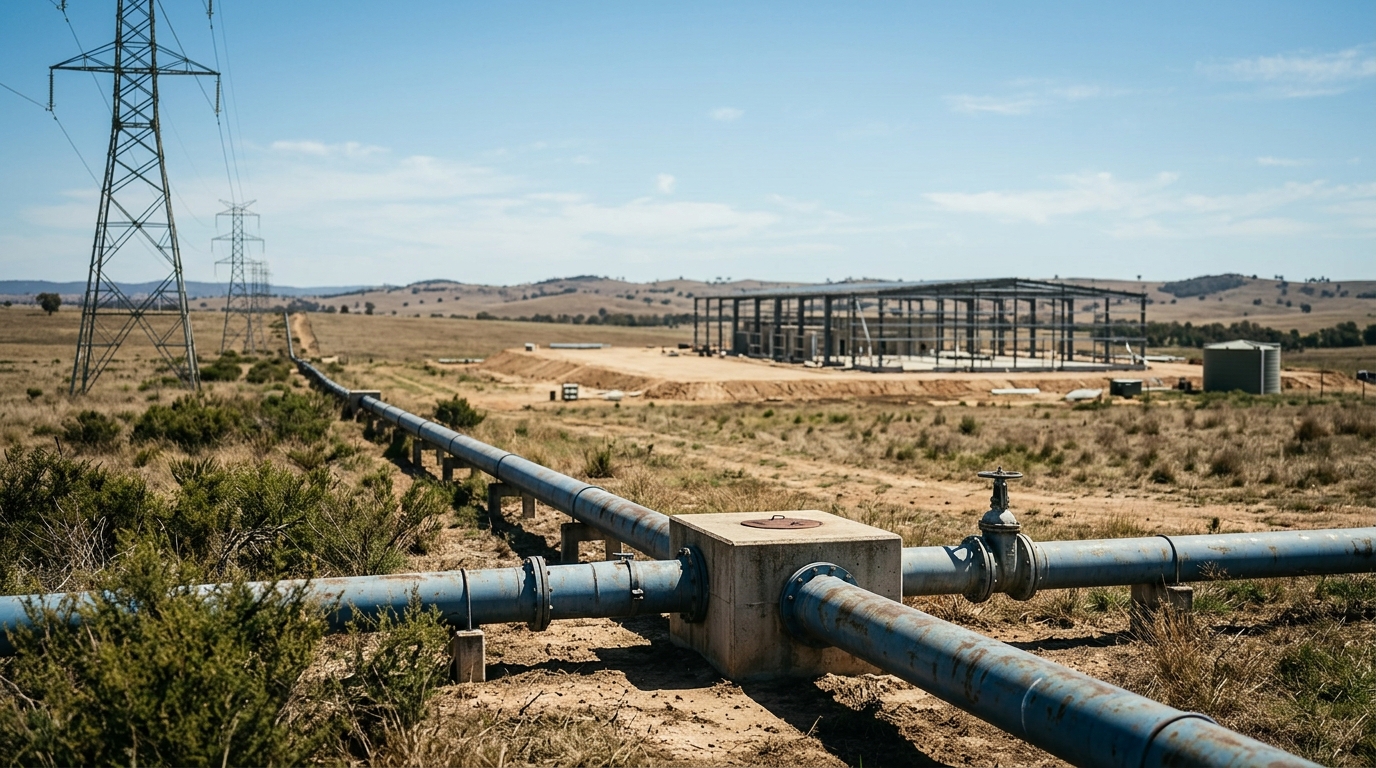
In NSW, major data centre proposals are typically assessed as State Significant Development (SSD) under the Environmental Planning and Assessment Act 1979, with the Department of Planning, Housing and Infrastructure as the consent authority. The SSD pathway triggers a mandatory Environmental Impact Statement
References and related sources
- Primary source: michaelwest.com.au
How iEnvi can help
iEnvi provides specialist consulting services relevant to this topic. Our team includes CEnvP Site Contamination Specialists with experience across contaminated land, groundwater, remediation, ecology, and regulatory compliance.
- iEnvi ESG services
- iEnvi contaminated land investigation services
- iEnvi remediation and validation services
- iEnvi expert services and independent review services
This is an iEnvi Machete news summary. Prepared by iEnvi to summarise the source article for contaminated land, groundwater, remediation, approvals and site risk professionals.
Published: 03 May 2026
Need advice on this topic? Speak to an iEnvi expert at info@ienvi.com.au or 1300 043 684, or contact us online.
Need advice on this issue? iEnvi provides practical, senior-led environmental consulting across contaminated land, remediation, ecology and environmental risk.
Contaminated land services Remediation services Groundwater services Ecology consulting Talk to iEnvi