

The Open-Weight AI Debate Explained
On 24 July 2024, a coalition of 25 prominent technology companies, venture capital firms, and open-source foundations published a joint open letter to Washington titled “Open Weights and American AI Leadership,” urging lawmakers to refrain from restricting or over-regulating downloadable, open-weight artificial intelligence models. The coalition’s signatories include NVIDIA, Meta, Microsoft, IBM, Mistral AI, Palantir, Perplexity, Hugging Face, Mozilla, Y Combinator, and Andreessen Horowitz. The letter argues that open-weight AI models occupy the same foundational role in modern computing as open-source software has for decades, underpinning the vast majority of internet infrastructure and enabling broad scientific, commercial, and governmental innovation.
What makes this development particularly significant is not only the coalition itself but the companies conspicuously absent from it. OpenAI, Anthropic, and Google, the three dominant closed-source frontier AI laboratories, declined to sign. Their collective absence formalises what had previously been an informal and largely unspoken division within the AI industry. Critics of the closed-source model, including several coalition members, have argued that these three organisations are actively lobbying governments to restrict open-weight models under the framing of safety concerns, while the practical effect of such restrictions would be to eliminate their most capable, cost-free competition.
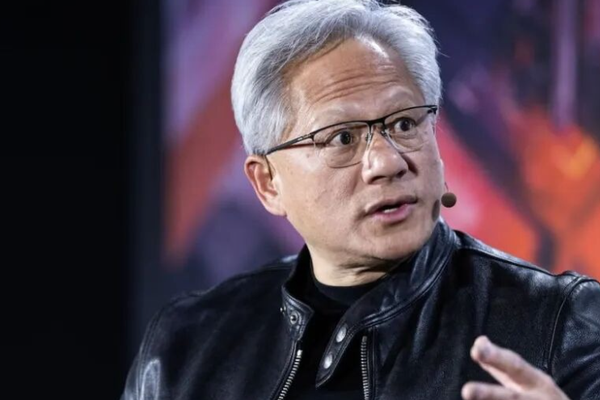
NVIDIA founder and CEO Jensen Huang punctuated the moment by making his first-ever post on X (formerly Twitter) to amplify the coalition’s message. For environmental and professional services firms operating in Australia, this public schism has direct operational consequences. The regulatory outcome of this debate will determine whether organisations can deploy powerful, private AI models on their own hardware, or whether they remain structurally dependent on proprietary subscription APIs controlled by a small number of US-based corporations. That is not a peripheral technology question; it is a data governance and business continuity question that will affect how technical consulting firms manage sensitive client information, project records, and regulatory submissions.
Why Open-Weight AI Matters for Enterprise Data
The open letter centres on a clear legislative ask: that the United States government protect the legal right to develop, distribute, and use open-weight AI models without imposing licensing regimes, mandatory safety disclosures, or liability frameworks that would apply disproportionately to open-weight developers relative to closed-source providers. The coalition draws an explicit analogy to open-source software, noting that the Linux operating system, the Apache web server, and the Python programming language, all open-source projects, now underpin the majority of global digital infrastructure. The letter contends that restricting open-weight AI would be analogous to legislating against open-source software in the early 2000s, and that the consequences would be similarly damaging to long-term national competitiveness.
A technically significant element of the letter is its focus on model distillation. Distillation is the process by which a smaller, more computationally efficient model is trained using the outputs of a larger, more capable model. This technique allows developers and enterprises to build domain-specific AI tools that are far less resource-intensive than frontier models, while still achieving high performance on targeted tasks. The coalition is urging governments to explicitly protect distillation as a legitimate practice, pushing back against intellectual property arguments advanced by closed-source providers who contend that using their model outputs for training constitutes infringement. For professional services firms, distillation is the technical pathway through which a general-purpose AI system can be refined into a reliable, specialised tool for tasks such as regulatory document review, geotechnical data interpretation, or compliance reporting.
Jensen Huang’s first-ever social media post stated: “The world needs both frontier closed models and frontier open models. Artificial intelligence will transform every industry, empower every company, and be built collectively by all nations.” Microsoft CEO Satya Nadella immediately amplified the post, publicly declaring that open-weight models are “essential for a healthy AI ecosystem.” The simultaneous public endorsement from the CEOs of NVIDIA and Microsoft, two of the world’s largest technology companies by market capitalisation, signals that this is not a fringe position but a mainstream commercial and strategic stance backed by the companies that manufacture the hardware and enterprise software that most organisations already depend on.
The enterprise architecture implications are concrete. Closed-source AI APIs, such as those offered by OpenAI and Anthropic, require organisations to transmit data to external servers for processing. This introduces risks around data residency, confidentiality, and service continuity. Open-weight models, by contrast, can be deployed on private infrastructure, including on-premise servers, hybrid cloud environments, or air-gapped systems, giving organisations complete control over their data and the ability to audit, customise, and version-control the model itself. If the coalition’s position prevails in Washington, this architecture remains fully accessible. If restrictive regulation passes, particularly regulation that imposes prohibitive compliance costs on open-weight developers, the practical effect would be to push organisations back towards closed APIs as the only viable option.
Australian context: AI governance, data sovereignty, and professional services infrastructure
Australia does not yet have a comprehensive AI-specific regulatory framework equivalent to the European Union’s AI Act, but the outcome of the US legislative debate will shape the tools available to Australian organisations regardless of domestic policy. If open-weight models are effectively restricted in the United States through compliance costs or liability frameworks, the global developer ecosystem that produces and maintains these models will contract, reducing the options available to Australian firms seeking private, on-premise AI deployment.
For environmental and technical consulting firms, the stakes are practical. These organisations routinely handle sensitive client data, unpublished project documentation, and submissions to state and federal regulators. Transmitting that material to offshore cloud APIs for AI processing raises genuine questions under Australian privacy law and client confidentiality obligations. Open-weight models deployed on local infrastructure sidestep these concerns entirely. The regulatory debate now unfolding in Washington will determine whether that option remains commercially viable and technically accessible over the coming years.
References and related sources
- Primary source: thenextweb.com
- aihub.com
- eadojo.org
- futunn.com
- 36kr.com
How iEnvi can help
iEnvi integrates technology and data-driven approaches into environmental consulting. We monitor AI and technology developments that affect how environmental professionals deliver services to clients.
This is an iEnvi Machete news summary. Prepared by iEnvi to summarise the source article for environmental professionals tracking AI, data, and technology developments that affect consulting and project delivery.
Published: 27 Jul 2026
Need advice on this topic? Speak to an iEnvi expert at info@ienvi.com.au or 1300 043 684, or contact us online.
Need advice on this issue? iEnvi provides practical, senior-led environmental consulting across contaminated land, remediation, ecology and environmental risk.
Contaminated land advice Remediation services Discuss your site Talk to iEnvi