
Overview
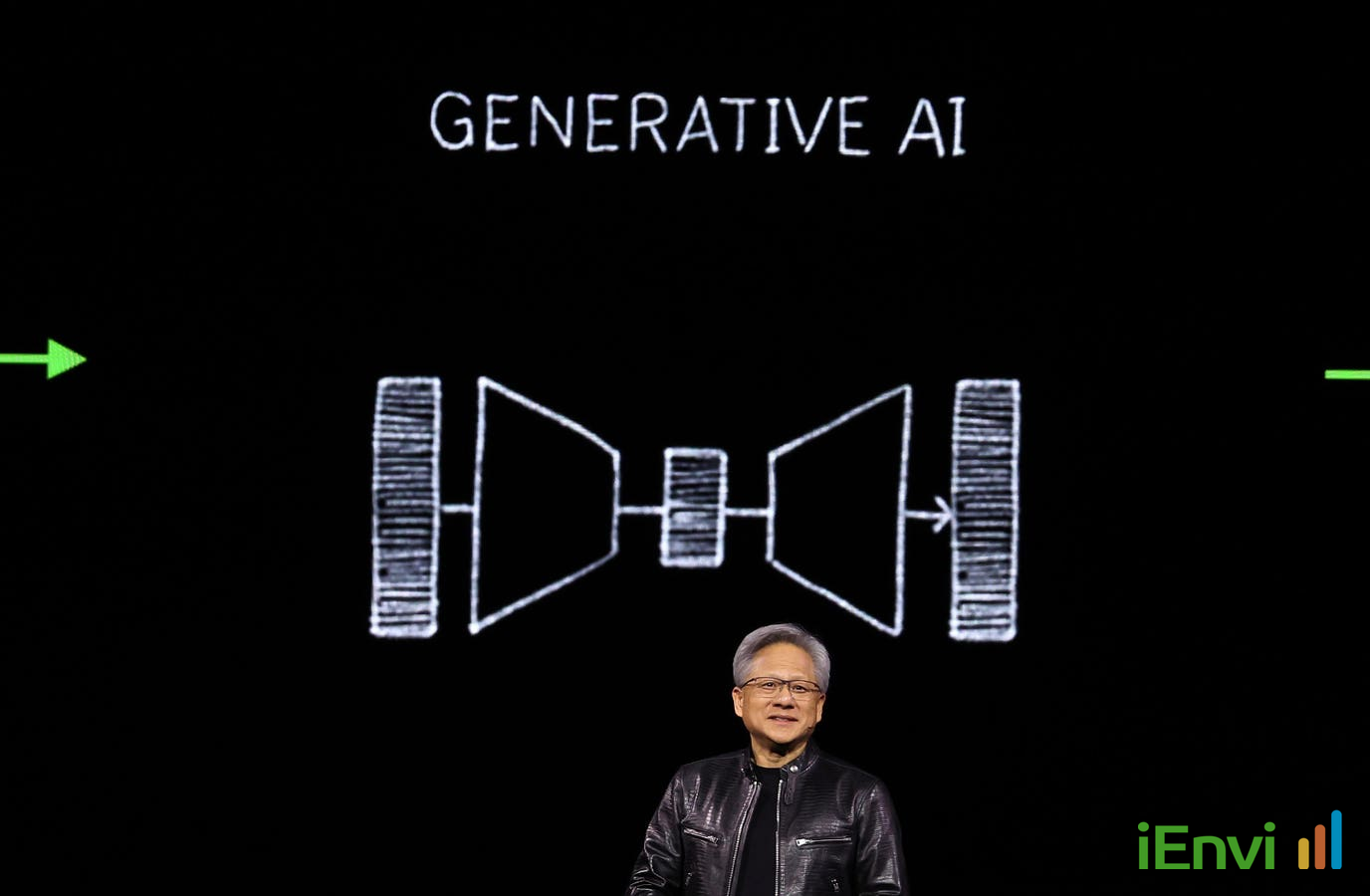
On 24 July 2026, NVIDIA CEO Jensen Huang made his first post on the social media platform X to launch a coordinated industry policy campaign. The post accompanied a joint letter titled “Open Weights and American AI Leadership,” which called on Washington policymakers to reject premature restrictions on open-weight artificial intelligence models. At launch, the letter carried 25 signatories spanning chipmakers, cloud providers, cybersecurity firms, and venture capital funds, including NVIDIA, Microsoft, Meta, Palantir, CrowdStrike, IBM, and Y Combinator.
Within 24 hours, the coalition doubled to 50 signatories. Most significantly, OpenAI and Google, two companies that had previously lobbied for strict regulatory licensing of frontier AI models under safety arguments, added their names. AMD, Cisco, Cloudflare, GitHub, Hugging Face, Mistral AI, and ServiceNow also joined. The rapid expansion left only Anthropic and Amazon as notable holdouts among the major technology firms. The speed of the reversal by OpenAI and Google is being read across the industry as a strategic pivot of genuine consequence, not a minor policy adjustment.
For Australian professional services firms, enterprise technology buyers, and specialist consultancies handling sensitive client data, this development reshapes the AI deployment landscape in practical terms. The debate over open-weight versus closed-source AI models is no longer theoretical. It is a live procurement, data governance, and competitive positioning question that organisations operating in regulated sectors need to address now rather than at the next annual technology review.
Key details of the Open Weights and American AI Leadership letter
The letter’s central argument rests on three claims. First, open-weight models prevent a dangerous concentration of AI capability and decision-making power within a small number of closed-source laboratories. Second, making model weights publicly downloadable establishes a shared foundation of national and global engineering knowledge, which the signatories argue strengthens rather than weakens security. Third, open weights enable global researchers, including cybersecurity professionals, to audit, stress-test, and patch AI systems transparently, which the letter contends accelerates defensive capability more effectively than proprietary, black-box architectures.
The distinction between open-weight and open-source AI is worth clarifying precisely, because the two terms are often conflated in non-technical commentary. An open-weight model makes its trained parameters available for download, allowing an organisation to run inference locally or fine-tune the model on proprietary data without routing information through a third-party API. Open-source, in the stricter software engineering sense, also includes the training code, data pipelines, and methodology. The letter principally concerns open weights, meaning organisations can deploy the finished model without the API dependency, but the training process that produced those weights may remain proprietary to the developer.
The 50-member coalition spans the full technology stack in a way that makes this more than a lobbying exercise by a single sector. Chipmakers (NVIDIA, AMD), cloud and network infrastructure providers (Cisco, Cloudflare), enterprise software platforms (IBM, ServiceNow), developer platforms (GitHub, Hugging Face), AI laboratories (Meta, Mistral AI, OpenAI, Google), and venture capital (Y Combinator) are all represented. This breadth signals a genuine alignment of commercial interests rather than a narrow manufacturer campaign. NVIDIA’s role as organiser is commercially rational: open-weight models drive demand for GPU hardware, which underpins NVIDIA’s core revenue. However, the company simultaneously maintains tight control over its proprietary CUDA software ecosystem, meaning that choosing an open-weight model does not resolve hardware or infrastructure dependency on NVIDIA products.
The policy context into which the letter lands is fractured. US policymakers were already debating pre-release vetting requirements for advanced frontier models and the separate but related question of restricting access to open-weight models developed outside the United States, including Chinese systems such as Kimi K3. The letter represents a concerted industry effort to shape those debates before binding regulatory frameworks are established. The holdout position of Anthropic and Amazon is meaningful: both firms have built commercial models that depend on closed API access, and both have previously aligned with safety-gated, licensed approaches to model distribution. Their absence from the coalition deepens a fault line in the industry between the open-weight camp and the safety-first, closed-frontier camp that is unlikely to resolve quickly.
Australian context: AI governance, data sovereignty, and professional services implications
Australia does not have a direct regulatory equivalent to the US open-weight debate, but the policy and commercial implications land in a context that is already active. The Australian Government’s Voluntary AI Safety Standard, released in 2024, and the ongoing work of the Department of Industry, Science and Resources on mandatory guardrails for high-risk AI applications mean that Australian enterprise buyers and professional services firms are operating in a period of regulatory formation. Decisions made now about whether to build workflows around closed APIs or open-weight models will have consequences that extend well beyond the current contract cycle.
For Australian consulting firms and specialist technical practices operating in regulated sectors, data sovereignty is the sharpest practical concern. When a practitioner submits confidential site investigation data, client commercial information, or legally privileged correspondence to a closed third-party API, that information leaves the organisation’s direct control and may be processed, logged, or retained on infrastructure subject to foreign jurisdiction. Open-weight models, deployed on locally controlled infrastructure, remove that dependency entirely. For environmental consultancies handling contaminated site assessments, geotechnical data, or heritage documentation under client confidentiality obligations, this distinction is not abstract — it determines whether AI-assisted workflows are permissible under existing contractual and regulatory obligations.
References and related sources
- Primary source: www.forbes.com
- explainx.ai
- benzinga.com
- fourweekmba.com
- tomshardware.com
- NEPM Assessment of Site Contamination
How iEnvi can help
iEnvi integrates technology and data-driven approaches into environmental consulting. We monitor AI and technology developments that affect how environmental professionals deliver services to clients.
This is an iEnvi Machete news summary. Prepared by iEnvi to summarise the source article for environmental professionals tracking AI, data, and technology developments that affect consulting and project delivery.
Published: 26 Jul 2026
Need advice on this topic? Speak to an iEnvi expert at info@ienvi.com.au or 1300 043 684, or contact us online.
Need advice on this issue? iEnvi provides practical, senior-led environmental consulting across contaminated land, remediation, ecology and environmental risk.
Contaminated site assessment Site investigation services Talk to iEnvi