
Destruction of Legacy AFFF Stockpiles
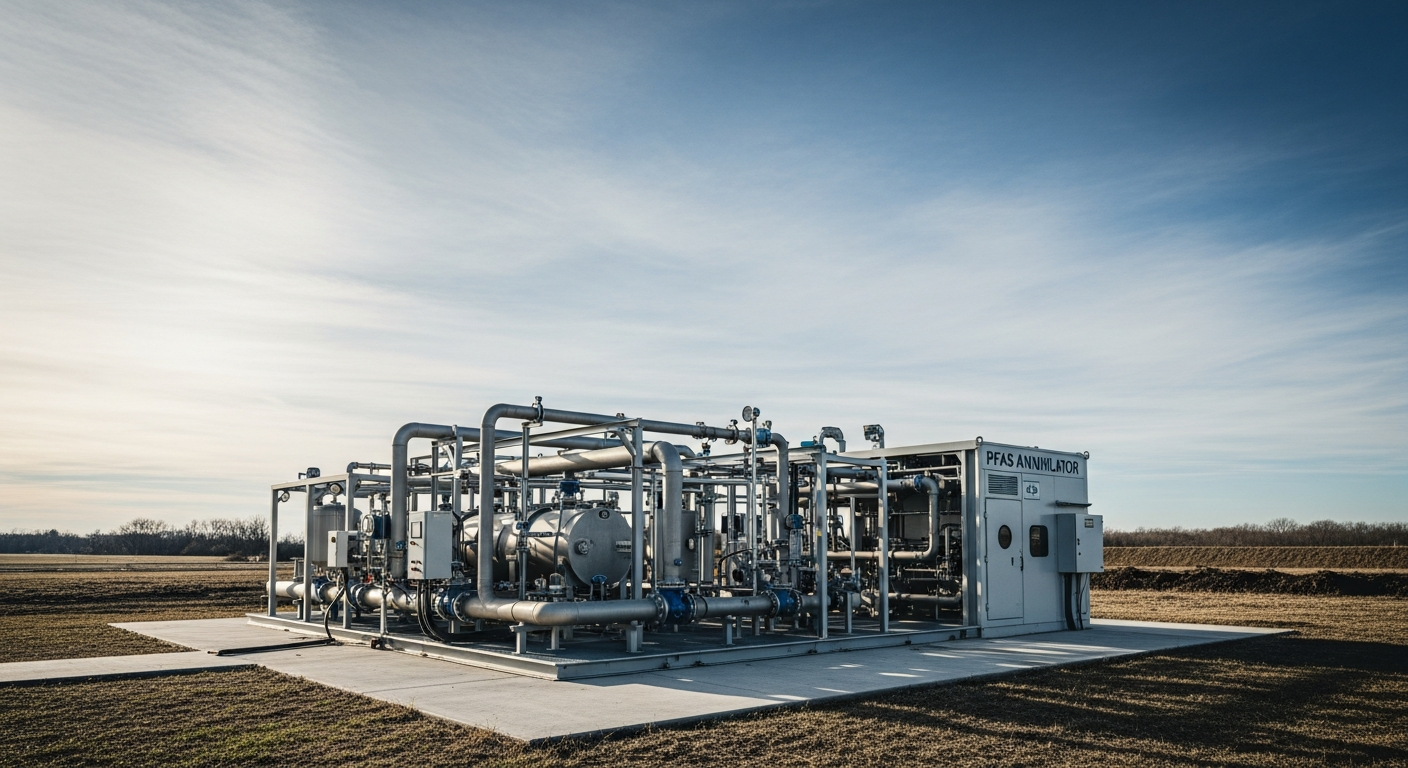
The safe and definitive disposal of legacy aqueous film-forming foam (AFFF) stockpiles represents one of the most pressing challenges in contemporary contaminated land management. In a major regulatory and technical milestone, the Ohio Environmental Protection Agency (Ohio EPA) recently completed the successful deployment of a commercial-scale supercritical water oxidation (SCWO) system, known as the “PFAS Annihilator”, to destroy approximately 53,000 litres (14,000 gallons) of concentrated legacy AFFF. The feedstock for this operation was amassed from 118 regional fire departments across the state, representing a coordinated effort to permanently remove these highly persistent chemicals from the environment. This operation marks a shift from laboratory-scale proof of concept to validated, commercial-scale field implementation of non-combustion destruction technology.
For environmental professionals, property developers, infrastructure operators, and legal counsel, this development is highly significant. Historically, managing concentrated Class B firefighting foams containing per- and polyfluoroalkyl substances (PFAS) has relied on high-temperature incineration or indefinite containerised storage. Both options carry substantial risks, including long-term cradle-to-grave legal liabilities, high transport costs, and public concern regarding atmospheric emissions. The successful application of a mobile, closed-loop destruction system provides a tangible precedent for regulators and site owners seeking a definitive, permanent solution to extinguish their chemical liabilities.
As Australian jurisdictions accelerate their phase-outs of legacy AFFF and tighten controls on PFAS-contaminated materials, the commercial validation of SCWO technology is highly relevant. This process demonstrates that the complete mineralisation of persistent organic pollutants is achievable without resorting to traditional combustion pathways. Consequently, environmental consultants and their clients must now reassess how they evaluate remedial strategies, manage risk during property transactions, and design waste classification pathways for high-concentration liquid waste streams.
How Supercritical Water Oxidation Destroys PFAS
To understand the significance of this deployment, it is necessary to examine the physical chemistry of per- and polyfluoroalkyl substances and the mechanics of the supercritical water oxidation process. PFAS compounds are defined by their highly stable carbon-fluorine (C-F) bonds, which are among the strongest single bonds in organic chemistry, possessing a bond energy of approximately 485 kilojoules per mole. This chemical stability makes them exceptionally resistant to thermal, chemical, and biological degradation. Traditional wastewater treatment processes, such as activated carbon adsorption or ion exchange resins, merely transfer these compounds from the water phase to a solid media, creating a secondary waste stream that still requires disposal or destruction.
Supercritical water oxidation overcomes this limitation by exploiting the unique thermodynamic properties of water past its thermodynamic critical point. This critical state is achieved when water is subjected to temperatures exceeding 374 degrees Celsius (705.2 degrees Fahrenheit) and pressures above 221 bar (22.1 megapascals or 3,205 pounds per square inch). Under these extreme conditions, water ceases to behave as a typical liquid or gas, instead entering a single supercritical phase where its density, dielectric constant, and hydrogen bonding network change dramatically. Supercritical water acts as a highly non-polar solvent, allowing organic compounds and oxygen to dissolve completely and mix in a single, homogeneous phase.
In this supercritical environment, the dissolved oxygen rapidly and completely oxidises the organic molecules, breaking the strong carbon-fluorine bonds. The “PFAS Annihilator” system operates by feeding the concentrated AFFF liquid into a reactor under these precise supercritical parameters. The chemical reaction yields clean water, carbon dioxide, and inert mineral salts, specifically fluoride salts, as the primary outputs. During the Ohio EPA deployment, the system achieved complete mineralisation, reducing PFAS concentrations to levels below analytical detection limits. This performance permitted the safe discharge of the treated liquid effluent directly into municipal wastewater networks, bypassing the need for hazardous waste landfilling or secondary containment.
This non-combustion pathway provides a stark contrast to high-temperature incineration, which typically requires temperatures exceeding 1,100 degrees Celsius (2,012 degrees Fahrenheit) to ensure the destruction of PFAS. Incineration is increasingly subject to intense regulatory scrutiny and public opposition due to the risk of incomplete combustion, which can generate volatile, hazardous fluorinated transformation products that disperse into the atmosphere. Because SCWO is a closed-loop, aqueous process, it eliminates the generation of harmful gaseous emissions and particulate matter, offering a highly controlled, verifiable, and environmentally sound alternative for destroying concentrated waste streams.
Australian context
The successful validation of SCWO technology in the United States directly mirrors the strategic objectives and regulatory hierarchies established in Australia. The management of these persistent chemicals is governed nationally by the PFAS National Environmental Management Plan (PFAS NEMP 3.0), which operates alongside the National Environment Protection (Assessment of Site Contamination) Measure 1999 (NEPM 2013). The PFAS NEMP prioritises the environmental management hierarchy, placing the highest value on the “destruction and irreversible transformation” of PFAS compounds, while relegating landfilling and containment to options of last resort. Historically, Australian holders of legacy AFFF stockpiles have faced limited domestic options for compliant destruction, with most concentrated foams either consigned to long-term storage or shipped offshore for high-temperature treatment at considerable cost. The Ohio deployment provides Australian regulators, defence agencies, airport operators, and fire services with a validated, commercial-scale benchmark for assessing SCWO as a domestic destruction pathway, and is likely to influence how state environment protection authorities evaluate licence applications, transport approvals, and end-point verification protocols for PFAS-impacted liquid waste streams in the years ahead.
References and related sources
- Primary source: www.wyso.org
- https://hbcuradiopreservation.org/
- PFAS National Environmental Management Plan (NEMP)
How iEnvi can help
iEnvi provides specialist consulting services relevant to this topic. Our team includes CEnvP Site Contamination Specialists with experience across contaminated land, groundwater, remediation, ecology, and regulatory compliance.
- iEnvi contaminated land services
- iEnvi remediation services
- iEnvi expert services and independent review services
This is an iEnvi Machete news summary. Prepared by iEnvi to summarise the source article for contaminated land, groundwater, remediation, approvals and site risk professionals.
Published: 17 Jun 2026
Need advice on this topic? Speak to an iEnvi expert at info@ienvi.com.au or 1300 043 684, or contact us online.
Need advice on this issue? iEnvi provides practical, senior-led environmental consulting across contaminated land, remediation, ecology and environmental risk.
Team credentials Environmental management plans Contaminated land advice Remediation services Talk to iEnvi