
OpenAI Launches GPT-5.5-Cyber and “Patch the Planet” Initiative to Harden Open-Source Software Security
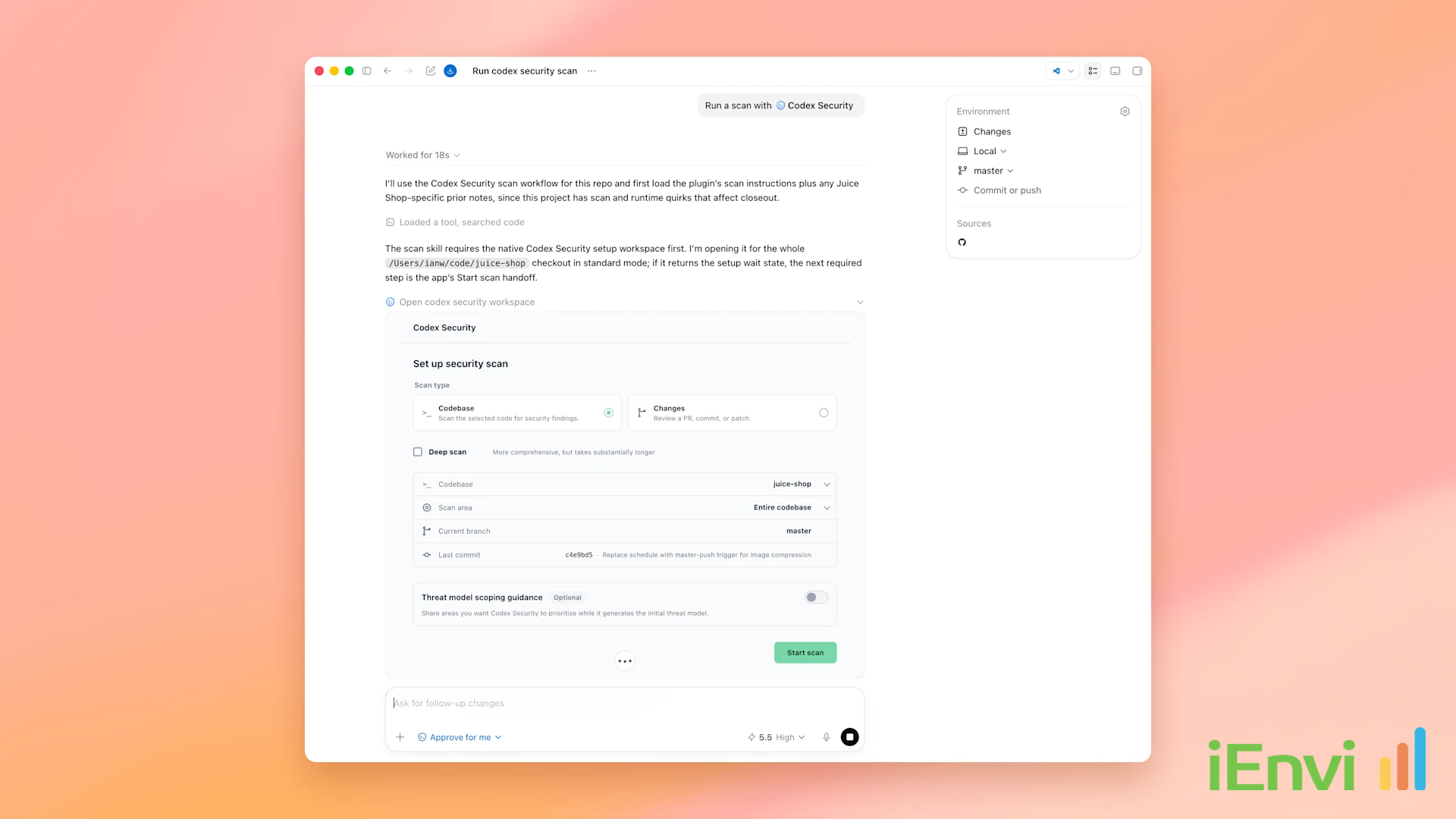
On 22 June 2026, OpenAI launched what it describes as a full-scale defensive cybersecurity campaign, releasing its most advanced security-specialised model, GPT-5.5-Cyber, alongside a revamped Codex Security scanner and a new internet-scale vulnerability remediation initiative called “Patch the Planet.” The initiative represents a meaningful departure from the prevailing model of AI-assisted security, which has historically focused on identifying vulnerabilities rather than resolving them. By partnering with security research firm Trail of Bits and vulnerability platforms HackerOne and Calif, OpenAI is now funding elite researchers and providing free security consulting and automated patching tools directly to the maintainers of widely used open-source projects, including cURL, Go, Python, Sigstore, and the pyca/cryptography library.
The strategic timing of this announcement is deliberate. It follows the US government’s abrupt export ban and regulatory freeze on Anthropic models over cybersecurity concerns, positioning OpenAI’s approach as a clear counterpoint: rather than restricting powerful AI behind proprietary gates, OpenAI is arguing that broad, structured public access to advanced defensive tooling produces more resilient outcomes than top-down corporate withholding. OpenAI Chief Global Affairs Officer Chris Lehane articulated this position directly in the company’s newsletter, writing that “the question is whether the future of a foundational technology should depend so much on the worldview of any one company.”
For professional and technical services firms, including environmental consultancies, engineering practices, and legal and transaction advisory teams, this development is relevant because the open-source libraries being targeted underpin a wide range of commercial software products, from data management platforms to field reporting systems and compliance workflow tools. When vulnerabilities in those foundational libraries go unpatched, the risk propagates silently through the entire software supply chain that regulated industries depend upon.
Key details of GPT-5.5-Cyber, Codex Security, and the Patch the Planet initiative
GPT-5.5-Cyber is purpose-built to sustain deep contextual analysis across large and complex codebases, a task that has historically been beyond the practical reach of general-purpose language models and traditional static analysis tools. Unlike conventional vulnerability scanners that produce a list of flagged issues and leave remediation to human developers, GPT-5.5-Cyber validates identified security flaws by reproducing them in isolated, controlled sandbox environments. Once validated, the model generates functional, project-specific patches tailored to the conventions and dependencies of the target codebase rather than producing generic code snippets that may not integrate cleanly.
The Codex Security tool has been re-released as a developer plug-in, allowing engineering teams to run deep local scans without routing sensitive proprietary code through external systems. Beyond simple vulnerability flagging, the plug-in enables teams to trace full attack paths through a codebase, construct automated threat models, and systematically triage backlogs of unresolved reports that have accumulated from external bug-bounty programmes. This last capability addresses one of the most persistent operational problems in enterprise security: the gap between the volume of identified vulnerabilities and the developer bandwidth available to assess and remediate them.
The “Patch the Planet” initiative directly targets a structural weakness in the open-source ecosystem. According to the source reporting, 94 percent of widely used open-source projects are maintained by fewer than 10 developers. Projects such as cURL, which underpins network data transfer in an enormous proportion of commercial software, and the Python and Go standard libraries, which form the foundation of countless data processing and automation tools, have historically received security attention proportional to the very small teams responsible for them rather than proportional to their systemic importance. By directing funded elite researchers and automated patching tools toward these projects, the initiative aims to harden the commercial software supply chain at its most vulnerable points.
A critical safeguard embedded in the initiative is the mandatory human-in-the-loop review requirement. OpenAI and Trail of Bits have stipulated that a human security engineer must review every patch generated through the programme before it is pushed to production. This requirement reflects a recognition that automated patch generation, without human oversight, carries a real risk of introducing secondary bugs or unintended behavioural changes, particularly in complex, dependency-heavy projects where a change to one module can produce cascading effects elsewhere in the codebase.

Australian context: software supply chain risk and AI governance implications for professional services
For Australian professional services firms, the significance of the Patch the Planet initiative sits primarily in the domain of software supply chain risk management and, increasingly, in the regulatory and governance frameworks emerging around AI use in professional practice. The Australian Cyber Security Centre (ACSC) has long identified software supply chain compromise as one of the highest-priority threat vectors facing Australian organisations, a position reinforced in the Australian Government’s 2023-2030 Cyber Security Strategy. The ACSC’s Essential Eight framework, which represents baseline mitigation guidance for Australian organisations, includes patch management as one of its core strategies, with a recommended target of patching internet-facing systems within 48 hours of a vulnerability being identified. The Patch the Planet initiative, by automating and accelerating remediation in foundational open-source libraries, directly supports organisations working to meet that standard across their software supply chains.
References and related sources
- Primary source: siliconangle.com
- thehackernews.com
- winzheng.com
- aljazeera.com
- cybermagazine.com
How iEnvi can help
iEnvi integrates technology and data-driven approaches into environmental consulting. We monitor AI and technology developments that affect how environmental professionals deliver services to clients.
This is an iEnvi Machete news summary. Prepared by iEnvi to summarise the source article for environmental professionals tracking AI, data, and technology developments that affect consulting and project delivery.
Published: 23 Jun 2026
Need advice on this topic? Speak to an iEnvi expert at info@ienvi.com.au or 1300 043 684, or contact us online.
Need advice on this issue? iEnvi provides practical, senior-led environmental consulting across contaminated land, remediation, ecology and environmental risk.