
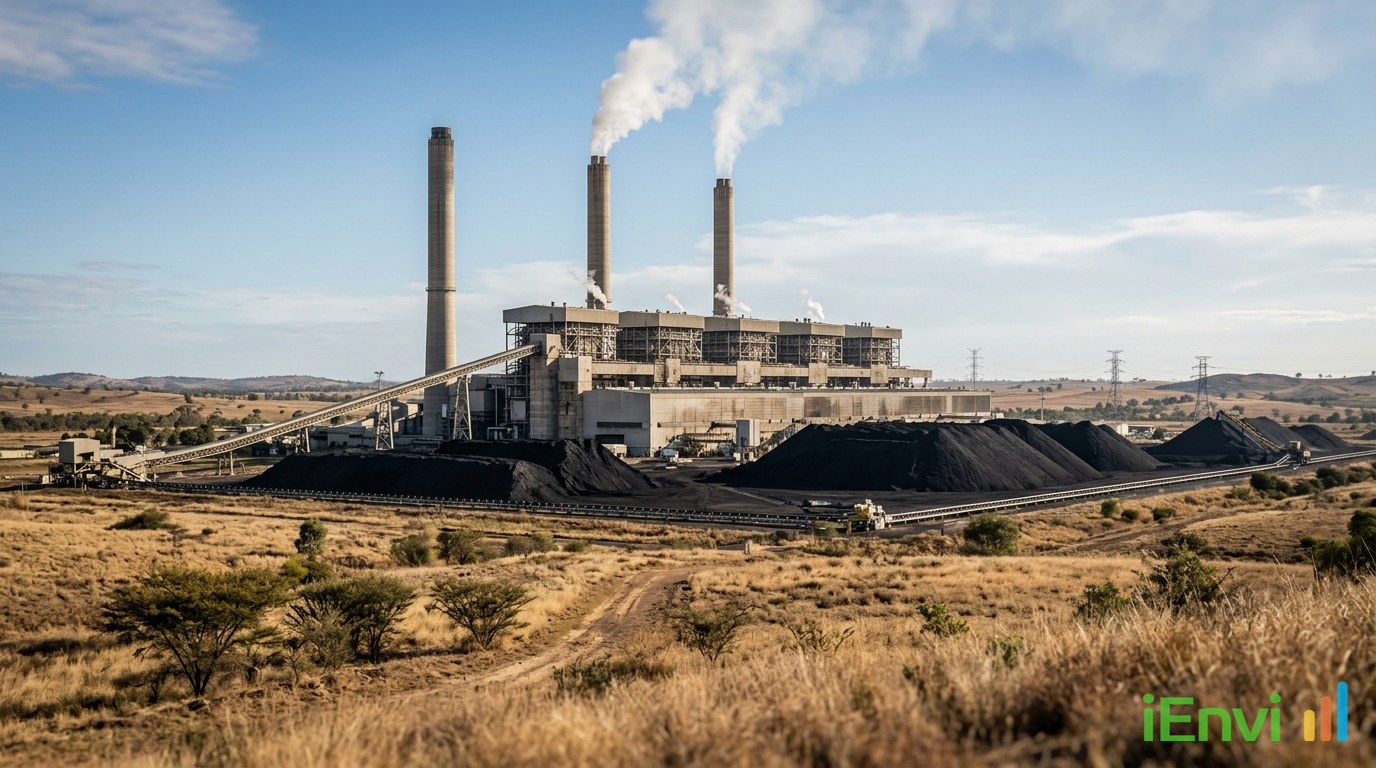
Impact of Queensland’s 2046 Coal Policy Shift on Environmental Projects
Queensland’s energy policy has undergone a sharp reversal following the October 2024 state election. The incoming Liberal National Party government, led by Premier David Crisafulli, has repealed legislated renewable energy targets that previously aimed for 80% renewable energy by 2035, and has extended the operational life of state-owned coal-fired power stations until at least 2046. This represents a decade-long extension beyond the previous Labor government’s planned coal exit timeline. For environmental professionals working across contaminated land, groundwater assessment, ecological impact, and energy infrastructure planning, this policy shift fundamentally reorders the project pipeline that many consultancies had been anticipating.
The previous Labor administration had made substantial progress toward its 2035 target. In 2024 alone, seven solar and wind farms and seven energy storage projects totalling 3,202 megawatts were committed to, a generation capacity roughly equivalent to four medium-sized coal-fired power stations. That momentum has now stalled. The Queensland Renewable Energy Council’s chief executive, Katie-Anne Mulder, described the industry’s response as experiencing “a bit of whiplash,” a phrase that captures the abrupt reorientation facing project proponents, financiers, and their environmental advisors. The state government has simultaneously committed $1.6 billion over five years to maintain its state-owned coal, hydro, and gas generation assets, indicating a long-term financial commitment to the extended coal operation programme.
For environmental consulting firms active in Queensland, this policy realignment means two things simultaneously: the anticipated wave of coal plant decommissioning and legacy site remediation work has been deferred by roughly a decade, and the operational compliance obligations attached to ageing coal infrastructure have become considerably more complex. This complexity is made more acute by the concurrent tightening of national environmental guidelines, including the release of the PFAS National Environmental Management Plan (NEMP) 3.0 and the updated 2025 Australian Drinking Water Guidelines (ADWG). Extending the operational life of coal assets does not pause regulatory scrutiny. If anything, it intensifies it.
Key details of Queensland’s 2046 coal extension and renewable energy policy shift
The legislative repeal of Queensland’s renewable energy targets is the centrepiece of the policy change. Those targets, which had been enshrined in legislation under the previous Labor government, mandated 80% renewable energy penetration by 2035 as a precursor to a near-complete coal exit. The new LNP government has removed those targets from statute, replacing them with a less prescriptive framework that prioritises grid reliability and cost of living concerns. State-owned coal plants, which include assets such as Callide and Stanwell, will now be maintained in operation until at least 2046 under the revised policy position.
Planning Minister Jarrod Bleijie initiated a call-in process for renewable energy projects that were mid-stream through assessment, halting their progress while the government reviewed whether they had adequate local community backing. This has created significant uncertainty for project proponents who had committed capital to development and environmental approvals. Separately, reporting indicates that 75% of renewable energy projects that entered the federal environmental assessment system since 2021 remain under assessment, and the backlog is continuing to grow. This intersection of state-level policy hesitation and federal assessment delays means that environmental consultants managing EPBC Act referrals and state development approvals for renewable projects face an extended and uncertain programme.
The $1.6 billion five-year maintenance commitment for coal, hydro, and gas assets has direct implications for the environmental management obligations attached to those facilities. Ageing coal-fired power stations carry a well-documented legacy contamination profile. Coal combustion residuals, including fly ash and bottom ash stored in on-site ponds and landfills, are a known source of groundwater contamination. Leachate from ash disposal facilities can contain arsenic, boron, selenium, chromium VI, and in some cases PFAS compounds from historical firefighting foam use on site. With these assets now operating for an additional decade, operators and their environmental consultants will need to maintain and potentially expand groundwater monitoring networks, manage containment infrastructure, and engage with regulators on ongoing compliance obligations under both state environmental protection legislation and the NEPM (Assessment of Site Contamination) 2013.
The PFAS dimension is particularly significant in the context of extended coal asset operation. The PFAS NEMP 3.0, released by the National Environment Protection Council in 2024, introduced updated investigation and screening levels that are considerably lower than those in NEMP 2.0. For example, PFOS plus PFHxS combined guideline values for freshwater ecological protection have been revised downward. Coal-fired power stations that have historically used aqueous film-forming foam (AFFF) for fire suppression in turbine halls, coal handling facilities, and fuel storage areas carry a credible PFAS source risk. Extending operations to 2046 means that PFAS source management, plume delineation, and receptor pathway assessment must be incorporated into long-term operational environmental management plans rather than deferred to a decommissioning programme.
Australian regulatory context for coal plant operations, contamination, and the 2046 extension
The extension of Queensland coal plant operations sits within a layered regulatory framework that environmental consultants must navigate carefully.
References and related sources
- Primary source: www.theguardian.com
How iEnvi can help
iEnvi provides specialist consulting services relevant to this topic. Our team includes CEnvP Site Contamination Specialists with experience across contaminated land, groundwater, remediation, ecology, and regulatory compliance.
- iEnvi contaminated land investigation services
- iEnvi remediation and validation services
- iEnvi expert services and independent review services
This is an iEnvi Machete news summary. Prepared by iEnvi to summarise the source article for contaminated land, groundwater, remediation, approvals and site risk professionals.
Published: 27 Apr 2026
Need advice on this topic? Speak to an iEnvi expert at info@ienvi.com.au or 1300 043 684, or contact us online.
Need advice on this issue? iEnvi provides practical, senior-led environmental consulting across contaminated land, remediation, ecology and environmental risk.
Contaminated land advice Remediation services Groundwater services Ecological assessment Talk to iEnvi