
Overview of PFAS Liabilities and Groundwater Remediation in Australia
The management of per- and polyfluoroalkyl substances (PFAS) in groundwater has historically represented a high-cost, linear liability for Australian site owners, developers, and government agencies. Standard remediation practices heavily rely on groundwater pump-and-treat systems using granular activated carbon (GAC) to capture these highly persistent synthetic chemicals. While GAC is highly effective at stripping PFAS from contaminated water, it does not destroy the compounds. Instead, it concentrates them on a solid substrate, generating a secondary hazardous waste stream that eventually requires expensive thermal destruction or long-term containment in secure landfills. This linear approach creates ongoing operational expenses and long-term liability risks for landholders and developers.
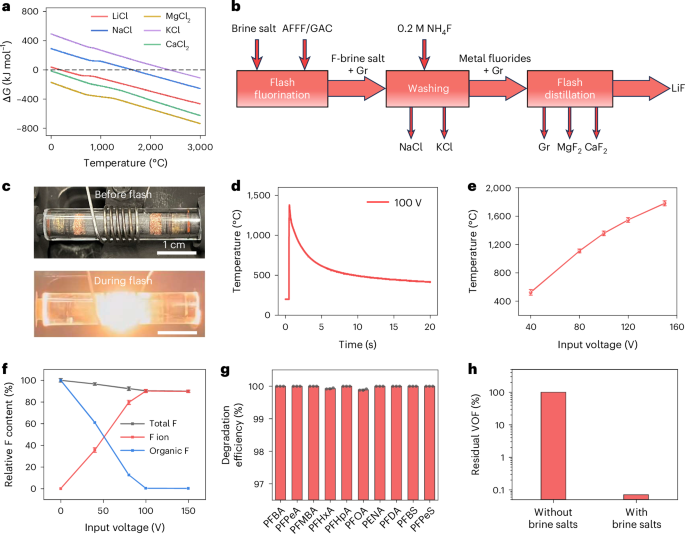
A major scientific breakthrough published in the journal Nature Water on 10 March 2025 offers a promising alternative to this costly cycle. A research team at Rice University, led by Yi Cheng and including co-authors Alexander E. Lathem, Phelecia Scotland, Qiming Liu, and others, has successfully demonstrated an electrothermal mineralisation process that destroys the PFAS bound to spent GAC while simultaneously upcycling the material. By applying flash Joule heating to the contaminated carbon, the researchers broke the exceptionally strong carbon-fluorine bonds and redirected the freed fluorine to extract high-purity, battery-grade lithium from high-salinity brine.
This development is highly relevant to Australian environmental consultants, developers, and councils grappling with the challenges of legacy PFAS plumes at airports, Defence bases, and industrial estates. By transforming a highly regulated, hazardous waste into a valuable manufacturing resource, this technology could fundamentally alter the economics of contaminated land remediation. Rather than treating remediation as an endless cost centre, this circular economy approach introduces a pathway where waste treatment offsets its own costs through material recovery, aligning site clean-up activities with national decarbonisation and critical minerals strategies.
The Flash Joule Heating and Upcycling Process
The technical foundation of this breakthrough lies in the application of flash Joule heating to achieve extreme, localised transient temperatures. The Rice University researchers subjected the PFAS-laden spent carbon mixture to high-voltage electric currents, raising the temperature of the material to over 1,000 degrees Celsius in a fraction of a second. This rapid, millisecond-scale electrothermal process provides the thermal energy required to sever the carbon-fluorine bonds, which are among the strongest in organic chemistry with a bond dissociation energy of approximately 485 kilojoules per mole. Unlike conventional incineration, which requires sustained high energy and can produce toxic volatile fluorinated byproducts if not carefully controlled, this transient heating method achieves complete mineralisation of the target compounds without generating hazardous secondary emissions.
During the flash fluorination process, the fluorine atoms released from the breaking PFAS molecules are not allowed to escape into the atmosphere. Instead, they are chemically captured and reacted with lithium-bearing brine. The freed fluorine acts as a highly selective reactant, binding with lithium cations present in the saline solution to precipitate lithium fluoride. The researchers successfully recovered high-purity lithium fluoride from this reaction, which is a critical precursor material utilised in the production of electrolytes for lithium-ion batteries. This dual-purpose chemical extraction pathway effectively utilises a contaminant as a valuable synthesis reagent.
In addition to the synthesis of lithium fluoride, the carbon carrier material itself undergoes a significant physical transformation. Under the extreme thermal and electrical conditions of flash Joule heating, the disordered carbon structure of the spent granular activated carbon is converted into high-value graphene. This transformation ensures that nearly all components of the waste stream are upcycled into usable, high-value industrial materials. The combination of complete PFAS destruction, lithium recovery from brine, and the synthesis of graphene represents a highly efficient material recovery rate that significantly reduces the carbon footprint and overall energy requirements compared to separate hazardous waste destruction and critical mineral mining operations.
Australian context
The implications of this technology for the Australian environmental sector are significant, particularly given the regulatory requirements enforced under the PFAS National Environmental Management Plan (PFAS NEMP 3.0). The PFAS NEMP 3.0 outlines strict guidelines for the storage, transport, and treatment of PFAS-contaminated materials, prioritising destruction technologies that avoid land disposal. Currently, when Australian site managers operate groundwater pump-and-treat systems, the spent GAC must be transported to specialised facilities for high-temperature thermal destruction, which is subject to high waste levies and strict state environmental protection authority licencing. If local thermal capacity is unavailable, the waste must be disposed of in highly engineered landfills with extensive leachate management systems, maintaining a long-term liability on the site owner’s balance sheet.
Furthermore, this breakthrough aligns closely with Australia’s National Waste Policy Action Plan and the circular economy principles championed by state regulators such as the New South Wales Environment Protection Authority, Victoria EPA, and the Queensland Department of Environment, Science and Innovation. Australian frameworks are increasingly demanding that remediation projects minimise waste-to-landfill pathways and reduce secondary carbon emissions.
References and related sources
- Primary source: doi.org
- PFAS National Environmental Management Plan (NEMP)
- NEPM Assessment of Site Contamination
How iEnvi can help
iEnvi provides specialist consulting services relevant to this topic. Our team includes CEnvP Site Contamination Specialists with experience across contaminated land, groundwater, remediation, ecology, and regulatory compliance.
- iEnvi remediation services
- iEnvi groundwater services
- iEnvi expert services and independent review services
This is an iEnvi Machete news summary. Prepared by iEnvi to summarise the source article for contaminated land, groundwater, remediation, approvals and site risk professionals.
Published: 17 Jun 2026
Need advice on this topic? Speak to an iEnvi expert at info@ienvi.com.au or 1300 043 684, or contact us online.
Need advice on this issue? iEnvi provides practical, senior-led environmental consulting across contaminated land, remediation, ecology and environmental risk.
Team credentials Groundwater remediation Environmental management plans Contaminated land advice Talk to iEnvi