
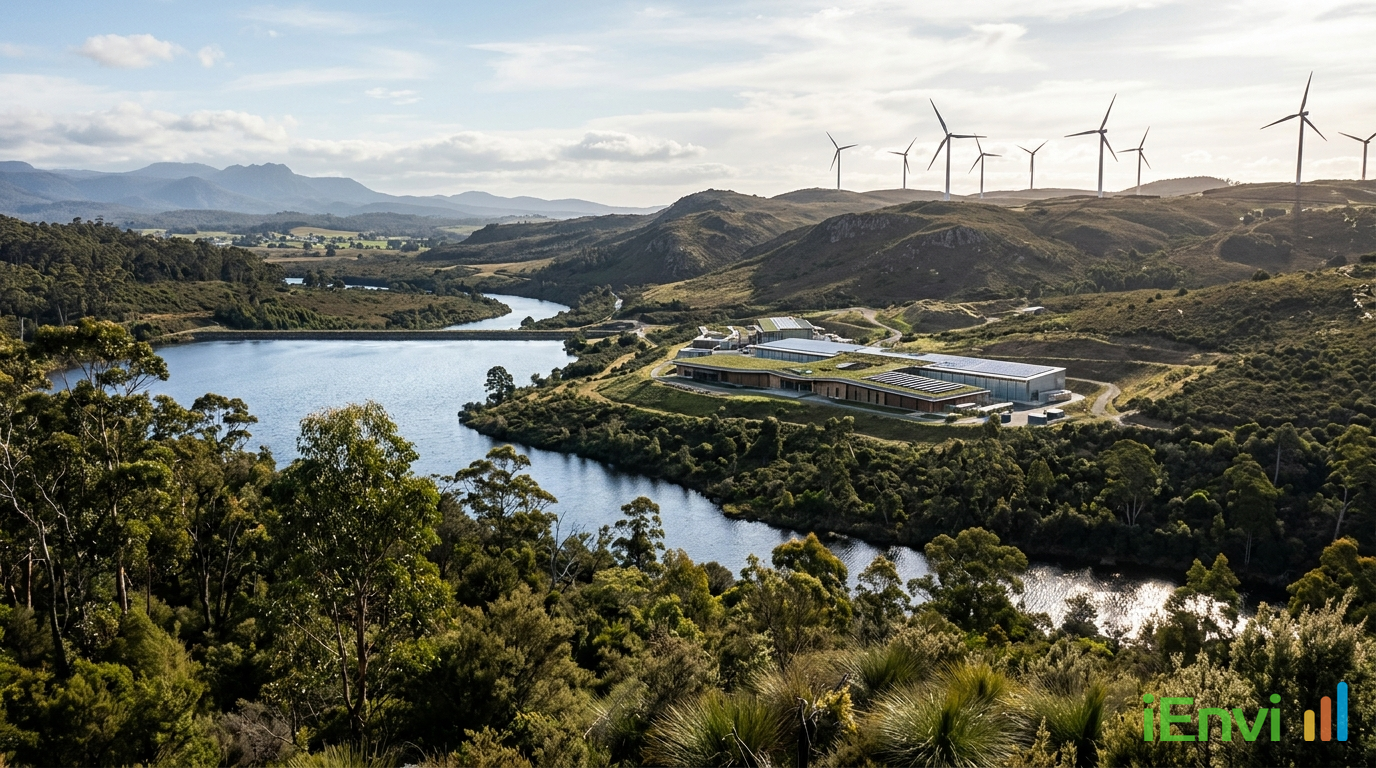
Tasmania data centre and AI infrastructure expectations
On 13 November 2026, the Tasmanian Government released the Expectations for Data Centres and AI Infrastructure Proponents: Tasmania. The policy statement sets out the environmental, energy and community conditions that proponents of large-scale data centres and artificial intelligence (AI) compute infrastructure are expected to agree to before building in the State. Premier Jeremy Rockliff released it with the Minister for Innovation, Science and the Digital Economy, Felix Ellis, and the Minister for Energy and Renewables, Nick Duigan. The statement rests on four pillars:
- Water security and wastewater management.
- Matching electricity demand with new on-island renewable generation and storage.
- An annual community benefit fund contribution of at least $3,000 per megawatt (MW) of contracted firm demand.
- Environmental governance, including a review six months after implementation.
Tasmania’s cool climate and largely renewable electricity supply have made it an obvious candidate for data centre investment. The new statement makes clear that access to those advantages comes with conditions. Proponents are expected to pay for the water, wastewater and transmission infrastructure their projects need, and to show that their facilities will not draw down regional water security or push network costs onto Tasmanian households and businesses.
For developers, landowners, planning authorities and their legal advisers, the practical effect is a change in timing. Water balance modelling, wastewater characterisation, drought resilience planning and energy sourcing evidence now belong in the feasibility stage of a Tasmanian data centre project, not late in the approvals file. The community benefit contribution also turns a social licence commitment into a recurring dollar figure that must appear in the financial model from day one of commercial operation.
Water, renewable energy and community benefit requirements for Tasmanian data centres
Under the water security and wastewater expectations, proponents must fully fund all water supply and wastewater infrastructure upgrades their facilities require. They must also demonstrate that cooling systems will not compromise regional water security or compete with existing water users. In addition, they must prepare operational resilience plans for low-rainfall and drought scenarios. As summarised in the Government’s announcement, these expectations are framed as outcomes to be demonstrated rather than as fixed numerical limits on water use per MW. The burden of evidence therefore sits with the proponent.
On energy, proponents are expected to partner with new on-island renewable energy and storage generation projects to meet their electricity demand. They must also fund their full share of transmission connection and network costs. The Government’s stated aim is that these costs are not shifted onto Tasmanian consumers. The word “new” matters: a facility that simply contracts output from existing hydro generation would not appear to meet the expectation. Connection of both the data centre load and any new generation will still run through the National Electricity Rules (NER) and National Electricity Market (NEM) connection processes.
Developers of major facilities are expected to contribute at least $3,000 per MW of contracted firm demand each year into a dedicated local community benefit fund, starting from commercial operation. At the minimum rate, a facility contracting 50 MW of firm demand would contribute $150,000 a year. A 100 MW facility would contribute $300,000 a year. As an illustration only, over a 20-year operating life that 100 MW facility would contribute $6 million at the minimum rate. The statement does not set a contribution term. The contribution is calculated on contracted firm demand, not on nameplate or installed capacity. That distinction will influence how proponents structure their network and supply contracts.
The statement also expects operations to minimise their lifecycle environmental footprint. The framework is to be reviewed six months after implementation, with community consultation. The expectations sit alongside the existing statutory approval pathways rather than replacing them. These include the Land Use Planning and Approvals Act 1993 (Tas) (LUPAA), the Environmental Management and Pollution Control Act 1994 (Tas) (EMPCA) and the Water Management Act 1999 (Tas).
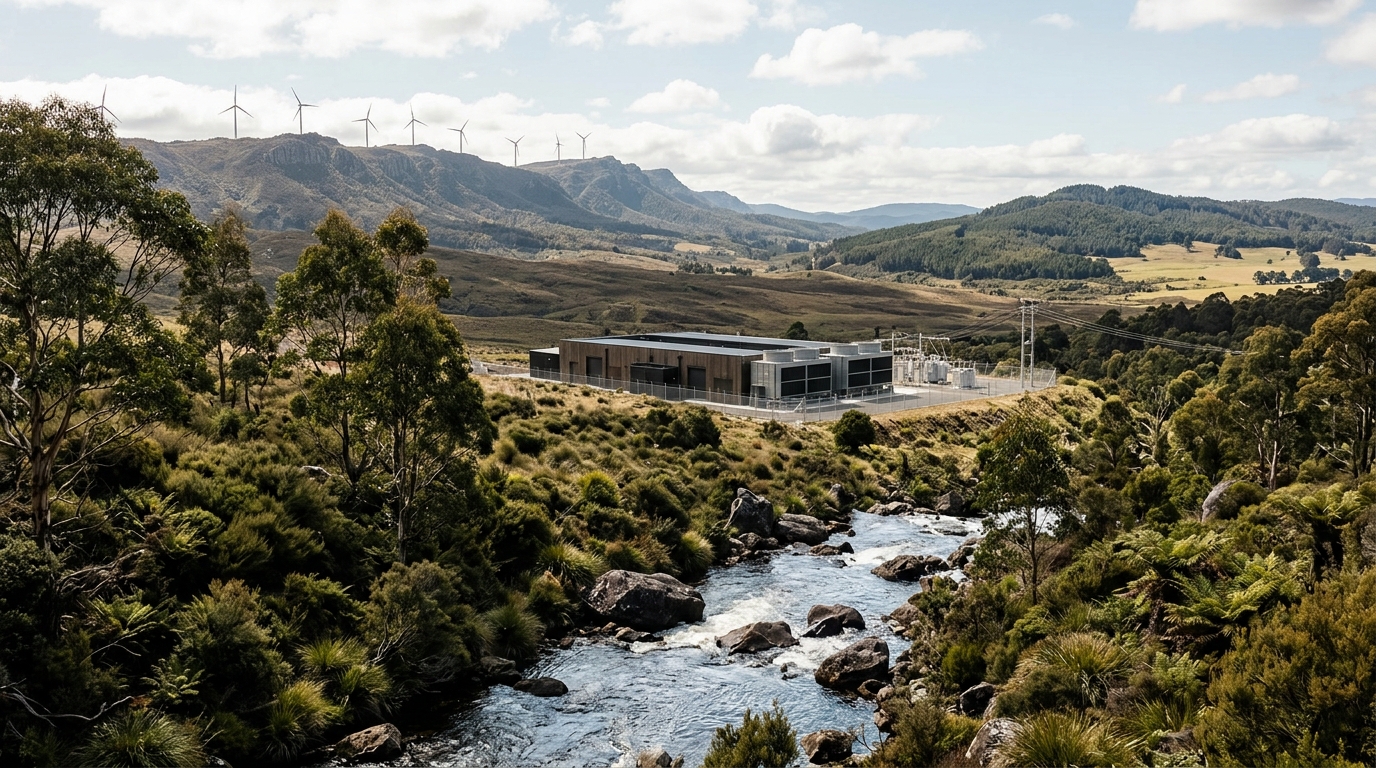
Planning and environmental approvals for data centres in Tasmania under LUPAA and EMPCA
In Tasmania, data centre use and development will continue to be assessed by the relevant planning authority under LUPAA, usually the local council. Environmental assessment and discharge conditions fall under EMPCA, administered by the Environment Protection Authority (EPA) Tasmania. Project teams should check early whether standby diesel generation, fuel combustion or bulk fuel storage triggers a level 2 activity under Schedule 2 of EMPCA, as this changes the assessment pathway and timeframe. Taking water from a watercourse or aquifer generally needs authorisation under the Water Management Act 1999. Trade waste acceptance for cooling system discharges sits with TasWater.
Wastewater from data centre cooling, particularly blowdown from evaporative systems, can contain concentrated dissolved salts and treatment chemicals such as biocides, corrosion inhibitors and scale inhibitors. Where any discharge to the environment is proposed, receiving water assessment in Australia is typically benchmarked against the Australian and New Zealand Guidelines for Fresh and Marine Water Quality (ANZG 2018), read together with Tasmania’s State Policy on Water Quality Management 1997. Land condition is a separate matter. EMPCA Part 5A deals with contaminated sites, and site contamination assessment in Tasmania follows the National Environment Protection (Assessment of Site Contamination) Measure, as amended in 2013 (NEPM 2013).
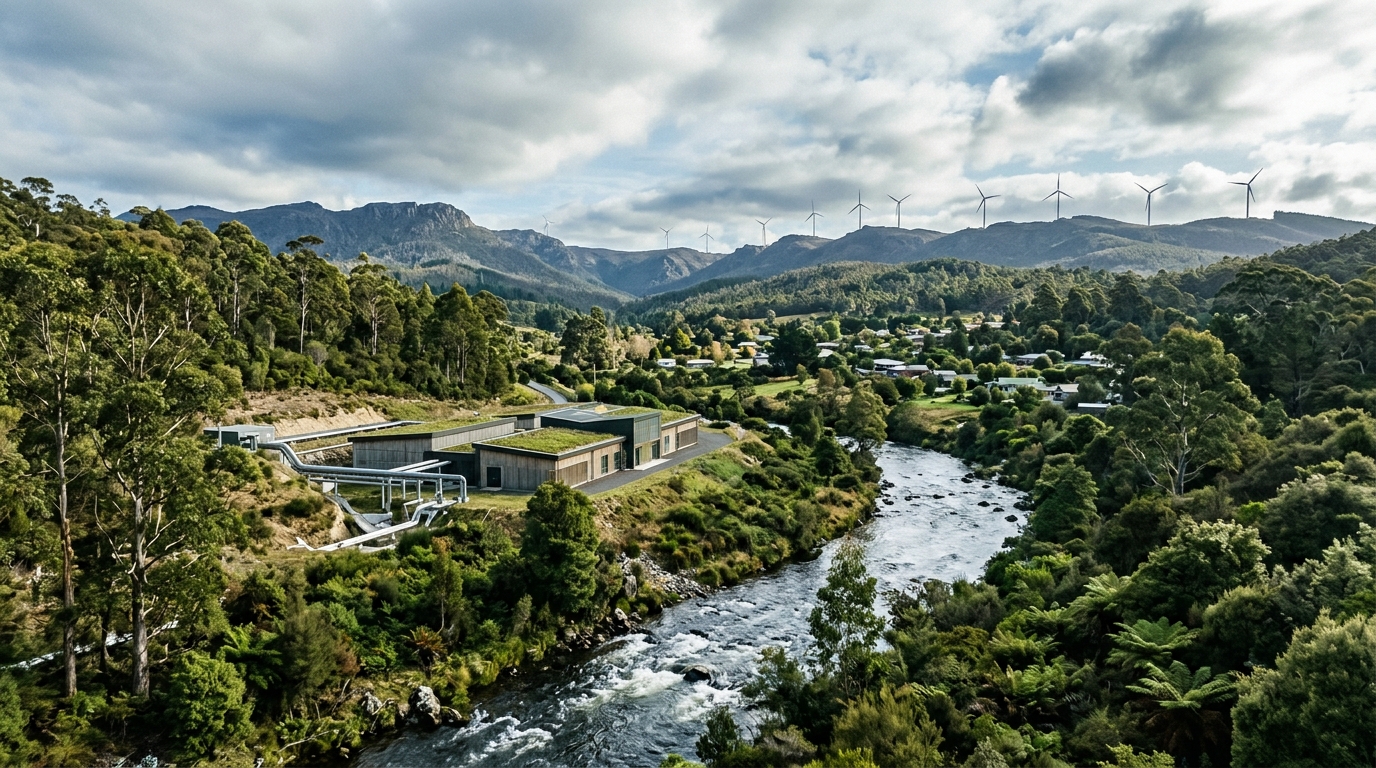
How Tasmania compares with other states
No other Australian state has a statement in exactly these terms. However, data centre proposals in New South Wales, Victoria, Queensland and South Australia face growing questions about water use, electricity demand and who pays for grid connection and network upgrades. In those states, projects are generally assessed through existing planning, environmental protection and water access frameworks, with conditions on water, energy and community engagement set project by project rather than through a single statewide statement. Tasmania has instead set out its expectations before proposals are lodged.
For proponents comparing sites across states, the Tasmanian statement means the business case needs to account for new renewable supply arrangements, full funding of water, wastewater and transmission infrastructure, and an annual community benefit contribution from the outset. Early discussions with the local council, EPA Tasmania, TasWater, TasNetworks and the Department of Natural Resources and Environment Tasmania can help identify approval and connection risks before major costs are committed.
References and related sources
- Primary source: www.premier.tas.gov.au
- amazonaws.com
- premier.tas.gov.au
How iEnvi can help
iEnvi provides specialist consulting services relevant to this topic. Our team includes CEnvP Site Contamination Specialists with experience across contaminated land, groundwater, remediation, ecology, and regulatory compliance.
- iEnvi contaminated land investigation services
- iEnvi remediation and validation services
- iEnvi expert services and independent review services
This is an iEnvi Machete news summary. Prepared by iEnvi to summarise the source article for contaminated land, groundwater, remediation, approvals and site risk professionals.
Published: 15 Nov 2026
Need advice on this topic? Speak to an iEnvi expert at info@ienvi.com.au or 1300 043 684, or contact us online.
Need advice on this issue? iEnvi provides practical, senior-led environmental consulting across contaminated land, remediation, ecology and environmental risk.
Team credentials Contaminated land services Remediation services Groundwater services Talk to iEnvi