
What is Claude Meetings, and which plans and platforms are in the beta?
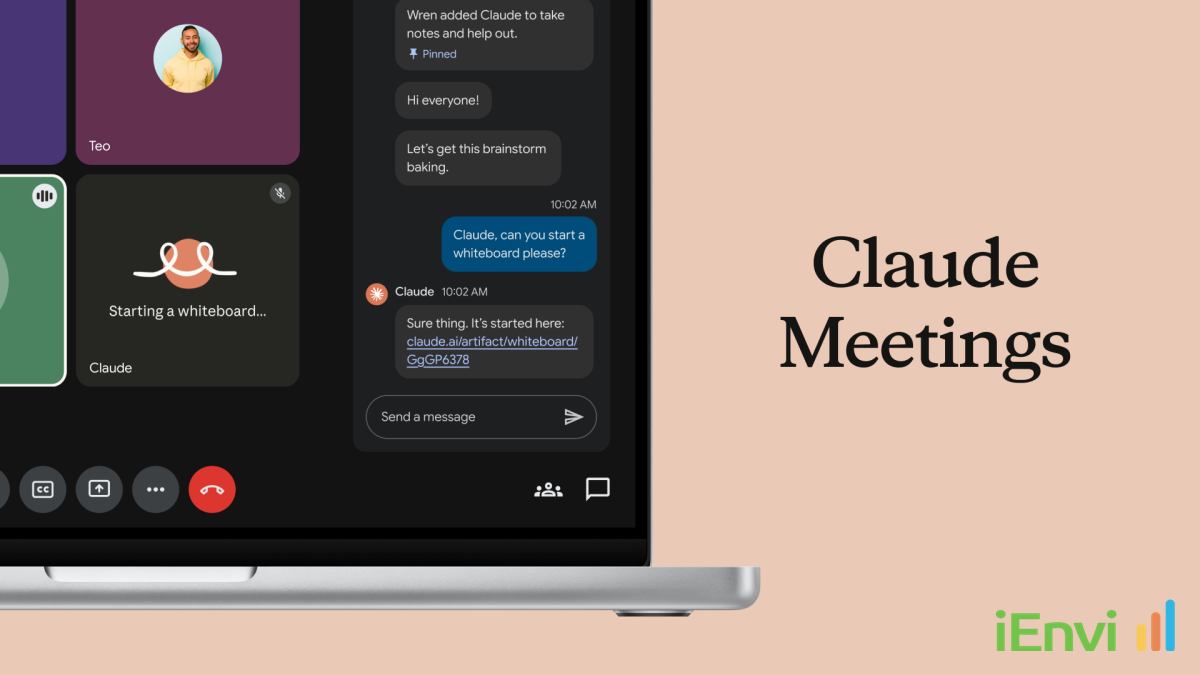
Anthropic has launched Claude Meetings, a beta feature for Claude Team and Enterprise subscribers that places Claude inside live video calls as a visible, interactive participant. TechCrunch reported the launch on 10 November 2026. The feature is available first on Google Meet, with Microsoft Teams and other video conferencing platforms to follow. Anthropic released two companion tools at the same time, Claude Whiteboards and Claude Sheets, which Claude can build and edit while a discussion is under way.
The difference from earlier AI meeting assistants is the timing of the output. Most existing tools act as transcribers. They record the call and produce a summary after everyone has left, and someone still has to turn those notes into a programme, a task list or a scope document. Claude Meetings is designed to produce those working documents during the meeting. Attendees can ask Claude, by voice or in the chat, to pull context from connected business applications, draft a project roadmap, assign action items with deadlines, or set up a whiteboard or spreadsheet. The TechCrunch report frames the release as a move by Anthropic beyond developer tools such as Claude Code and into general knowledge worker productivity. That puts it in direct competition with Microsoft 365 Copilot in Teams and Zoom AI Companion.
Australian environmental consultants, developers, lawyers and council officers spend a lot of project time in meetings. On a contaminated land project these include scoping workshops, site auditor interface meetings, remediation options workshops and regulator meetings, where scope, responsibilities and next steps are often agreed. A tool that turns those conversations into a draft scope or action log before the call ends could save time. Whether it can be used on those calls depends on confidentiality settings, client consent and records obligations, and those are the points this article focuses on.
Claude Meetings beta: platforms, outputs, integrations and data controls
Claude Meetings launches in beta on Google Meet only, for Claude Team and Enterprise plans. According to TechCrunch, Microsoft Teams and broader video conferencing support are scheduled to follow, although no release date for Teams has been reported. When Claude joins a call, it identifies itself in the attendee grid and posts a disclosure message in the meeting chat. That means participants can see an AI is present, rather than having a recording tool running unseen in the background.
Outputs are stored in a dedicated workspace for each meeting on claude.ai. Reported outputs include:
- meeting notes and structured summaries;
- action logs, with tasks assigned to named people and given deadlines;
- Claude Whiteboards, for visual planning and mapping out workflows during the discussion;
- Claude Sheets, for structured tables and models built while the call is running.
Claude can also query connected business systems during the meeting through app connectors. The reported integrations include Jira and other Atlassian tools, HubSpot and corporate data warehouses. In practice, this means a participant can ask for current information from a project tracker or customer system and have it brought into the conversation, instead of promising to send it by email afterwards.
The data handling and access controls are the most important details for professional services firms. Anthropic stores transcripts, structured summaries and descriptions of shared screens, but does not retain raw meeting audio. By default, Claude will not join calls that include external or unverified guest domains unless an administrator has authorised them. If an unauthorised external guest joins a call that Claude is already attending, Claude disconnects automatically. Some organisations are excluded from the beta for now: those that require Zero Data Retention (ZDR), HIPAA-ready configurations (a United States health information privacy standard) or customer-managed encryption keys (CMEK). They will remain excluded until Anthropic certifies additional boundary controls.
Australian context
For Australian professional services firms, the platform sequence matters more than anything else in the launch. Many Australian consultancies, law firms, councils and state agencies use Microsoft Teams as their main meeting platform. A Google Meet-only beta will therefore be of limited use to them, apart from internal trials. The Teams release is the one most firms will be waiting for before considering a wider rollout. Organisations already using Microsoft 365 will also compare Claude Meetings with Copilot in Teams, which they may already be licensed for.
Stored transcripts and summaries of client calls are records, and they bring obligations under Australian law. Organisations covered by the Privacy Act 1988 (Cth) need to consider how personal information captured in transcripts is collected, used and disclosed under the Australian Privacy Principles. Recording private conversations is also regulated at state level. Relevant laws include the Surveillance Devices Act 2007 (NSW), the Invasion of Privacy Act 1971 (Qld), the Surveillance Devices Act 1999 (Vic) and the Surveillance Devices Act 2016 (SA), and their consent requirements are not the same. Claude’s visible attendee listing and chat disclosure help with transparency. They do not replace a firm’s own legal advice on consent in each state where participants are located.
Contaminated land work raises some issues of its own. Under the auditor schemes in New South Wales, Victoria, Queensland and South Australia, the site auditor or environmental auditor is independent of the consultant and client. Meetings with them are often formally minuted and may later be relied on in audit findings. Where land is the subject of a dispute, discussions may be covered by legal professional privilege, and transcripts held on a third-party platform could become a point of argument about whether confidentiality, and therefore privilege, has been maintained. Firms should agree with clients, auditors and legal advisers whether Claude can attend these meetings, and how any transcripts and summaries will be stored, before switching the feature on for project work.
References and related sources
- Primary source: techcrunch.com
- meetingnotes.com
- youtube.com
- computerworld.com
- webdesignernews.com
How iEnvi can help
iEnvi integrates technology and data-driven approaches into environmental consulting. We monitor AI and technology developments that affect how environmental professionals deliver services to clients.
This is an iEnvi Machete news summary. Prepared by iEnvi to summarise the source article for environmental professionals tracking AI, data, and technology developments that affect consulting and project delivery.
Published: 15 Nov 2026
Need advice on this topic? Speak to an iEnvi expert at info@ienvi.com.au or 1300 043 684, or contact us online.
Need advice on this issue? iEnvi provides practical, senior-led environmental consulting across contaminated land, remediation, ecology and environmental risk.
Contaminated land services Remediation services Talk to iEnvi