

Overview
The Taskforce on Nature-related Financial Disclosures (TNFD) released finalised additional sector guidance for alternative fuels in late June 2026, and a detailed legal analysis published by Clayton Utz on 24 July 2026 has drawn sharp attention to what this means for project developers, fuel buyers, and their advisors in Australia. The guidance introduces a formal “comply or explain” disclosure test that places nature performance alongside carbon accounting as a co-equal measure of sustainability credibility. For the first time, a globally recognised framework explicitly states that demonstrating carbon savings is not, on its own, sufficient to substantiate a sustainability claim for alternative fuel projects.
The affected fuel categories are clearly defined. Bioenergy covers gaseous, liquid, and solid fuels derived from biomass, waste, and residue feedstocks. Synthetic fuels cover hydrogen produced from electrolysis and hydrogen-derived products including e-methanol, e-kerosene, and e-ammonia. For each of these streams, the TNFD guidance sets out expectations for disclosing impacts on freshwater systems, pollution loading, land use change, and ocean use. These are not aspirational targets; they are disclosure metrics against which a project’s sustainability narrative will be publicly tested by financiers, offtake partners, and regulators.
For Australian environmental professionals advising on transition energy projects, bioenergy facilities, hydrogen supply chains, and sustainable aviation fuel (SAF) programmes, this guidance materially changes the scope of technical work required at every project stage. It is no longer adequate to focus ecological assessment effort solely on the immediate project footprint. Nature-related impacts across the full upstream supply chain are now in scope for disclosure, and the professional obligation to support accurate, defensible reporting extends accordingly.
Key details of the TNFD alternative fuels sector guidance
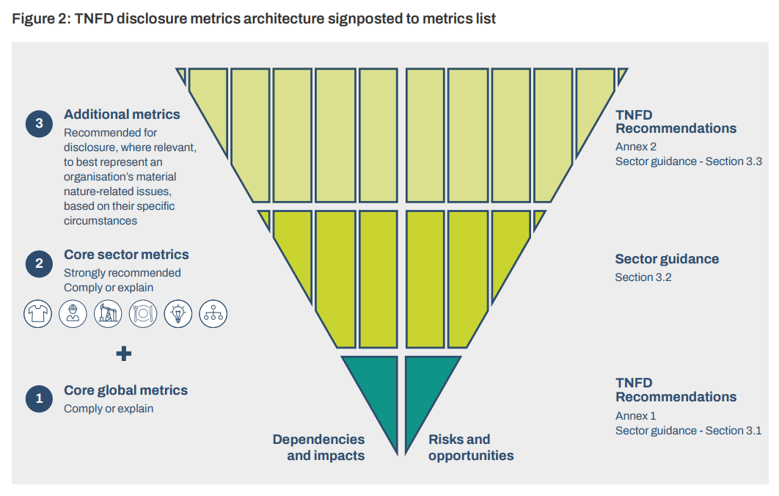
The TNFD guidance establishes two primary disclosure streams for alternative fuels. The first covers bioenergy, encompassing all gaseous, liquid, and solid fuels derived from biomass, waste, and residue feedstocks. The second covers synthetic fuels, specifically hydrogen generated through electrolysis and the family of hydrogen-derived e-fuels: e-methanol, e-kerosene, and e-ammonia. Each stream carries its own set of core sector metrics that organisations within the value chain are expected to report against, using the TNFD’s LEAP approach as the underlying analytical method. LEAP is a four-stage process: Locate (identify interfaces with nature), Evaluate (dependencies and impacts), Assess (material risks and opportunities), and Prepare (strategy and disclosure). Completing a credible LEAP assessment for a bioenergy or synthetic fuel project requires geographic and ecological data at a level of precision most project proponents have not historically collected.
The traceability requirements embedded in the guidance are among its most technically demanding provisions. For primary biomass feedstocks, such as purpose-grown energy crops, forestry residues, or plantation material, the guidance mandates farm-level, plantation-level, or forest-sourcing-area-level traceability. This is not catchment-level or regional-level attribution; it requires the ability to trace material to a specific land parcel and to assess the ecological conditions at that parcel. For waste and residue feedstocks, the requirement is point-of-origin traceability, meaning the precise geographic source of the waste material must be identifiable and documented. These standards go well beyond what most existing bioenergy certification schemes require at the project registration stage.
A critical feature of the framework is that disclosure obligations do not terminate at the fuel producer. Downstream buyers and users of alternative fuels, including airlines, marine shipping operators, road transport companies, and electric utilities, are expected to disclose the core sector metrics for nature-related impacts across their entire value chain, even where they have no direct operational control over the upstream production process. This means that an airline purchasing SAF for its Australian domestic routes, or an electricity utility co-firing biomass, carries a disclosure obligation that extends back to the farm or forest where the feedstock was grown. The commercial consequence is that buyers who cannot obtain supply chain data from their fuel suppliers are exposed to a disclosure gap that financiers and ESG-focused investors will regard as a material risk.
The “comply or explain” structure of the test means that organisations unable to meet a specific metric are not automatically non-compliant, provided they can offer a credible and transparent explanation for the gap. However, the explanation itself becomes a public record and is subject to scrutiny. Repeated or unresolved gaps across multiple reporting cycles are likely to attract regulatory and investor attention, particularly as voluntary frameworks of this type have historically preceded mandatory adoption. The interaction between TNFD disclosure and existing sustainability-linked financing structures means that non-disclosure or weak disclosure can have direct contractual and cost-of-capital consequences, independent of any regulatory enforcement action.
Australian context: TNFD, the Guarantee of Origin scheme, and existing environmental law obligations
Australia’s Guarantee of Origin (GO) scheme is the most immediate domestic regulatory intersection with the TNFD alternative fuels guidance. The GO scheme, administered through the Department of Climate Change, Energy, the Environment and Water, is being expanded to cover Low Carbon Liquid Fuels (LCLFs), including sustainable aviation fuel and other bioenergy products. The scheme is designed to track and verify emissions associated with hydrogen and other low-carbon fuels.
References and related sources
- Primary source: www.claytonutz.com
- claytonutz.com
- claytonutz.com
- EPBC Act
How iEnvi can help
iEnvi provides specialist consulting services relevant to this topic. Our team includes CEnvP Site Contamination Specialists with experience across contaminated land, groundwater, remediation, ecology, and regulatory compliance.
- iEnvi contaminated land investigation services
- iEnvi remediation and validation services
- iEnvi expert services and independent review services
This is an iEnvi Machete news summary. Prepared by iEnvi to summarise the source article for contaminated land, groundwater, remediation, approvals and site risk professionals.
Published: 28 Jul 2026
Need advice on this topic? Speak to an iEnvi expert at info@ienvi.com.au or 1300 043 684, or contact us online.
Need advice on this issue? iEnvi provides practical, senior-led environmental consulting across contaminated land, remediation, ecology and environmental risk.
Team credentials Contaminated land services Remediation services Groundwater services Talk to iEnvi