
Overview
On 21 July 2024, the Heidelberg Magistrates Court fined Diamond Creek landowner Joseph Chetcuti $60,000 and ordered him to pay $12,000 in legal costs after he pleaded guilty to operating an unlicensed industrial waste dumping facility on a 19,000 square metre (approximately 1.9 hectare) property on Black Gully Road in Victoria. The prosecution, brought by EPA Victoria, represents the highest individual fine ever handed down under the Environment Protection Act 2017 (Vic), setting a new benchmark for personal liability in Victorian environmental law. With remediation costs expected to exceed $1 million, the financial consequences extend well beyond the court-imposed penalty.
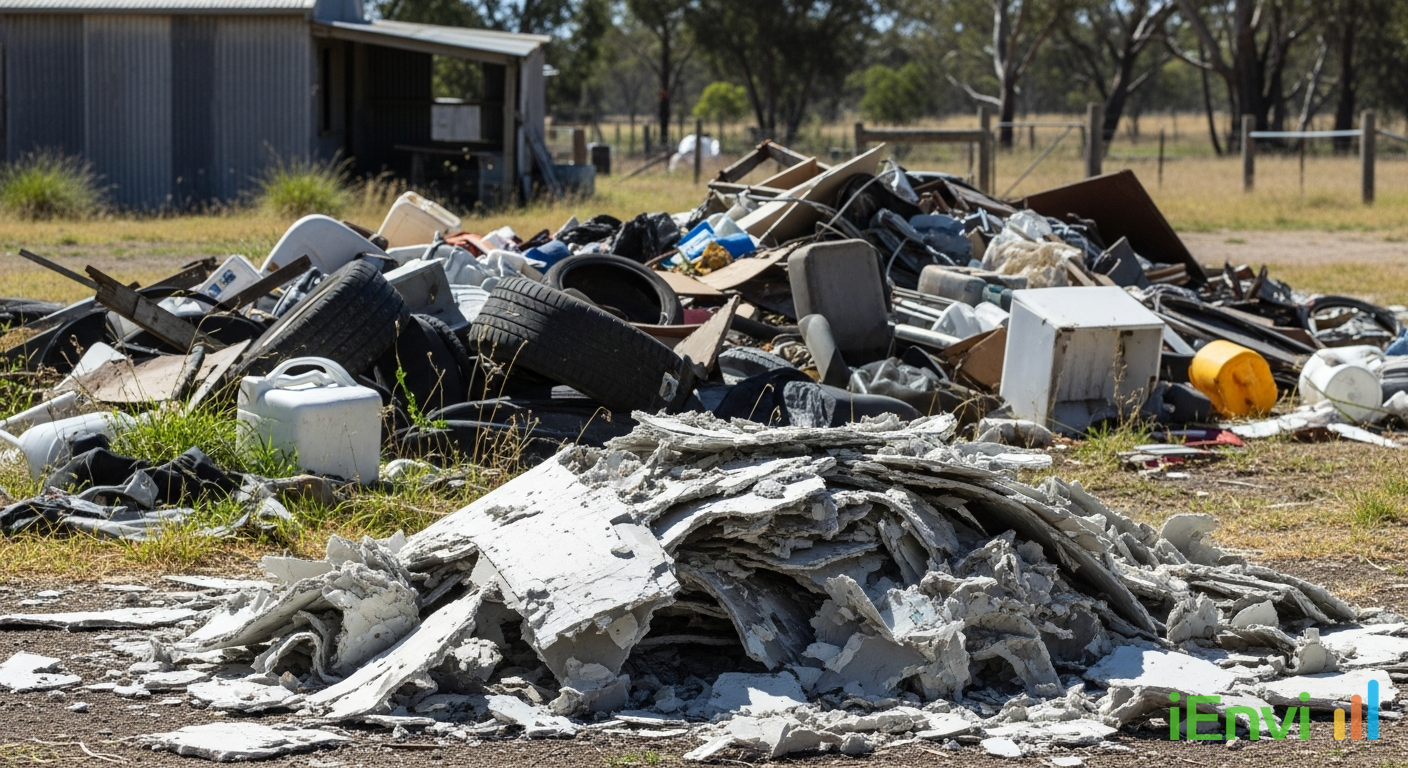
The case came to regulatory attention following a waste fire at the property in May 2023, during which EPA officers and emergency services discovered active burning of industrial, construction and demolition waste. Subsequent soil testing confirmed that fill material stockpiled across the site was heavily contaminated with asbestos-containing material. The court found that Chetcuti had been running a highly organised, unlicensed operation involving the receipt and deposit of reportable priority waste at a site that held no licence to accept it.
For environmental practitioners, property developers, commercial lenders and transaction lawyers operating in Victoria and across Australia, this ruling carries weight beyond its record-breaking fine. The court ruled that Chetcuti remains personally liable for remediating the contaminated site even if the property is sold, a decision that fundamentally reshapes how legacy environmental liability must be assessed during property transactions. The combination of a landmark individual penalty, a remediation obligation that survives divestment, and EPA Victoria’s demonstrated willingness to pursue prosecution through surveillance and aerial monitoring means this case will be referenced for years in contaminated land practice.
Key details of the Diamond Creek prosecution and EPA Victoria’s enforcement approach
Chetcuti pleaded guilty to two distinct offences. The first was depositing and receiving waste, including reportable priority waste, at an unlicensed site in contravention of the general waste duties established under the Environment Protection Act 2017 (Vic). The second was non-compliance with an Environmental Action Notice (EAN) issued under Section 290(1) of the same Act. That notice directed Chetcuti to cease accepting and burning waste at the property, to properly classify all stockpiled materials on-site, and to engage a qualified occupational hygienist to supervise and verify the safe removal of all asbestos-containing material. His failure to comply with the EAN materially strengthened the prosecution’s case and likely influenced the severity of the penalty.
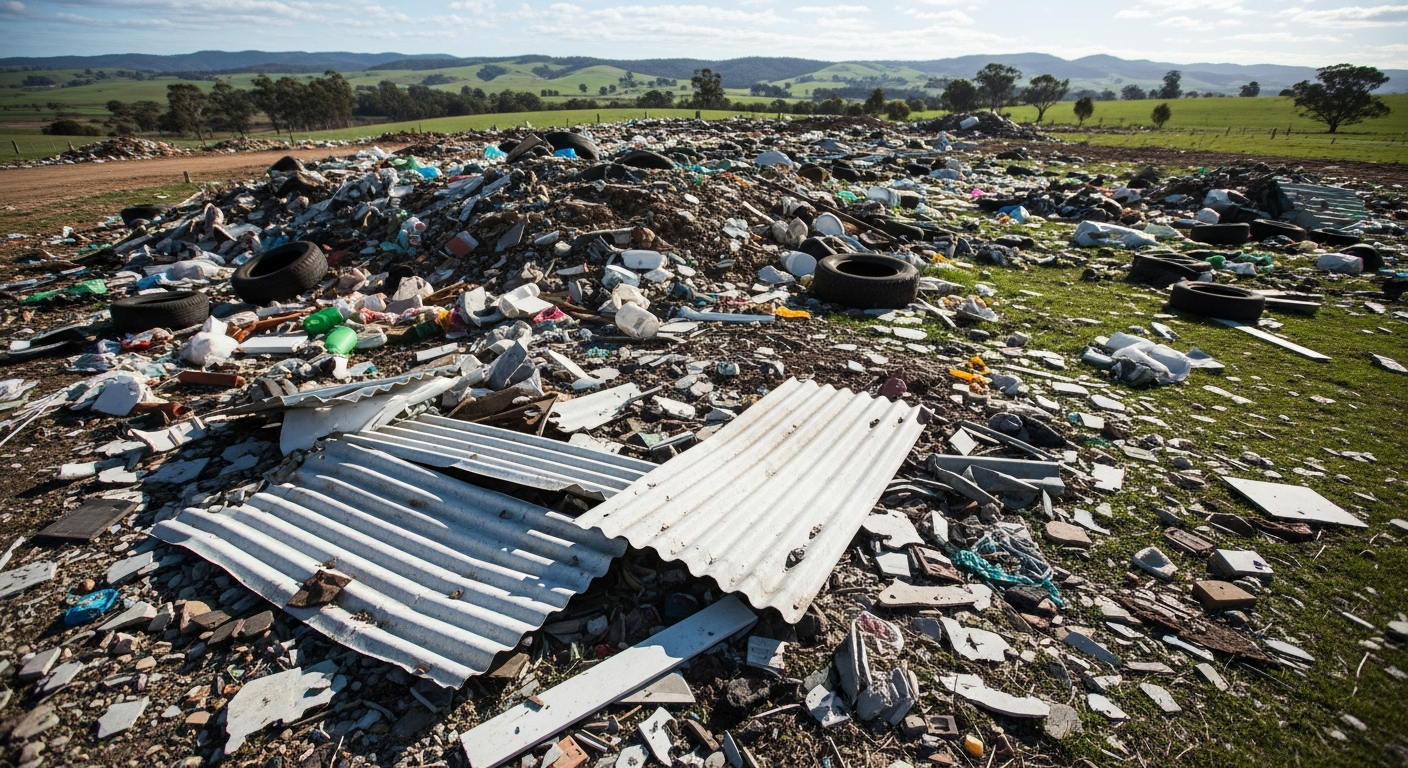
The 19,000 square metre property was found to contain stockpiles of imported fill soil contaminated with asbestos. Under Victorian law, asbestos-containing material in soil is classified as reportable priority waste once it meets defined concentration thresholds, and its transport and disposal must be tracked through EPA Victoria’s Waste Tracker system. The failure to classify the incoming fill material before it was deposited on-site, and the absence of any Waste Tracker records, were central to the prosecution. EPA Victoria built its evidentiary case using a combination of aerial photography, physical surveillance and automated tracking of soil import movements, demonstrating the agency’s expanding capacity to detect and document illegal waste practices without relying solely on complaints or tip-offs.
The total court-ordered monetary outcome was $72,000, comprising the $60,000 fine and $12,000 in legal costs. However, EPA Victoria has stated publicly that it expects the total cost of remediating the contaminated site to exceed $1 million. This figure reflects the complexity of removing asbestos-contaminated fill from a nearly 2-hectare property, including safe excavation, occupational hygienist oversight, appropriate classification and manifesting of the waste, licensed disposal and site validation. These remediation costs are not discharged by the court penalty and remain the personal legal responsibility of Chetcuti regardless of any future property transaction.
The ruling that clean-up liability survives a property sale is particularly significant. This confirms that environmental remediation obligations under the Environment Protection Act 2017 (Vic) attach to the person responsible for causing or contributing to contamination, not merely to the current property owner. It is not sufficient for a liable party to divest themselves of the land and walk away. Prospective purchasers, financiers and their legal advisers must treat this as a clear signal that undisclosed environmental liability can follow a vendor, but equally that inadequate due diligence by a purchaser can result in them acquiring a site burdened by pre-existing obligations they did not create.
Australian context: general environmental duty, waste classification and contaminated land frameworks
Victoria’s Environment Protection Act 2017 introduced the General Environmental Duty (GED) as a positive, overarching obligation on all persons whose activities create a risk of harm to human health or the environment. The GED requires that duty holders take reasonably practicable steps to minimise those risks. The Chetcuti prosecution illustrates how the GED operates in parallel with specific offence provisions: the court did not need to establish a prescriptive breach of a technical standard but could rely on the broader obligation to manage waste responsibly. This approach to environmental liability aligns with the shift seen in other Australian jurisdictions, including New South Wales under the Protection of the Environment Operations Act 1997 (NSW).
References and related sources
- Primary source: www.epa.vic.gov.au
- EPA Victoria
How iEnvi can help
iEnvi provides specialist consulting services relevant to this topic. Our team includes CEnvP Site Contamination Specialists with experience across contaminated land, groundwater, remediation, ecology, and regulatory compliance.
- iEnvi remediation services
- iEnvi asbestos services
- iEnvi due diligence services
- iEnvi expert services and independent review services
This is an iEnvi Machete news summary. Prepared by iEnvi to summarise the source article for contaminated land, groundwater, remediation, approvals and site risk professionals.
Published: 28 Jul 2026
Need advice on this topic? Speak to an iEnvi expert at info@ienvi.com.au or 1300 043 684, or contact us online.
Need advice on this issue? iEnvi provides practical, senior-led environmental consulting across contaminated land, remediation, ecology and environmental risk.
Team credentials Contaminated land services Remediation services Groundwater services Talk to iEnvi