
Overview
A peer-reviewed study published in Environmental Science and Technology on 6 April 2026 by researchers from UC Irvine’s Joe C. Wen School of Population and Public Health has exposed a fundamental failure in one of California’s largest and most expensive environmental remediation programmes. The study evaluated residential properties surrounding the former Exide Technologies lead-acid battery smelter in Los Angeles, a site that generated one of the most significant urban lead contamination events in recent American history. The state of California committed $176.6 million USD (approximately $275 million AUD at current exchange rates) to excavate lead-contaminated soil from surrounding residential lots, targeting properties where soil exceeded a lead concentration of 80 parts per million (ppm). The programme was declared a success. The study reveals it was not.
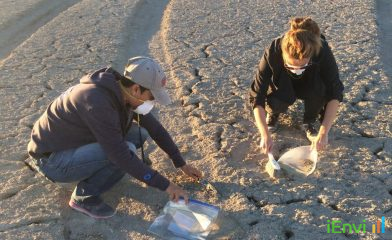
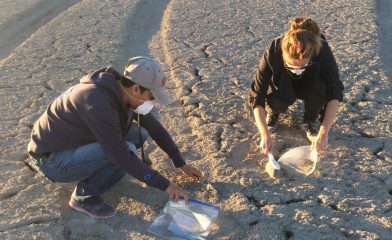
The research team, working from UC Irvine’s Joe C. Wen School of Population and Public Health, collected 1,128 soil samples across 373 properties that had been formally declared remediated under the state programme. Their findings are unambiguous and deeply troubling: 70% of officially remediated homes still returned soil lead concentrations above the 80 ppm cleanup threshold. The average measured lead concentration across these supposedly clean properties was 215 ppm, which is nearly three times the applicable safety limit. The single variable that allowed this outcome to occur was the absence of any mandatory post-remediation verification testing. The cleanup methodology assumed that excavating visibly contaminated soil was sufficient proof of success. No independent sampling was required to confirm that assumption.
For Australian environmental professionals, site auditors, developers, and legal advisers, this study carries substantial weight. It provides a real-world, large-scale case study demonstrating precisely why post-remediation validation is not a procedural formality but a public health and legal necessity. It also provides a documented basis for explaining to cost-conscious clients why validation sampling programmes, independent audit oversight, and long-term site management plans represent risk mitigation rather than unnecessary expenditure.
Key details of the UC Irvine lead contamination study
The Exide Technologies facility operated in the Los Angeles suburb of Vernon and was one of the largest secondary lead smelters in the western United States. Following its closure and the declaration of a contamination emergency, the California Department of Toxic Substances Control (DTSC) established an 1.7-mile (approximately 2.7 kilometre) radius cleanup zone around the facility. Within this boundary, the programme targeted residential properties where surface soil concentrations exceeded 80 ppm lead, with excavation and replacement of contaminated material as the primary remediation method. The 80 ppm threshold was the applicable regulatory criterion adopted for the programme.
The UC Irvine research team collected their 1,128 samples from 373 remediated properties using a rigorous sampling protocol. The results showed that 70% of sampled properties returned at least one result above the 80 ppm criterion, with a mean lead concentration of 215 ppm across affected properties. This is not a marginal exceedance. At 215 ppm, average concentrations sit at 2.7 times the regulatory threshold. The study also extended sampling to properties just outside the official 1.7-kilometre cleanup boundary. Of these unmediated neighbouring properties, 89% returned lead concentrations exceeding the 80 ppm threshold, indicating the contamination plume extended well beyond the boundary used to define remediation eligibility. These boundary properties received no remediation works and no assessment under the programme.
The study’s findings point to several compounding technical failures in the remediation methodology. The programme’s conceptual basis assumed that a single round of surface soil excavation would permanently interrupt the lead exposure pathway. This assumption did not account for secondary contamination mechanisms that are well understood in contaminated land practice. Lead dust deposited over decades of smelter operation accumulates in roof cavities, gutters, downpipes, and garden structures. Following remediation and replacement of surface soils with clean fill, rainfall events mobilise this legacy roof dust and redeposit it into the newly placed clean material, effectively re-contaminating the remediated surface layer. Additionally, inadequate excavation depths on some properties are likely to have left residual contamination in subsurface horizons, which gardening activity, root penetration, and natural soil bioturbation subsequently redistributed into the surface zone over time.
The absence of post-remediation verification sampling meant none of these failure mechanisms were identified before properties were declared clean. Residents returned to homes under the belief that the remediation had been successful. The study’s authors note that this represents a significant ongoing public health exposure, particularly for young children who are most vulnerable to the neurological effects of lead at low doses. The United States Centers for Disease Control and Prevention recognises that there is no safe blood lead level in children, and soil is a primary ingestion exposure pathway for children under six years of age.
Australian context: how NEPM 2013 validation requirements prevent this outcome
The California outcome described in this study would be extremely difficult to replicate under Australia’s regulatory framework for contaminated land management. The National Environment Protection (Assessment of Site Contamination) Measure 2013, commonly referred to as NEPM 2013, establishes validation as a mandatory and non-negotiable component
References and related sources
- Primary source: publichealth.uci.edu
- https://news.uci.edu/2026/04/06/uc-irvine-study-finds-dangerous-lead-levels-at-l
- NEPM Assessment of Site Contamination
How iEnvi can help
iEnvi provides specialist consulting services relevant to this topic. Our team includes CEnvP Site Contamination Specialists with experience across contaminated land, groundwater, remediation, ecology, and regulatory compliance.
- iEnvi remediation services
- iEnvi contaminated land investigation services
- iEnvi expert services and independent review services
This is an iEnvi Machete news summary. Prepared by iEnvi to summarise the source article for contaminated land, groundwater, remediation, approvals and site risk professionals.
Published: 08 Apr 2026
Need advice on this topic? Speak to an iEnvi expert at info@ienvi.com.au or 1300 043 684, or contact us online.
Need advice on this issue? iEnvi provides practical, senior-led environmental consulting across contaminated land, remediation, ecology and environmental risk.
Team credentials Contaminated land services Remediation services Groundwater services Talk to iEnvi