
Global Growth in Industrial Robotics and Physical AI Funding
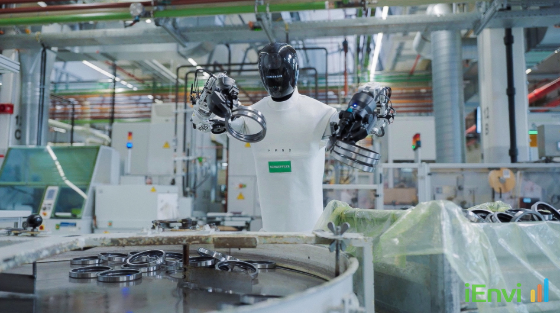
UK-based artificial intelligence and robotics startup Humanoid has closed a USD $152 million (approximately AUD $235 million) Series A funding round at a post-money valuation of USD $1.35 billion (approximately AUD $2.08 billion), making it Europe’s first pure-play humanoid robotics unicorn. Founded in 2024 by CEO Artem Sokolov and headquartered in London, the company reached this valuation milestone in under two years, a pace that reflects the accelerating commercial appetite for physical AI systems in industrial settings. The round was led by Prime Movers Lab and included strategic investment from industrial heavyweights Bosch and Schaeffler, Taiwan’s Fubon Financial Holding Venture Capital, and Aglaé Ventures, the investment vehicle of LVMH chairman Bernard Arnault.
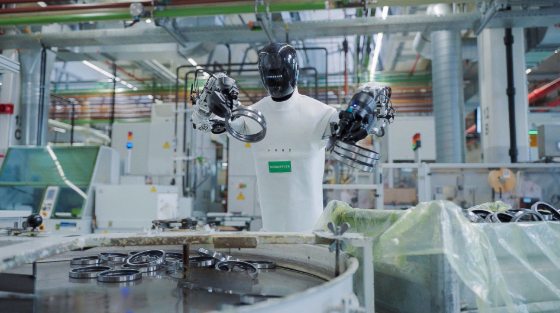
The raise brings Humanoid’s total funding to USD $270 million (approximately AUD $416 million) and will be directed toward mass production and commercial deployment of its flagship wheel-based industrial robot, the HMND 01 Alpha. Unlike the bipedal humanoid robots that have attracted significant media attention from competitors in the United States and China, Humanoid has deliberately pursued a wheeled-mobility architecture that prioritises immediate commercial viability over anthropomorphic novelty. This design decision has material consequences for safety certification timelines, operational deployment costs, and integration speed in structured industrial environments such as warehouses, logistics hubs, and manufacturing floors.
For Australian professionals working in environmental consulting, industrial project management, facilities operations, and workplace health and safety, this development is relevant not because it directly alters a regulatory threshold or changes a site assessment methodology, but because it signals a genuine inflection point in the commercialisation of physical AI. Beta rollouts of the HMND 01 Alpha are scheduled for the fourth quarter of 2026, a timeline that is close enough to require planning decisions now from operational managers, WHS advisors, and procurement teams across Australian industry.
Key details of the Humanoid HMND 01 Alpha and KinetIQ AI platform
The HMND 01 Alpha is Humanoid’s flagship wheeled industrial robot and the product around which the Series A capital will be deployed. Its published technical specifications include a payload capacity of 15 kilograms, a continuous runtime of four hours per charge cycle, and 29 degrees of freedom across its upper body and articulated limbs. The wheeled base replaces the bipedal locomotion system used by competitors such as Boston Dynamics’ Atlas and Figure AI’s Figure 02, eliminating the computational overhead and physical instability risks associated with dynamic two-legged balancing. On flat, structured industrial floors, wheeled systems deliver substantially higher energy efficiency and predictable movement envelopes, both of which simplify the engineering of human-robot co-working zones.
The robot’s intelligence layer is provided by KinetIQ, Humanoid’s proprietary AI framework. KinetIQ is structured as a four-layer architecture integrating perception, reasoning, decision-making, and motion control into a unified system. Rather than executing pre-programmed, rigid movement trajectories, KinetIQ allows the HMND 01 Alpha to interpret its environment in real time and adapt its actions dynamically to changes in task conditions or workspace layout. This approach is qualitatively different from earlier generations of industrial automation, which relied on fixed-path robotics that required substantial reprogramming whenever a production line configuration changed. The capacity to reason and adapt without hard-coded reprogramming is the core commercial differentiator that Humanoid is positioning against conventional industrial robotics.
The involvement of Bosch and Schaeffler as investors carries strategic weight beyond their capital contribution. Bosch has formally agreed to act as Humanoid’s contract manufacturing partner, providing hardware design support and supply chain infrastructure. Schaeffler, the German precision manufacturing and automotive components group, has signed a commercial deployment agreement to roll out thousands of HMND 01 Alpha units across its own manufacturing facilities. This means Schaeffler is simultaneously an investor in and a large-scale customer of Humanoid, which is a level of industrial validation that moves the technology from the speculative pipeline into committed procurement. For industrial operators assessing the credibility of humanoid robotics as a near-term investment, the Schaeffler deployment agreement is the most concrete commercial signal in this announcement.
From a regulatory and safety certification standpoint, the wheeled architecture provides a material advantage over bipedal designs. Under both European machinery safety standards and equivalent frameworks in other jurisdictions, a robot that cannot fall over due to bipedal balance failures presents a substantially reduced risk profile in shared human-robot workspaces. This translates directly into faster safety clearance processes, lower insurance liability exposure during trials, and simpler compliance documentation for site operators. The OSHA-equivalent pathway for wheeled industrial robots is well established through decades of automated guided vehicle (AGV) deployments, whereas bipedal humanoid robots are still navigating novel certification territory in most jurisdictions.
Australian context: physical AI, workforce automation, and WHS regulatory implications
Australia does not yet have a nationally harmonised regulatory framework specifically governing humanoid or wheel-based AI robots in industrial workplaces. The primary legislative architecture is the Work Health and Safety Act 2011 (Cth) and its state and territory equivalents, which apply a general duty of care framework requiring employers to eliminate or minimise risks to workers so far as is reasonably practicable. As physical AI systems move from pilot programs into widespread industrial deployment, operators and WHS advisors will need to engage proactively with how existing risk assessment obligations apply to shared human-robot work environments, and where current guidance gaps may require additional due diligence.
References and related sources
- Primary source: www.siliconrepublic.com
- pulse2.com
- rockingrobots.com
- pymnts.com
- humanoidroboticstechnology.com
How iEnvi can help
iEnvi integrates technology and data-driven approaches into environmental consulting. We monitor AI and technology developments that affect how environmental professionals deliver services to clients.
This is an iEnvi Machete news summary. Prepared by iEnvi to summarise the source article for environmental professionals tracking AI, data, and technology developments that affect consulting and project delivery.
Published: 23 Jul 2026
Need advice on this topic? Speak to an iEnvi expert at info@ienvi.com.au or 1300 043 684, or contact us online.
Need advice on this issue? iEnvi provides practical, senior-led environmental consulting across contaminated land, remediation, ecology and environmental risk.