
Nvidia CEO Defends Use of Open-Source Chinese AI Models
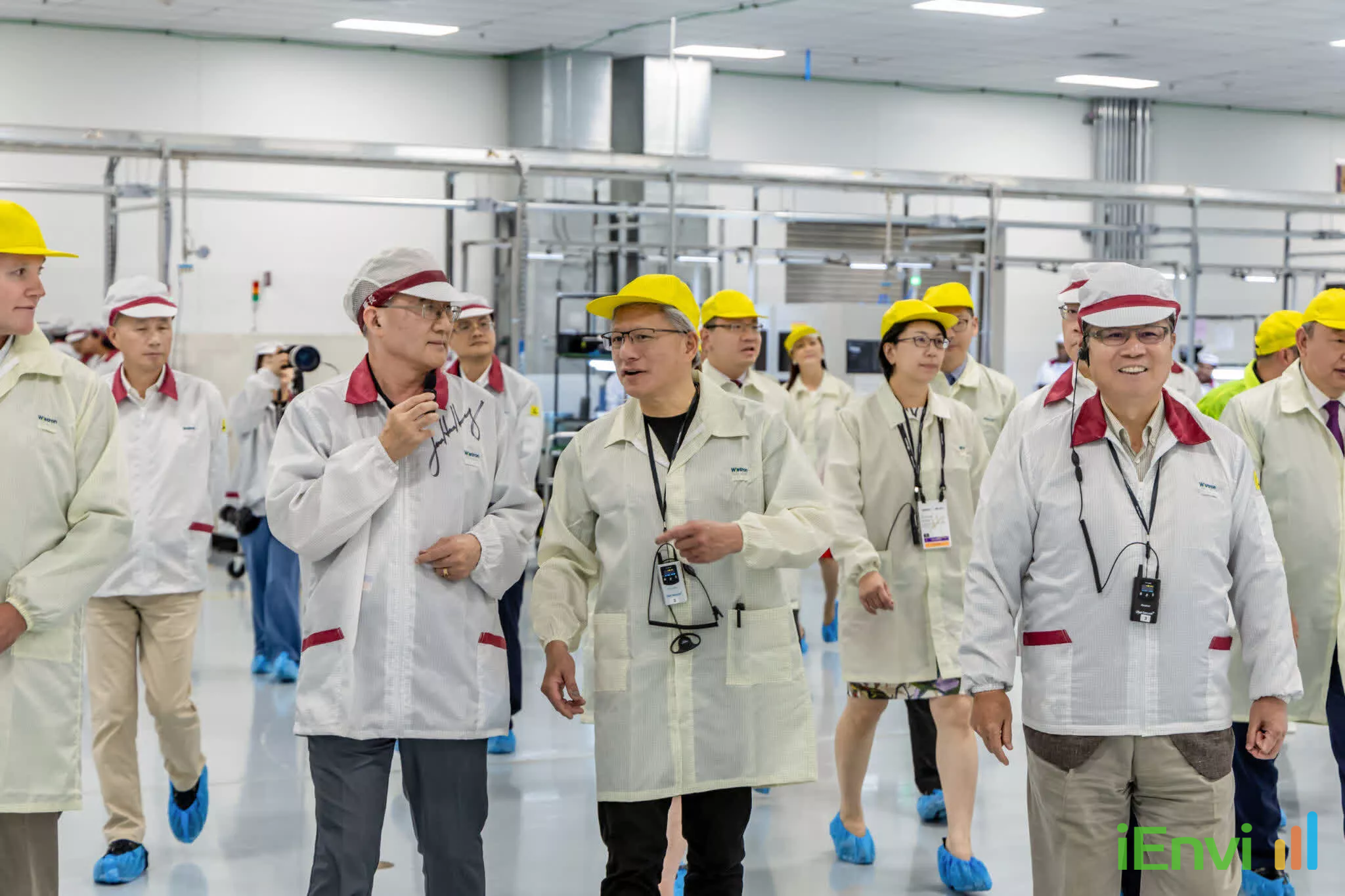
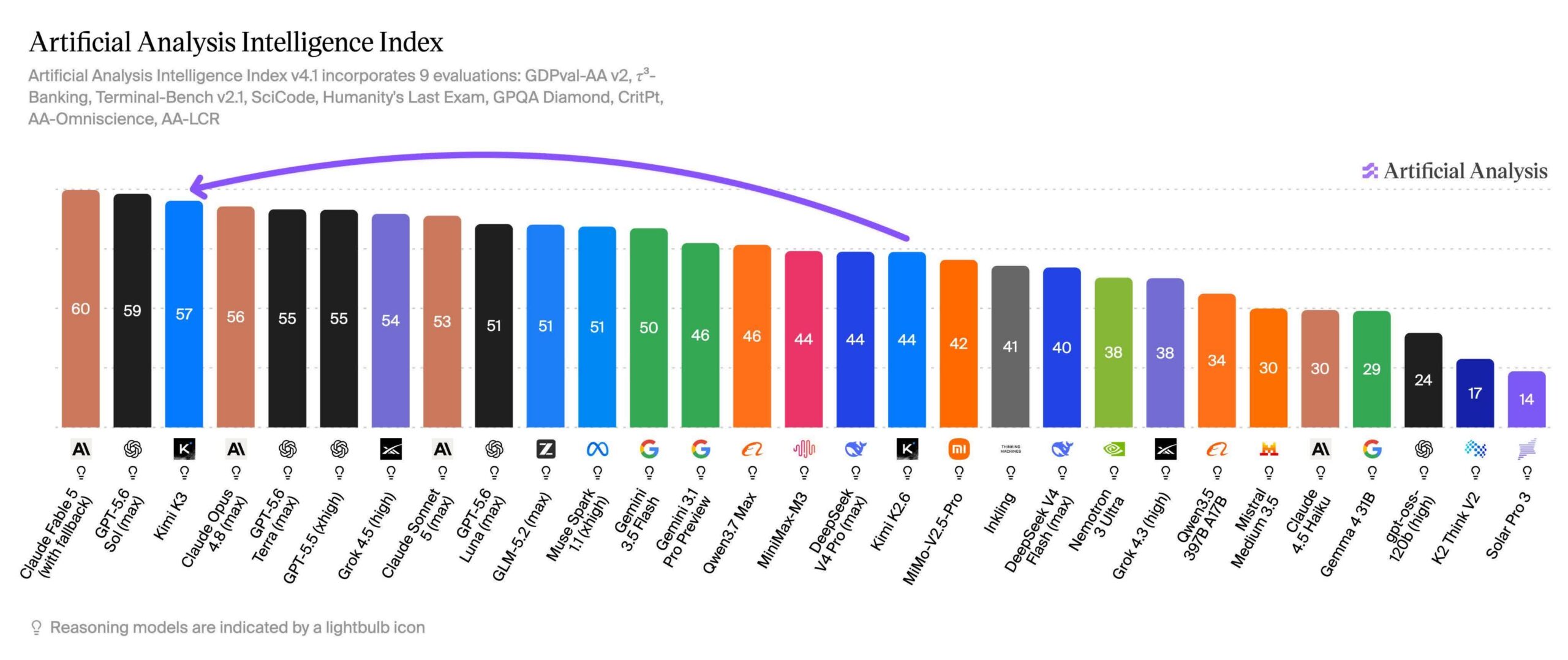
Nvidia chief executive Jensen Huang has publicly defended the right of American and, by extension, Western enterprises to use Chinese open-weight artificial intelligence models, describing them as “excellent” and stating that open-source models of high quality “should be used.” Huang made these remarks on 22 July 2024 while speaking to Axios in Fort Worth, Texas, at the opening of a new production phase at the Wistron manufacturing plant, which produces Nvidia’s AI infrastructure hardware. The statement is notable not only for its directness but for the moment in which it was delivered: Wall Street was in the middle of what analysts were calling a “Kimi panic,” driven by the rapid emergence of Moonshot AI’s Kimi K3, a high-capability Chinese open-weight model that is closing the performance gap with leading proprietary American systems at a fraction of the cost.
The remarks place Huang in direct opposition to US Treasury Secretary Scott Bessent, who, just hours before Huang spoke, announced that the administration is actively investigating whether Chinese AI models were built using stolen American intellectual property. Bessent flagged sanctions as a potential enforcement mechanism and pointed to digital watermarking as a technical method for detecting whether foreign models were trained on proprietary US data. The collision between these two positions, one from the world’s dominant AI chipmaker and the other from the US Treasury, signals a widening strategic divide between hardware providers and national security regulators over how freely global AI models should circulate.
For enterprise technology leaders, legal teams, and professional service firms operating in Australia, this development is not a distant geopolitical curiosity. It has immediate relevance to procurement decisions, vendor risk assessments, software licensing governance, and the architecture of AI-assisted workflows that are increasingly embedded in consulting, legal, engineering, and government advisory services.
Key details: the Kimi panic, sanctions threats, and hardware demand
The term “Kimi panic” refers to the market anxiety triggered by performance evaluations showing that Moonshot AI’s Kimi K3 and related Chinese open-weight models are competitive with, and in some benchmarks superior to, proprietary American large language models. Because these models are open-weight, meaning their parameters are publicly released rather than locked behind an API, organisations can download and run them locally or within private cloud environments without paying per-query fees to a US-based model provider. This changes the cost calculus significantly for enterprise deployments at scale, and the market reaction reflects concern that proprietary model developers, including OpenAI and Anthropic, face serious commercial pressure.
The US Treasury’s proposed sanction mechanism centres on the use of digital watermarks to determine whether a given model was trained on data sourced from American companies without authorisation. Treasury Secretary Bessent’s comments indicate that the US government is actively building a technical and legal basis for restricting the adoption of specific foreign-developed AI models. If sanctions were imposed, any enterprise, including Australian organisations with US-linked operations, joint ventures, or contractual obligations subject to American law, that had integrated a sanctioned Chinese model into an automated pipeline or agentic workflow could face a compliance obligation to remove that model immediately. The timeline for such a removal would likely be short, and the operational disruption could be substantial.
Huang’s position reflects Nvidia’s structural incentives. As the dominant supplier of graphics processing units used to train and run AI models, Nvidia benefits commercially from a global open-source ecosystem regardless of which model is running on which hardware. Huang described the current period as “the largest infrastructure buildout in human history,” and his defence of open-weight Chinese models is consistent with a business strategy that maximises GPU demand worldwide. The proliferation of locally run open-weight models also intensifies demand for high-bandwidth memory and on-premises storage hardware, which are areas where Nvidia’s product roadmap is concentrated.
From a technical infrastructure standpoint, running large open-weight models locally places significant memory and compute demands on hardware. This is driving enterprise hardware decisions toward high-bandwidth memory solutions, shifting procurement conversations from cloud API subscriptions toward physical infrastructure investment. For organisations that have historically used software-as-a-service AI tools, the move to locally hosted open-weight models represents a fundamental change in both capital expenditure and IT risk management.
Australian context: geopolitical AI risk and enterprise compliance obligations
Australia does not have an equivalent of the US Treasury’s foreign technology sanction framework specifically targeting AI models, but Australian organisations are not insulated from the consequences if the US proceeds with enforcement action. Australian entities that are subsidiaries of, or in contractual relationships with, US parent companies may be subject to US export control and sanctions law, including the Export Administration Regulations and the Office of Foreign Assets Control frameworks. If a specific Chinese AI model is designated under these instruments, Australian subsidiaries using that model in commercial workflows may need to comply with the same removal obligations as their US counterparts, regardless of whether Australian domestic law independently requires it.
The Australian government has been developing its own AI governance posture through the Department of Industry, Science and Resources.
References and related sources
- Primary source: www.techspot.com
- techmeme.com
- airmore.ai
- venturebeat.com
- businessinsider.com
How iEnvi can help
iEnvi integrates technology and data-driven approaches into environmental consulting. We monitor AI and technology developments that affect how environmental professionals deliver services to clients.
This is an iEnvi Machete news summary. Prepared by iEnvi to summarise the source article for environmental professionals tracking AI, data, and technology developments that affect consulting and project delivery.
Published: 23 Jul 2026
Need advice on this topic? Speak to an iEnvi expert at info@ienvi.com.au or 1300 043 684, or contact us online.
Need advice on this issue? iEnvi provides practical, senior-led environmental consulting across contaminated land, remediation, ecology and environmental risk.
Contaminated land advice Remediation services Discuss your site Talk to iEnvi